ANALYSIS | In Canadian politics, a new world order can't overshadow the price of groceries
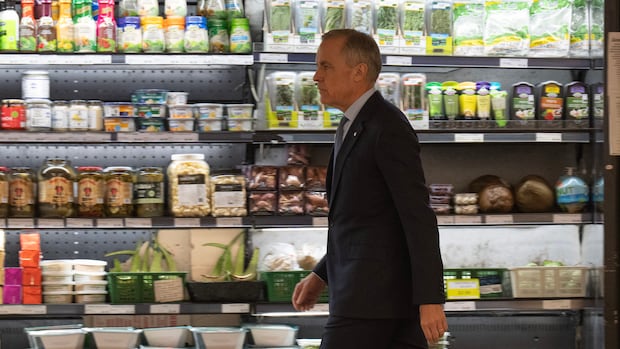
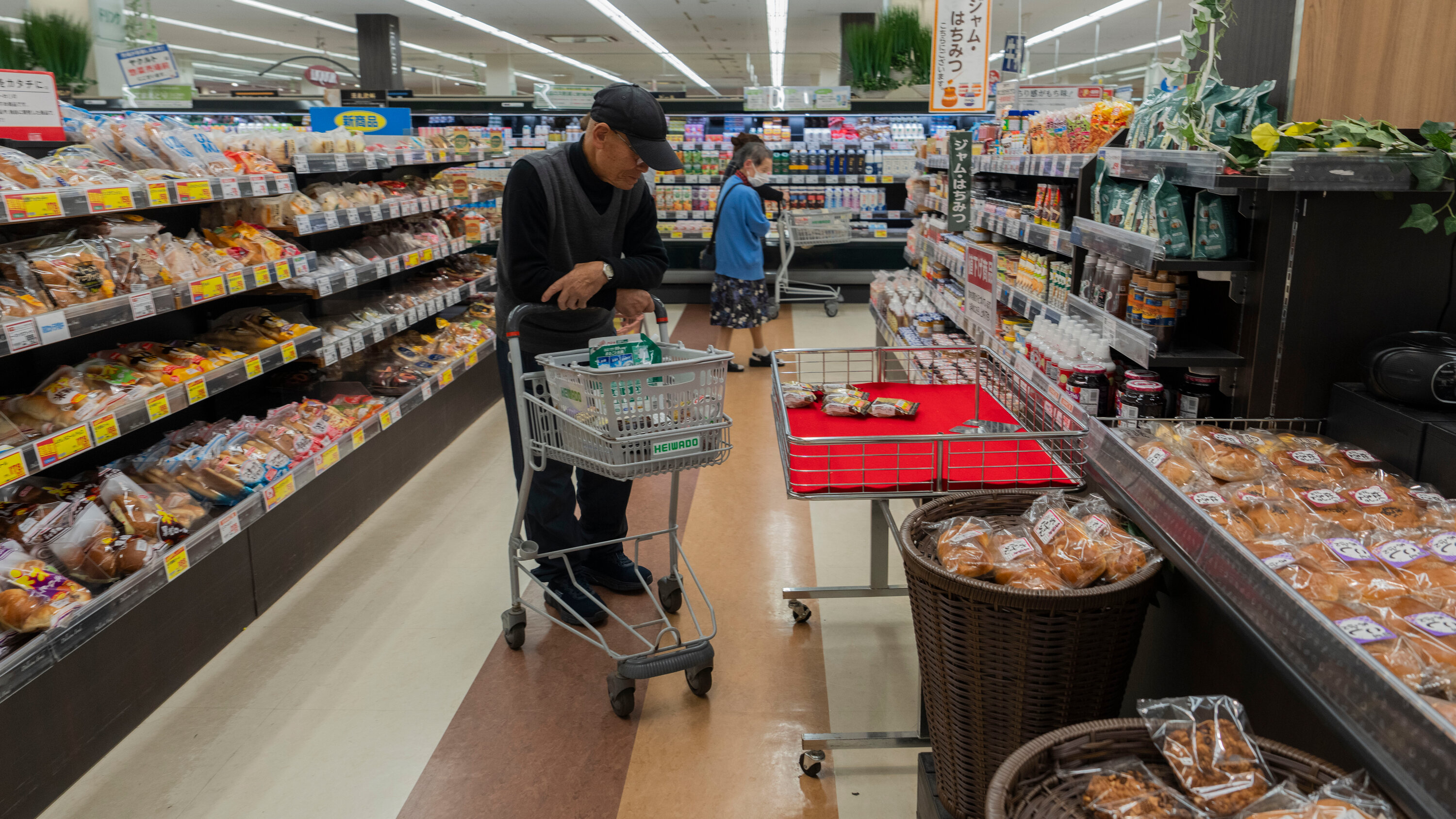
Listen to this articleEstimated 6 minutesThe audio version of this article is generated by AI-based technology. Mispronunciations can occur. We are working with our partners to continually review and improve the results.The old world is dying and a new era of global instability beckons. But first, the groceries."For many Canadians, the cost of groceries and everyday essentials has been too high for too long. They need more support now," Prime Minister Mark Carney conceded on Monday morning, speaking at a grocery store in Ottawa, almost exactly a week removed from his landmark speech in Davos, Switzerland.The cost of food is no small thing. Indeed, for many Canadians it is the main thing. And for too many, the cost of food has become too much. The Liberal government's answer, Carney explained, is to provide a "boost" to those most in need, while building a "bridge" in the longer term to "food security and affordability."The boost is an increase in the GST credit — now styled as the "Groceries and Essentials Benefit" — which is targeted toward Canadians on the lower end of the income scale. The bridge includes a number of policies to support businesses dealing with trade disruptions and boost domestic production. The government also says it is developing a national food security strategy, which will include measures to monitor and enforce competition in the food sector.WATCH | GST top-up will help families most in need, Carney says:Prime Minister Mark Carney announced Monday the government would launch the new Canadian Groceries and Essentials Benefit, including an increase to the GST credit, which returns a portion of the federal sales tax to Canadians with lower incomes. Carney said the benefit will provide 'relief for people who feel that extra cost at the checkout most acutely.'Returning to Ottawa for Parliament's first day of business in 2026, the Conservatives were largely unimpressed, dismissing the GST credit boost as an ineffective and insufficient policy that merely repeats something Justin Trudeau's government did. Granted, the Conservatives also said they would vote in favour of legislation to implement it.This debate is ultimately, of course, about an Official Opposition that wants the government to take the blame for higher grocery prices and a government that would rather avoid that. While the threat posed by U.S. President Donald Trump looms large, the cost of living continues to be the top concern when Canadians are asked what's worrying them.But the two parties are also talking about different things, even when they are both talking about the price of groceries.To explain the rise in prices, the Liberals point to external factors."The pandemic caused inflation to spike worldwide, pushing up those costs of groceries and essentials," Carney explained on Monday. "Global supply chain shocks, subsequently, shocks caused by tariffs, weather events from our changing climate and geopolitical disruptions have caused food prices to rise faster than overall inflation."The price of beef has been blamed on drought conditions in Western Canada. A sharp increase in coffee prices has been linked to climate change and American tariffs. A spike in the price of lettuce late last year has been attributed to conditions in southern California. (All three items featured in a graphic Conservative Leader Pierre Poilievre posted to social media last week.)Of course, that food prices are being driven higher by forces that are largely outside the immediate control of the federal government is an argument that can only, at best, buy a government some time and space to figure out what can be done to address the problem.WATCH | Poilievre calls Carney measure a 'Trudeau-era rebate':Conservative Leader Pierre Poilievre says he’ll back the Liberal GST rebate but criticized the policy during question period on Monday, calling it a 'Trudeau-era rebate' that will 'barely cover a few trips to the grocery store.'
The Conservatives argue that since food-price inflation was recently higher in Canada than in other G7 nations, there must be something about the domestic situation that is driving up prices."Will the prime minister finally reverse his inflationary deficits and taxes so Canadians can afford to eat?" Poilievre asked at question period on Monday afternoon.The Conservatives blame a number of measures, including federal clean fuel regulations and the federal carbon price on industrial emissions. But on the latter policy an expert analysis published in December found that "emissions pricing at $80 per tonne could potentially increase the cost of domestically produced food by approximately 0.8 percent on average." (According to Statistics Canada data, grocery prices were up five per cent annually in December.)Conservatives previously blamed the carbon tax for higher grocery prices. But that policy was withdrawn last spring without apparently solving the problem.As for the federal government's deficit spending, a recent analysis published by Desjardins suggested federal deficits have had a relatively modest impact on inflation in Canada. And while Conservatives might not want to be seen opposing a boost to the GST credit, those changes will come at a cost to the federal treasury — which will, in turn, make it harder to balance the budget.This debate over what's primarily to blame for food prices matters not only for the politics of grocery prices, but also obviously for the sake of actually addressing the problem. If a diagnosis is wrong, the proposed remedy is unlikely to do much good.In an interview with iPolitics, Tyler Meredith, a former policy adviser in the Trudeau government, pointed to the Carney government's promise to require unit price labelling as a step that could have a meaningful benefit for consumers.Mike von Massow, a professor in the department of food agricultural and resource economics at the University of Guelph, says he would focus on boosting domestic production and diversifying Canada's suppliers."What I would be doing in the long term is building climate resilience, building some supply chain diversification that protects us not only from things like climate change, but also … give us some resilience to geopolitical uncertainty."For as long as food prices are going to remain volatile, and as much as that might impact Canadian politics, a serious debate along these lines is needed — at least as serious as the debate that is being had about a newly threatening world.