Scientists use AI to create a virus never seen before
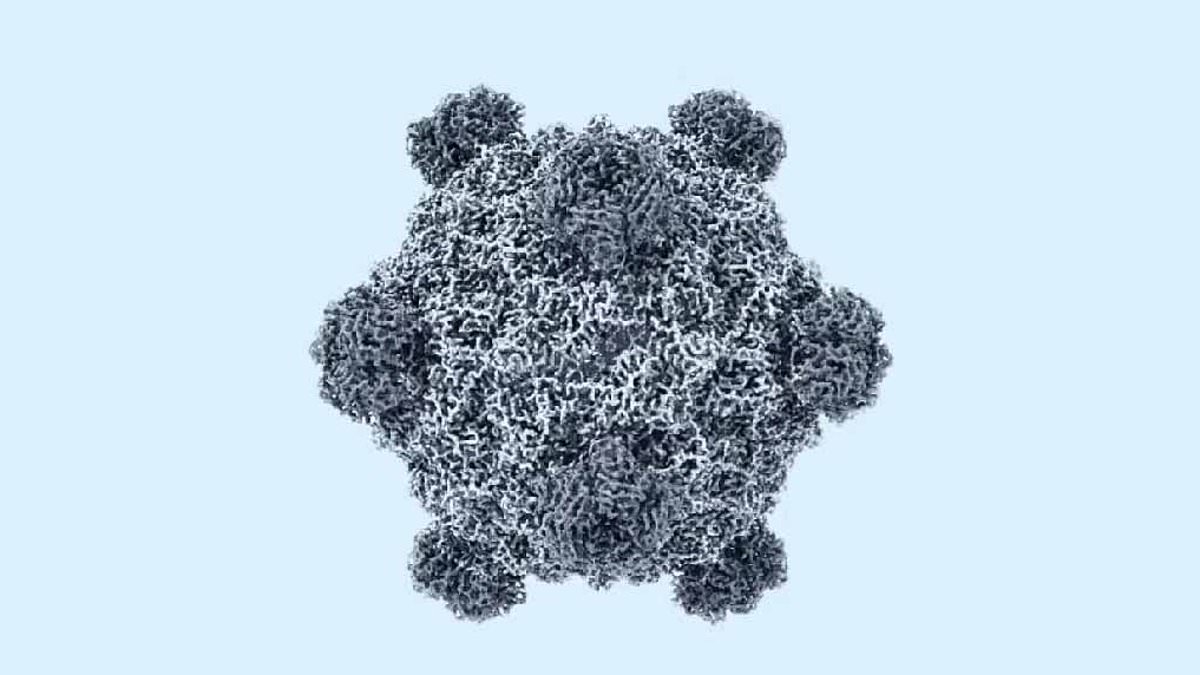
Lab–grown life has taken a major leap forward as scientists use AI to create a new virus that has never been seen before.The virus, dubbed Evo–Φ2147, was created by scientists from scratch using new technologies that could revolutionise the course of evolution.With just 11 genes, compared to the 200,000 in the human genome, this virus is among the simplest forms of life.However, scientists believe that the same tools could one day create entire living organisms or resurrect long–extinct species.This artificial virus was specifically created to kill infectious and potentially deadly E. Coli bacteria.Based on a wild virus known to infect bacteria, scientists used an AI tool called Evo2 to create 285 entirely new viruses from scratch.While only 16 were able to attack the E. Coli, the most successful were 25 per cent quicker at killing bacteria than the wild variants.However, previous research has raised concerns that AI–designed pathogens could themselves become a deadly threat to humanity. Scientists have made a major breakthrough towards creating artificial life, as they use AI to create a new virus that never existed in nature (pictured)This incredible breakthrough comes from the work of scientists at Genyro, a startup led by British scientists and entrepreneur Dr Adrian Woolfson.Dr Woolfson told the Daily Mail: 'For the last 4 billion years, all life on Earth has evolved by the trial-and-error process of Darwinian evolution by natural selection, which lacks any foresight or intention.'Natural evolution now has a co-author. That co-author, the emerging ability of AI-driven genome design and genome construction technologies, has the potential to exist alongside natural evolution.' This has been made possible by the simultaneous development of two technologies: AI that can write genetic code, and new tools for assembling genes in the lab.The AI tool Evo2 is much like the large language model chatbots ChatGPT and Grok, except that it has been trained on genetic codes rather than written text.Evo2 was trained on nine trillion 'base pairs' – the individual As, Cs, Ts, and Gs that are the basic materials of DNA – to teach it how genes are put together.This allows Evo2 to create entirely new codes for organisms that have never existed, specifically shaped to fit their designer's requirements.Join the debateDoes the speed at which AI can design new life worry YOU? This breakthrough comes from the scientists at Genyro, led by British scientist and entrepeneur Dr Adrian Woolfson. Pictured: (left to right) Co–founders Noah Robinson, Kaihang Wang, Adrian Woolfson, and Brian Hie How do you make a new virus in the lab? Scientists train an AI on trillions of pieces of genetic information.The AI, called Evo2, creates a sequence of DNA base pairs that gives the genetic code for a new virus.The scientists use a technology called Sidewinder to create small building blocks of DNA.Sidewinder attaches 'page number' labels to the building blocks so they can be put in the right order.The pieces are assembled into DNA, and the 'page numbers are removed'.The DNA is inserted into a bacterium, which is then hijacked to start producing the new virus. At the same time, scientists have also created a new method for putting together artificial genomes, known as Sidewinder.In the past, putting together an artificial genome was like trying to put the torn–up pages of a book together – it's possible, but only if you know what order they are supposed to be in.Dr Kaihang Wang, inventor of the technology and assistant professor at the California Institute of Technology, compares Sidewinder to adding page numbers to these torn–up fragments.Dr Wang told Pharmaphorum: 'In order to have a book, not only do we need to have the printed each individual page, you also need to arrange them into the correct order to form the book, right?'And before us, DNA construction was kind of like in the era of you have the printing press, but you don't have the other thing called a page number to actually align and assemble the books in the right order.'Thanks to this new technology, scientists can make long sequences of DNA in the lab with 100,000 times more accuracy.That could make constructing artificial genomes 1,000 times cheaper and 1,000 times quicker.With Sidewinder and Evo2, scientists now have the potential to create entirely new forms of life in just days, rather than weeks or months. The scientists used an AI programme called Evo2 to design a virus capable of killing antibacterial–resistant E. Coli Right now, the virus Evo–Φ2147 is just about as complex as anything that scientists are able to create.With just 5,386 base pairs of DNA code compared to the 3.2 billion found in humans, this virus is incredibly simple and isn't even considered living by some experts since it can't reproduce on its own.However, this is an extremely exciting moment for researchers attempting to tackle the growing threat of antibiotic resistance.Dr Samuel King and Dr Brian Hie, co–creators of the new virus, wrote in a blog post: Bacterial resistance to antibiotics represents one of the most pressing challenges in modern medicine, with resistant infections killing hundreds of thousands or more annually.'We wanted to see if we could one day design phage therapies that could be resilient against bacterial evolution.'In the future, the researchers hope that these technologies could be used to create antibacterial treatments or speed up the design and production of vaccines.Dr Woolfson says: 'This has immediate utility in the production of so-called personalised cancer vaccines. These typically take eight to 12 weeks to manufacture, but with the Sidewinder technology that we have developed, we anticipate being able to do this in two to three days' However, experts have previously suggested that the use of AI has the potential to speed up the production of bioweapons as well as medicines. In the future, the scientists say this technology could be used to make new treatments for bacterial infections and cancers In a paper published last year, researchers used AI to design proteins that could mimic deadly poisons and toxins such as ricin, botulinum, and Shiga.They found that a large number of these weaponizable DNA codes could slip past the safety filters used by companies that print custom DNA sequences on demand.The researchers did this to demonstrate how our current biosafety tools might not be ready for the widespread availability of AI–designed life.Likewise, experts on existential risk have warned that designing bioweapons is one of the most dangerous potential applications of AI. The Existential Risk Observatory, which monitors threats to humanity's survival, considers an AI–designed plague to be one of the five biggest risks the world faces.To avoid these new tools being used for dangerous means, the researchers behind Evo2 specifically removed examples from the training data that could teach the AI how to make human pathogens.Dr King and Dr Hie write: 'Evo cannot generate human viral sequences due to deliberate training data exclusions, preventing both accidental and intentional misuse for pathogen design.'Elon Musk's hatred of AI explained: Billionaire believes it will spell the end of humans - a fear Stephen Hawking shared Elon Musk pictured in 2022Elon Musk wants to push technology to its absolute limit, from space travel to self-driving cars — but he draws the line at artificial intelligence. The billionaire first shared his distaste for AI in 2014, calling it humanity's 'biggest existential threat' and comparing it to 'summoning the demon'.At the time, Musk also revealed he was investing in AI companies not to make money but to keep an eye on the technology in case it gets out of hand. His main fear is that in the wrong hands, if AI becomes advanced, it could overtake humans and spell the end of mankind, which is known as The Singularity.That concern is shared among many brilliant minds, including the late Stephen Hawking, who told the BBC in 2014: 'The development of full artificial intelligence could spell the end of the human race.'It would take off on its own and redesign itself at an ever-increasing rate.' Despite his fear of AI, Musk has invested in the San Francisco-based AI group Vicarious, in DeepMind - which has since been acquired by Google - and OpenAI, creating the popular ChatGPT program that has taken the world by storm in recent months.During a 2016 interview, Musk noted that he and OpenAI created the company to 'have democratisation of AI technology to make it widely available'.Musk founded OpenAI with Sam Altman, the company's CEO, but in 2018 the billionaire attempted to take control of the start-up.His request was rejected, forcing him to quit OpenAI and move on with his other projects.In November, OpenAI launched ChatGPT, which became an instant success worldwide.The chatbot uses 'large language model' software to train itself by scouring a massive amount of text data so it can learn to generate eerily human-like text in response to a given prompt. ChatGPT is used to write research papers, books, news articles, emails and more.But while Altman is basking in its glory, Musk is attacking ChatGPT.He says the AI is 'woke' and deviates from OpenAI's original non-profit mission.'OpenAI was created as an open source (which is why I named it 'Open' AI), non-profit company to serve as a counterweight to Google, but now it has become a closed source, maximum-profit company effectively controlled by Microsoft, Musk tweeted in February.The Singularity is making waves worldwide as artificial intelligence advances in ways only seen in science fiction - but what does it actually mean?In simple terms, it describes a hypothetical future where technology surpasses human intelligence and changes the path of our evolution.Experts have said that once AI reaches this point, it will be able to innovate much faster than humans. There are two ways the advancement could play out, with the first leading to humans and machines working together to create a world better suited for humanity.For example, humans could scan their consciousness and store it in a computer in which they will live forever.The second scenario is that AI becomes more powerful than humans, taking control and making humans its slaves - but if this is true, it is far off in the distant future.Researchers are now looking for signs of AI reaching The Singularity, such as the technology's ability to translate speech with the accuracy of a human and perform tasks faster.Former Google engineer Ray Kurzweil predicts it will be reached by 2045.He has made 147 predictions about technology advancements since the early 1990s - and 86 per cent have been correct.