The 16 top things to do in Tokyo
Tokyo is the megacity that other world capitals look up to. Nowhere else has quite the same mix of timeless history and space-age tech, of strict tradition and up-to-the-second fashions, of bewildering crowds and moments of utter serenity. It's the past and future of Japan wrapped up together into one thrilling package – and, understandably, it's one of the top tourist destinations on the planet.Deciding what to do in a city as vast and complex as Tokyo can take some planning. You can spend your days shopping for next-century electronics in futuristic malls or find inner peace in timeless temples and serene zen gardens. After dark, devote evenings to high culture, sipping sake in back-alley bars, or clubbing with the cosplay set, dressed up as a manga superhero.To maximize the experience on your first trip to Tokyo, here are our favorite things to do.How to enjoy the best things to do in TokyoThe first thing to consider is your budget. The Japanese capital is famously expensive, as well as being famously expansive, but there are plenty of budget experiences and free things to do in Tokyo that can help you keep a cap on costs. Plan time at free-to-visit parks, temples and viewpoints, alongside ticketed museums and attractions, and take time for inexpensive food market lunches, alongside pricey sit-down dinners. Tokyo covers a huge area – this is the third-biggest city in the world by population – so it pays to explore neighborhood by neighborhood, zipping around by bus, train or subway if you're watching your budget. While it can be a little daunting diving into Tokyo's complex public transport system for the first time, getting around in Tokyo is easy once you master the basics.And there's plenty to do in Tokyo with kids in your party, from the famous Ghibli Museum to the city's Disneyland and DisneySea theme parks. Shopping for nicknacks from the city's kawaii ("cute") culture will keep kids happy for hours. The ornate frontage of the Kabukiza theater in Ginza, Tokyo. kuremo/Shutterstock
Advertisement
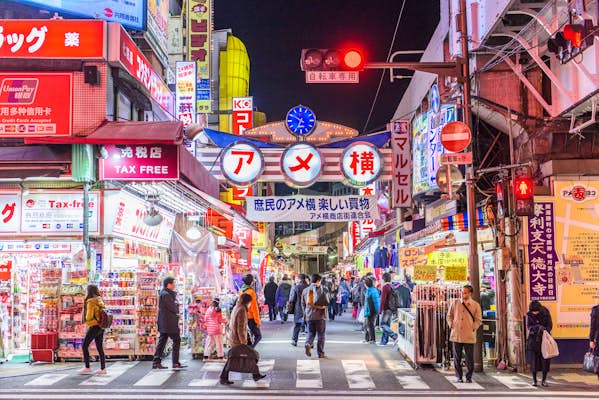
1. Experience a traditional Japanese art formOne of Asia's most iconic cities, Tokyo only became the capital of Japan in 1868, but it expanded rapidly, becoming the beating heart of Japanese commerce, cuisine and culture. But while famed for its futuristic skyline and robot-run hotels and restaurants, Tokyo retains its deeply traditional heart, best experienced through the arts.Don't miss kabuki – a form of Japanese theater based on popular legends, which is characterized by elaborate costumes, stylized acting and the use of male actors for all roles. Book tickets ahead for the Kabukiza theater in Ginza, and read up on the artform before you attend a show; kabuki is full of small details that are easily missed by first-time visitors.For immersion into Japan's food culture, head to Asakusa, a neighborhood that keeps the old traditions of Tokyo alive, for a multicourse kaiseki meal – a Japanese form of haute cuisine that follows very strict rules of etiquette for every detail – with entertainment provided by performing geisha.Planning tip: Book your Asakusa kaiseki and geisha experience in advance through Japan Awaits. Manga billboards in Tokyo's Akihabara district. Eakkarat Rangram/Shutterstock 2. Dive into the fun of Akihabara's pop cultureThe Akihabara neighborhood is almost a pilgrimage destination for the city's otaku (die-hard pop-culture fans), who define their lives through themes of geeky nostalgia and artistic eccentricity. Flanking Akihabara's main avenue, Chūō Dōri, are stores full of secondhand video game consoles, towering gaming arcades and manga comics stores, as well as flagship anime (Japanese animation) merchandise shops. If you’re on the hunt for old-school video game treasures, peruse the bountiful shelves of Retro Game Camp and Super Potato Retro-kan.Planning tip: You don't have to be obsessed with manga or anime to enjoy this quirky neighborhood. With its neon-bright electronics stores, retro arcades, cosplay cafes – and the chance to drive go-karts through the streets – it's equal parts sensory overload, cultural immersion and just plain fun. Lunch at Tsukiji fish market in Tokyo. Allen.G/Shutterstock 3. Taste the Pacific at Tokyo’s fish marketsBestowed with the honorary title of "Japan’s Kitchen," Tsukiji was formerly the location of the city's most famous fish market. In 2018, the bulk of the wholesale fish-selling shifted to Toyosu Market on Tokyo Bay, but there's still plenty of action at Tsukiji, where the outer market area remains much as it was in the early Shōwa Period when the market was founded.The market's cramped alleyways are still permeated by the saline smells of the Pacific. A rainbow menagerie of sea creatures decorates the market stalls here daily, and octogenarian fishmongers hail passersby with promises of culinary delights, some ready to eat on the spot.Over at Toyosu, the largest seafood market in the world conducts its business inside huge ventilated hangars in Kōtō Ward. Built as a state-of-the-art upgrade to Tsukiji, it lacks the rustic charm of its predecessor, functioning more as a commercial seafood trading floor. However, it’s home to Tokyo’s legendary morning tuna auctions – a great addition to any Tokyo itinerary for early risers.Planning tip: Must-eats at Tsukiji include fist-sized seared scallops, tamagoyaki (rolled omelets) and uni (sea urchin). Digital art at Borderless: MORI Building Art Museum in Tokyo. KenSoftTH/Shutterstock 4. See cutting-edge digital art at teamLab BorderlessThe modern art collective, teamLab, has made Tokyo the focal point for its ultra-technological experiments in art and digital media. Engage with its digital creativity at Borderless: MORI Building Digital Art Museum, set in the Azabudai Hills development near the Tokyo Tower. Inside this 21st-century space, shapeshifting light and sound effects explore themes centered on human experience. This is a showcase of spectacular interactive installations and absolutely not to be missed. Digital art is trending all over Tokyo, and you'll see it worked into many other attractions around the city.Planning tip: While you're in the Roppongi area, there's more art (both historic and modern) on display at the Suntory Museum of Art and the National Art Center, Tokyo. The mirrored entrance to Tokyu Plaza in Harajuku. nuu_jeed/Shutterstock 5. Join the shopping legions at Omote-sandō and HarajukuThe tree-lined avenue of Omote-sandō is famed for blending modern Japanese aesthetics with Western hipster trends. This vibrant thoroughfare, lined with zelkova trees, is dominated by high-end boutiques from Emporio Armani to Gucci, housed behind jarringly creative architectural facades. The Tokyu Plaza, with its fractured mirror entrance, is particularly alluring.The backstreets of Harajuku are Tokyo's street-fashion laboratory. This is where you'll find the trendsetters, the peacocks and the style photographers who chronicle it all – alongside the vintage clothing stores staffed by resident bohemians that keep everything moving.Planning tip: Continuing the hipster theme, hit B-Flat COMMUNE for lunch, a large outdoor canopy surrounded by food trucks serving favorite Japanese street bites, alongside vegan cuisine and craft beer.
Advertisement
Top sumo wrestlers at a competition in Tokyo. J Henning Buchholz/Shutterstock 6. Enjoy the big thrill of live sumoOne of the most enduring elements of Japan’s spiritual culture, sumo wrestling originated in the early Nara Period (710–794 CE) when bouts between wrestlers were conceived as a way to entertain the Shintō gods.Although sumo is undeniably a sport in the modern age, much of the religious pageantry lives on – the salting of the pre-bout ring, the almost ascetic dedication of wrestlers, and the reverential regard in which yokozuna (grand champions) are held. If you’re lucky enough to nab a ticket for a major competition, mentally prepare yourself for rice wine, impassioned crowd support and highly audible slaps of belly on belly.Planning tip: Sumo has six live annual events, three of which take place in Tokyo’s Ryōgoku Kokugikan in January, May and September. Tickets typically sell out well in advance, so keep your eye out online for ticket release dates. Omoide Yokochō, near Shinjuku station. Marcus Morgan/Shutterstock 7. Enjoy a pub crawl in Tokyo's yokochō alleywaysLined with small bars and restaurants, Tokyo's traditional yokochō (alleyways) are as much a part of the city's culture as its futuristic urban design. Shinjuku’s Golden Gai is the most popular yokochō zone, with 250-plus ramshackle pubs crammed into an area the size of a football field (including a vibrant collection of LGBTIQ+ dance bars).Nomiya Yokochō is a less-touristy option in off-beat Kita-Senju, with a new wave of foreign restaurants joining the charmingly claustrophobic chaos of its traditional bars. Alternatively, check out Kichijoji’s Harmonica Alley, a network of corridors filled with the crackle of meat skewers cooking on open grills and the swoosh of bars pouring draft glasses of Asahi.Planning tip: Finish the evening at full volume at one of the nearby karaoke parlors. Experiencing karaoke in the country where it was born is an unforgettable experience. Stylishly presented sushi in Tokyo. norikko/Shutterstock 8. Eat Michelin-starred Japanese cuisineWashoku – the traditional food of Japan – was designated an intangible element of cultural heritage by UNESCO in 2013, and Tokyo is the standard-bearer of the national cuisine. Nearly 170 Michelin stars have been awarded to restaurants across the capital, including some serving multi-course haute cuisine menus that will burn a fairly sizable hole in your retirement fund.Modern fine dining is typified by Florilège, a double Michelin-starred French-Japanese fusion, where tasting menus are prepped in the culinary theater of an open kitchen, or try unagi (eel) at family-run Nodaiwa Azabu Iikura Honten.Planning tip: Book well ahead for Michelin-standard cuisine in Japan – many prestigious, big-name eateries open bookings two months in advance, and tables fill up quickly. The Shibuya Crossing, one of the busiest crosswalks in the world. Sean Pavone/Shutterstock 9. Marvel at the crowds at Shibuya crossingShibuya serves up the Tokyo you’ve dreamed about and seen in movies: the frenetic pace, the mind-boggling crowds, the glowing lights and the giant video screens beaming larger-than-life celebrities over the streets. At the district’s famous "scramble" road crossing, all of this comes together every time the lights change, and it’s an awesome sight.Planning tip: Come during the day to get the perfect overhead photo from a nearby rooftop, or visit on a Friday or Saturday night, when you'll find the volume turned up to 11. Picknicking under the cherry trees in Yoyogi-kōen park in Shibuya. KanokpolTokumhnerd/Shutterstock 10. See the cherry blossoms in Yoyogi-kōenCome spring, thousands of cherry trees around the city burst into white and pink flowers, ushering in the season for hanami (cherry-blossom viewing). If Tokyoites have one point in the year where they can let their hair down en masse, this is it. Locals gather in huge numbers in parks and along river banks for cherry blossom-viewing parties under a canopy of pink and white flowers.Grassy Yoyogi-kōen, one of the city's largest parks, is where you'll find some of the most spirited and elaborate bacchanals, complete with barbecues, sake-sipping and DJ turntables. Many revelers stay long after dark for the spectacle of yozakura (illuminated blossoms at night).Planning tip: There are many more spots to view the annual spectacle; Visit Tokyo publishes an annual guide on their website. Snow surrounding the Sensō-ji temple in Asakura. Martinho Smart/Shutterstock 11. Engage with Japanese spirituality in Sensō-jiThe spiritual home of Tokyo's ancestors, the Buddhist temple of Sensō-ji in Asakura was founded more than 1000 years before the city got its official start. While engulfed by the urban sprawl today, it retains an alluring, timeless atmosphere redolent of the height of the Edo period and the mercantile bustle that defined Tokyo's golden age.The main plaza holds a tall pagoda, renovated in 2017, and a giant cauldron of incense kept constantly smoking by the crowds of visitors who throng the compound daily, particularly at weekends. Altogether, Sensō-ji is a heady mix of the secular and sacred and one of Tokyo's most iconic sights. Planning tip: Pick up snacks and souvenirs from vendors in the colorful Nakamise-dōri arcade leading to the temple complex. The greenery-covered exterior of the Ghibli Museum in Tokyo. cowardlion/Shutterstock 12. Immerse yourself in a cartoon world at the Ghibli MuseumEven those unfamiliar with the magical world of master animator Miyazaki Hayao – creator of anime classics including Princess Mononoke, My Neighbor Totoro and Spirited Away – will find this museum, enchanting. Fans just won't want to leave. Miyazaki designed the space himself, and like his films, it's filled with whirring steampunk-esque machines and fairy-tale structures. While you won't see staff cosplaying any characters, many famous Ghibli characters have been cleverly worked into the fabric of the museum. Walking around really does feel a bit like falling into the fantasy worlds created by Miyazaki Hayao.Planning tip: Tickets can be purchased up to four months in advance from overseas
travel agents or up to one month in advance through the online ticket portal of convenience store Lawson's. Green scenery in the Rikugi-en garden in Bunkyō Ward. Paolo Gianti/Shutterstock 13. Find your calm in Rikugi-enPowerful daimyo (feudal lords) ruled much of Japan from the 10th to the 19th centuries, but in Tokyo – a city stricken over the centuries by rampaging fires, earth-shattering quakes, bombing raids and poor upkeep of traditional architecture – few visible remnants of their influence remain.One place to look for the powerful magic of old Tokyo is at Rikugi-en, a garden in Bunkyō Ward. Designed by Yanagisawa Yoshiyasu, lord of the Kawagoe estate, around the turn of the 17th century, this is a bucolic splotch of green amid the crush of urban Tokyo.Mossy footpaths, waka (31 syllable) poetry-inspired spiritual masonry, mirror-like ponds and cobblestone bridges are joined by shifting autumn foliage and a resplendent weeping cherry tree in spring. Come and step back through a few centuries.Planning tip: Free guided tours in English lasting one hour leave at 11am and 2pm on the first and third Sundays of each month. The Meiji-jingu shrine in Shibuya. Nina Alizada/Shutterstock 14. Discover the secrets of Shintō at Meiji-jingūTokyo’s largest and most famous Shintō shrine feels a world away from the bustle of the modern city. It’s reached via a long, rambling forest path marked by towering torii (entrance gates), and its grounds are vast, enveloping a series of wooden shrine buildings and landscaped gardens enveloped by a thick coat of greenery. Meiji-jingū is a place of worship and a memorial to Emperor
Meiji, and it’s also a place for traditional festivals and rituals,
where weddings are held and milestones are celebrated – something you
might catch if you time your visit right.Planning tip: See a different side to Tokyo culture at nearby Yoyogi-kōen park. On Sunday afternoons, a legendary troupe of rockabilly dancers performs near the Harajuku entrance. A view of the Tokyo Tower in Minato, Tokyo. Ned Snowman/Shutterstock 15. Get a view over TokyoTo really appreciate the scale of the Japanese capital, you have to see it from above. Built in 1958, the Tokyo Tower eclipses the Eiffel Tower – a building it closely resembles – at 333m tall. This red-and-white communications tower offers sweeping city views from two observation decks. If you’re feeling adventurous, get bonus views on the 600-step outdoor staircase climbing to the 150m-high Main Deck.For even loftier views, the Top Deck sits at 250m, but tickets are about twice the price of the Main Deck (buy them ahead online for a small discount). Another place to head to for a view is the Tokyo Skytree – the tallest free-standing tower in the world when it opened in 2012. Again, you have a choice of two observation decks looking out from this 634m-high broadcasting tower. Planning tip: For a view toward the Tokyo Tower, head to Shiba Park, a 30-minute walk from central Roppongi, where you can also visit the Zōjō-ji Buddhist temple. The summit of Mt Fuji viewed from Mt Takao. fab images/Shutterstock 16. Take a day trip by trainJapan's world-class railway system opens up some highly rewarding day-trips from Tokyo. High-speed rail lines mean you can get a taste of the countryside just an hour from the city center. For a view of Mt Fuji, choose a clear day and head to 599m Mt Takao. A 2-hour hike (or half that, if you take the cable car for the opening section) will unveil resplendent views of Japan's most famous peak, passing through a scenic woodland that comes alive with sakura (cherry blossom) in springtime.For a less strenuous day trip, take the JR Yokosuka Line from Tokyo Station to Kamakura. This coastal town temporarily replaced Kyoto as the seat of power in Japan from 1185 to 1333, leaving historic relics such as the magnificent Tsurugaoka Hachimangu Shrine and the Kencho-ji and Hokoku-ji Zen temples. Perhaps the highlight is the Daibutsu, an 11.3m-high bronze statue of Buddha resting serenely at Kotoku-in Temple.Planning tip: Short train trips are inexpensive compared to Japan's longer-distance shinkansen (bullet train) routes; pay for rides using an IC card (Suica or Pasmo) for convenience.





Comments (0)