Poorly performing police forces to be named and shamed under new plans
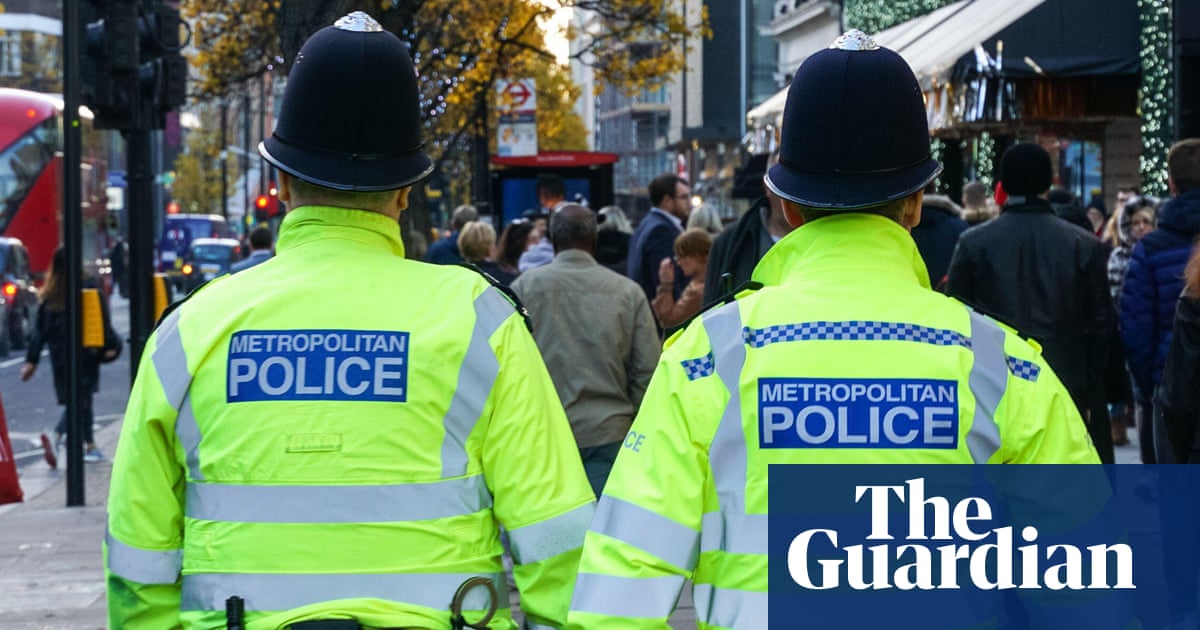
Police forces will face new targets for crime fighting and those performing poorly will be named and shamed under government plans to take sweeping powers over law enforcement.The new plans come as part of changes to policing in England and Wales to be announced on Monday by the home secretary, Shabana Mahmood. The Home Office claims the reforms are the biggest in two centuries.But one serving chief told the Guardian: “It’s a power grab by national politicians for influence in policing.”Among the changes are targets for forces on how quickly they respond to emergency calls, the satisfaction of crime victims with the service they receive, and public trust and confidence in their local force.A source said the results would be published on a dashboard, so people could compare their area to others.Nationally set targets were introduced under the Blair government, but fell out of favour and were abolished in 2011 when the Conservative-led coalition was in power.The reforms generally have broad support from police chiefs, but some of the measures are more controversial.One said national targets, with forces potentially ranked in league tables, could lead to perverse incentives. “People worry about their position in league tables as opposed to the quality of service,” they said. “What gets measured gets done, and what does not get measured does not get done.”Another chief in a different part of England said: “You can hit the target and miss the point.”As part of boosting crime fighting, the home secretary will take powers to intervene directly in forces by sending in special teams. The Home Office gave the example of a force where crime clear-up rates are low having teams sent in from another force where they are higher.The home secretary will also take powers to oust chief constables deemed to be failing.Since 2011, policing powers have been devolved locally, with elected police and crime commissioners (PCCs) in charge of priorities and budgets, chief constables given operational control, and central government having limited powers. PCCs will be abolished by 2028.View image in fullscreenHome secretary Shabana Mahmood has described her approach in private to police reform as ‘we go large, or we go home’. Photograph: Andy Rain/EPAThe philosophy of Labour’s reforms is that it is right that the centrally elected government holds policing accountable, and current localised systems have been ineffective at doing so.Mahmood said: “It is essential that the people can determine what they expect from their forces.“I will make police forces accountable to parliament – driving up standards so they fight more crime in their communities.”The white paper containing the reforms, being officially trailed ahead of its unveiling to parliament on Monday, is called: “From local to national: a new model for policing.”Sources said it will cost £500m over three years, and police chiefs who support it believe the upfront expense will be recouped through savings.The Guardian reported last April that police chiefs had asked government for a new national centre for policing to include counter-terrorism and the fight against serious and organised crime. In July, they asked for fewer forces.Mahmood has privately described her approach to police reform as: “We go large, or we go home.”She is expected to back a “significant” cut in the 43 forces currently carrying out local policing in England and Wales, but not announce a number the government backs. A commission will instead review the issue and suggest which forces should merge, with chiefs supporting a number between 12 and 15.One chief welcomed government pledges to protect and enhance neighbourhood policing in the reforms, but warned recent results showed problems in bigger forces, with smaller ones clearing up more crime. “Big forces don’t necessarily improve performance,” they said.Implementation of force mergers and abolitions could be years away, and one chief said: “It feels like it is being kicked into the long grass.”Mergers are at risk from many factors, including local sensibilities and cultures.The PCC for Devon and Cornwall released a survey showing 66% want the force to stay as it is, with only 18% preferring a bigger regional force and just 1.5% wanting Cornwall to get its own police officers.One source suggested a reason some people in Cornwall might want little to do with their neighbours in Devon: “They think they are too English.”