Inside the crisis of stalking and harassment in women's football
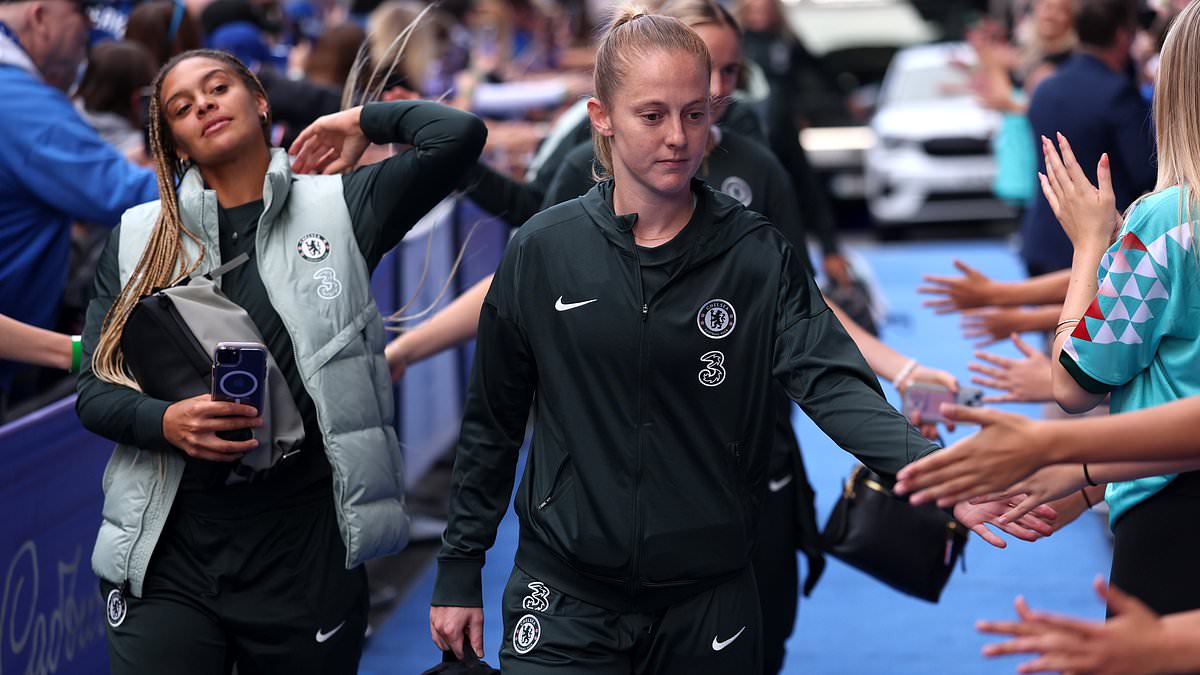
Take a trip to Manchester United Women’s stadium on a matchday and fans will see their heroes park their cars in front of them before strolling into the ground, keys swinging.At Chelsea’s Kingsmeadow, one player has been known to arrive by bicycle, skidding to a halt on the asphalt – once even narrowly avoiding colliding with a match official much to the amusement of those nearby – before hopping off and heading into the changing rooms.During games at some of these smaller grounds, it can feel as if the crowd is spilling on to the pitch. When Arsenal needed a performance to rescue their Champions League campaign last season, Gunners boss Renee Slegers insisted the ‘intimacy’ of playing at Meadow Park helped her team get the victory.After the final whistle, players spot familiar faces among a crowd of families, friends, children and everyone in between. They hand over shirts, boots and gloves, sign programmes, and thank supporters for being there.These are just a few of the elements that make the women’s football match day experience so unique for fans – and marketable for those who are looking to grow the game.What these days should not, and must not, involve for the players, however, is any sense that this intimacy is being exploited by certain individuals for their own personal agendas. Liverpool's Marie Hobinger described how 42-year-old businessman Mangal Dalal’s incessant inappropriate and sexualised messaging on social media corrupted her match-day experience After alerting her club to the messages, Hobinger was assigned a safety officer, and Dalal was later arrestedEarlier this week, Marie Hobinger, a midfielder for Liverpool Women, described how 42-year-old businessman Mangal Dalal’s incessant inappropriate and sexualised messaging on social media – first on her public posts and then in her inbox – had corrupted her matchday experience.Over three weeks, he sent her messages on Instagram claiming he loved her and wished they had slept together, before taking a train from London to Manchester to attend one of her games. After alerting her club to the messages, Hobinger was assigned a safety officer, and Dalal was arrested after being spotted in the crowd.‘I felt uncomfortable and my thoughts were not on my game as much as they should have been,’ Hobinger said in her victim impact statement, read out at Dalal’s sentencing at Westminster Magistrates’ Court on Tuesday.‘When fans were taking pictures from the crowd it made me feel insecure about who was taking them. I love matchdays and this should be a time when I should be feeling confident and strong.‘It makes me sad that women’s football is sexualised and disrespected. No woman, no matter what her job is, should have to put up with this type of behaviour.’Dalal was handed an 18-month community order and a two-year restraining order for stalking the 24-year-old Austrian international. While there is no automatic right to anonymity for victims in cases of this nature, the CPS opted to name Hobinger – despite frustration from her club about spotlighting her ordeal – in the hope of deterring others.Unfortunately, Hobinger's case is merely the tip of the iceberg. As the profile of the women’s game continues to rise, abuse towards female athletes is becoming an increasingly significant issue and, as Hobinger’s experience shows, one that is spilling from the digital realm into the real world.It would be misleading to suggest that abuse is confined to the women’s game. Male footballers have long been subjected to torrents of hostility, often racialised and frequently extreme. The experiences of Bukayo Saka, Jadon Sancho and Marcus Rashford following the Euro 2020 final, or former Bournemouth forward Antoine Semenyo earlier this season at Anfield, speak for themselves. Sjoeke Nusken of Chelsea arrives at Kingsmeadow ahead of a recent match. At the smaller grounds many WSL sides play at, players can feel more exposed ‘Threats are a big problem, because the security in the women's game isn't the same as the men's game,’ Chelsea boss Sonia Bompastor said recently Arsenal's former Liverpool defender Taylor Hinds was receiving treatment for a head injury when an individual in the crowd began shouting sexually inappropriate comments at herWhat is emerging in women’s football, however, is both a growing volume of abuse and a different texture to it – one that is frequently sexist, misogynistic and personal.‘Threats are a big problem, because the security in the women's game isn't the same as the men's game,’ Chelsea boss Sonia Bompastor told the BBC recently. ‘Abuse can cause real mental problems for players.’One such example occurred earlier this year during a WSL match between Liverpool and Arsenal at the Emirates Stadium. Arsenal's former Liverpool defender Taylor Hinds was receiving treatment for a head injury when an individual in the crowd began shouting sexually inappropriate comments at her.Hinds and a team-mate alerted officials, who ensured the individual was removed from the ground. Afterwards, she admitted it had been difficult to return to playing after hearing the comments.She said: ‘It was hard for my mum and dad to find out what was being shouted at their daughter during a game of football. I will not let the actions of one individual ruin what was a fantastic day for the team and our supporters, but it is not OK, and I was determined to make a stand.’This incident generated widespread public attention because it unfolded visibly in the stands, but it represents only a small fraction of what players are experiencing online.‘Online abuse is one of our highest priorities at the moment and we have seen, even in the last month, the speed at which the change in the type of abuse is happening,’ says Nikki Doucet, head of Women’s Super League Football, which governs the top two tiers of the women’s game in England. ‘It’s something that we’re having a lot of conversations about.’Earlier this month, Arsenal’s new Swedish signing Smilla Holmberg posted a video on the club’s official channels saying how excited she was to play for the team, only for the comments section to be flooded with sexist and sexualised remarks. Arsenal were forced to turn off their comments on both Instagram and X. Arsenal’s new Swedish signing Smilla Holmberg posted a video on the club’s official channels saying how excited she was to play for the team, only for the comments section to be flooded with sexist and sexualised remarks Arsenal were forced to turn off the comments sections on both Instagram and X following Holmberg's video postSources speaking on the condition of anonymity have told Daily Mail Sport that the area where players typically struggle the most is when they feel that the messages they are receiving do not just live online. This is when someone messages them to say that they know where they live, know what car they drive, or mention something about their family.This is especially problematic because it leaves the player feeling that there is a genuine sense this may lead to a form of in-person contact – and this is where the Hobinger case will really hit home for many of them.The whole picture is complicated by the fact that many female footballers rely on social media to supplement their incomes.Given that much of the women’s football fanbase follow individual players rather than teams, many have sought to use this to their advantage, harnessing social media to promote their personal ‘brands’. WSL clubs largely support this, recognising that it helps to grow the game, provided it does not interfere with players’ obligations to their teams.As one senior figure at a WSL club recently put it: ‘Players are making more money through their commercial deals than their annual salaries. Why would they turn down an opportunity to earn £100,000 for an hour’s work?’There is also a strong sense among many players that they need to help grow the game, to encourage participation and visibility. They connect with fans online, sharing their lives, their routines and where they go for coffee with team-mates. It promotes them individually, but it also shows young girls dreaming of becoming the next Lauren James or Ella Toone what it takes to reach the top.All of this means that women’s football has an entire ecosystem which exists online. But at the same time, only a select few at the very top of the game have systems around them, such as press teams, to take over their accounts and post on their behalf in instances where they may want to cut off use due to online abuse.James Newman of Sheffield Hallam University was part of recent research into the rise of online harassment of female athletes which showed that many WSL clubs struggle to manage or even monitor the sheer volume of social media abuse players receive. Their analysis of top-flight clubs’ policies in 2023 revealed that more could be done to protect female athletes. Sam Kerr of Chelsea signs autographs for fans at Kingsmeadow. Last year Chelsea Women announced that they were stopping signing autographs after their games at their 5,000-capacity stadium due to the safety and security of both supporters and players Lauren Hemp of Manchester City takes pictures with fans following this month's match between Manchester City and Everton at Joie Stadium‘We now have football clubs with both men’s and women’s teams, but the policies are not bespoke for women players, women athletes, or women working within those environments,’ Newman tells Daily Mail Sport.‘Attention in this area has typically been driven by issues arising in the men’s game. For example, while racism is a major problem across men’s and women’s football and society more broadly, more policy attention – or at least discourse – has been directed towards men’s players.‘The associated abuse experienced by women athletes – across different races and ethnicities – has been largely neglected. The men’s side is still under-protected, but the women’s side sits further along that continuum of neglect. It’s a different problem and, in many ways, a deeper one because of the lack of attention.’This is compounded by the fact that decisions about policies affecting female athletes are still largely controlled by men. Additionally, according to Newman, organisations often shift responsibility due to uncertainty over ownership between clubs, leagues, governmental bodies and social media companies.The result, Newman said, is that ‘organisations frequently shift the responsibility for reporting abuse on to athletes themselves. When someone is already vulnerable or has experienced abuse, the fear of speaking out grows, and silence becomes more likely.’The landscape is changing quickly, however, with bigger clubs that have dedicated female-specific resources catching up rapidly. Chelsea Women, for example, last month announced that they are working with Signify Group, a world-leading organisation that uses AI and open-source data to help clubs monitor and respond to threats more effectively. Arsenal have also been working with them since 2021.Back in the real world, bigger crowds inevitably increase the likelihood of problematic individuals being present. And unlike the men’s game, the infrastructure surrounding women’s football is often less equipped to deal with this. Players do not arrive behind tinted windows or remain shielded by layers of security. Stewards are fewer, barriers lower, and access easier.Last year, Chelsea Women announced their players would no longer sign autographs after their games at their 5,000-capacity Kingsmeadow, saying: ‘There were occasions that led to concerns about the safety and security of both supporters and players, largely due to the rising numbers who are seeking signatures and selfies before and after games.’ Manchester United players arrive at Carrington for training. Levels of security are not as advanced as in the men's game Keira Walsh of Chelsea interacts with the fans ahead of a recent WSL matchCaptain Millie Bright also described her disappointment last year after she was abused by a ‘fan’ who had asked her for a photograph.‘Please may I remind you that as players we are not collectibles,' said Bright. 'We are not robots, we are humans the same as you.’Many other clubs, including Arsenal, Manchester City, West Ham and Manchester United, have put new structures in place to redirect players to signing autographs in more organised zones.Away from matchdays, lower-profile players have found themselves surprised at how frequently they are being recognised when out and about. And there is a different level of threat felt by a woman when she is alone and away from the safety of her club, when an individual approaches her to say they know who she is.This is clearly not just a sporting problem, but a deeper societal one. For the same reasons that these athletes shouldn’t be forced to take themselves offline, this is not a challenge that sport can - or should have to - solve alone.That said, women’s football’s key stakeholders are taking it seriously. The PFA work closely with the top two tiers of the women’s game, regularly communicating with players about available resources, including support for reporting abuse to the police and managing that process.The WSL have also made it a clear priority. 'There are reactive tools at the moment, which is basically allowing the abuse to happen, and (we are) having to figure out what the proactive tools are,’ WSL chief Doucet adds.‘(On Monday) I was at Parliament with a sport minister, the police, the Home Office, Kick It Out, Ofcom and other stakeholders, to create a working group to try to figure out how you implement the Online Safety Act now that it’s come through, and how to make sure everyone understands what can be regulated under it. The PFA work closely with the top two tiers of the women’s game, communicating with players about available resources, including support for reporting abuse to the police Kerolin of Man City poses for a photo with fans after the team's WSL victory over Everton‘We’ve also talked with the WNBA (Women’s National Basketball Association). What tools they’re using, and how we can learn from them if they have things that are ahead of us.‘It’s one of our biggest priorities, because it’s a barrier to performance. It’s a barrier for young girls if they know they’re going to get abused. And also for players from a financial perspective: if they feel they can’t be online to promote themselves or build their brands, that’s really difficult. So we’re having conversations at the highest possible levels we can.’As the Hobinger case showed, those conversations cannot come quickly enough, and players cannot be expected to continue carrying this burden alone.Without urgent and robust measures, the very future of the women’s game – and its ability to thrive – is at stake.