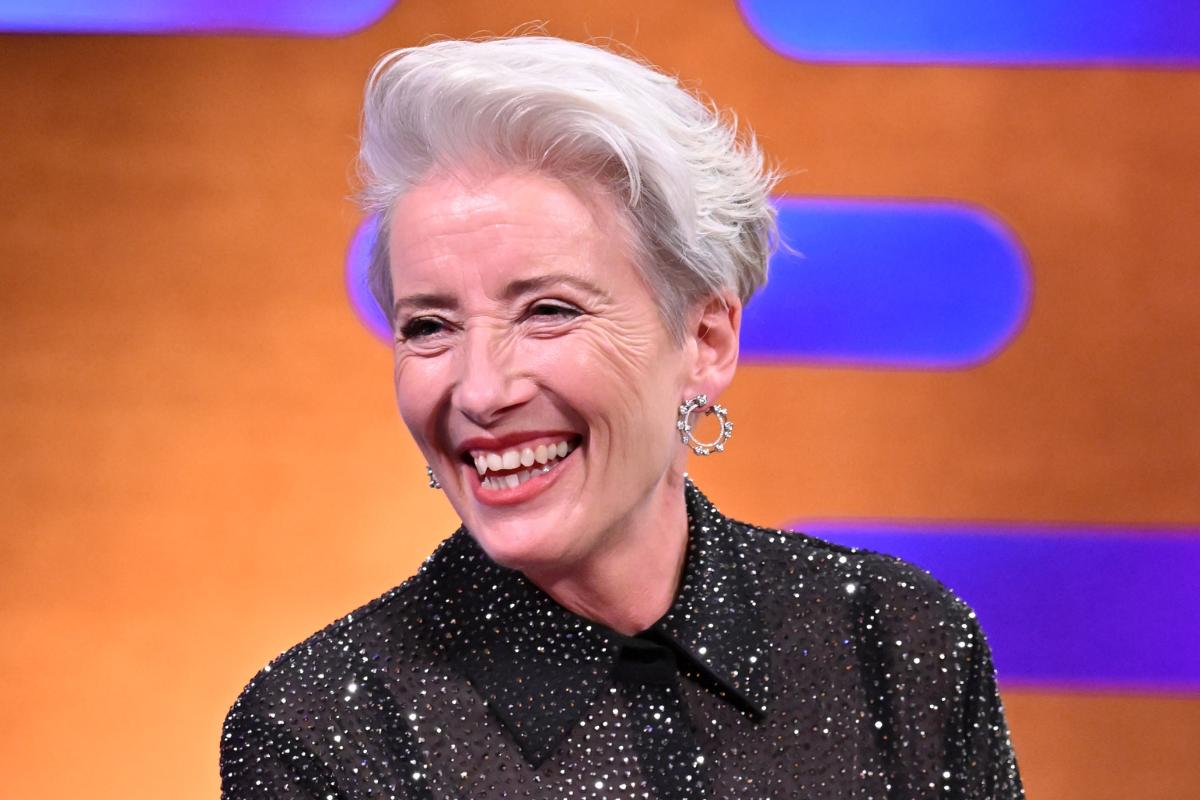
Teenager from Somerset works with Emma Thompson to create 'powerful' new film
Rylee, a young food ambassador, has helped create a film narrated by Emma Thompson and three other young people from across the UK with lived experience of food insecurity to help raise awareness and call for wider change.
Launched by The Food Foundation, the film titled “The Lunch They Deserve”, which was created by multi-Bafta-winning animators The Tin Bear Project and funded by Trust for London and The National Lottery Community Fund, seeks to focus the nation on “the need for better school food standards”.
"The Lunch They Deserve" movie. (Image: YouTube)
You can view the film here.
According to The Food Foundation, there are currently 4.5 million children growing up in poverty in the UK, and for many of them, a healthy diet is unaffordable.
The film encourages schools to ensure these young people have access to a nutritious, hot meal that will help to keep them healthy.
Dame Emma Thompson, actor and food foundation celebrity ambassador, said: “School lunchtime is the golden opportunity for society to step up, to serve great food to our young people and by doing so support families, the NHS and our communities. Every child has the right to healthy food. Let’s get it right in all our schools. Let’s give all our kids the lunch they deserve so that they can thrive.”
Jamie Oliver, chef and school food campaigner, said: “We’ve had the evidence for years - good school food transforms children’s health, learning, attendance and wellbeing. Yet we still have a system where some children eat well at school, and others don’t. That’s outrageous. School meals are the UK’s biggest and most important restaurant chain, and it’s failing too many of its customers. It’s long past time for the government to properly update 20-year-old standards and actually enforce them.”
Earlier this year, the government announced that from September 2026, the provision of free school meals will be extended to all children from households in receipt of Universal Credit.
The announcement of the expansion of Free School Meals was celebrated by Emma Thompson and the young food ambassadors, who campaigned side by side on this issue for a number of years.
They are now joining The Food Foundation’s call for further bold action from the government that will create a turning point in school food standards, and consequently in child health, in 2026, alongside the expansion of free school meals.
The young food ambassadors are a group of young activists from around the UK, campaigning both in their own communities and on a national level for the right of all people to be able to access healthy and affordable food. Many have lived or are living with food insecurity.
In “The Lunch They Deserve”, Emma Thompson narrates alongside Nausheen, 15, from Northern Ireland; Rylee, 15, from Somerset; Emmanuela, 17, from London; and Adama, 17, from Newcastle.
Rylee said: “As a young person in an all-boys secondary school, I feel it's very important that we are able to eat healthy and nutritious meals that will support our growth and our academic achievements, especially in these last two years of GCSE exam preparation. The current offer is not sufficient and does not promote a healthy or active lifestyle.”
A spokesperson said: “Free School Meals are one of the most powerful tools available to protect children from food insecurity, give some relief to families that are struggling with the rising cost of food, and address health inequalities across the UK.
“As Free School Meals are rolled out to more vulnerable children, standards must also be updated and properly monitored to improve child health and educational outcomes.”
They added that children from the lowest income households suffer the most from diet-related ill health and are, on average, shorter.
From their statistics, they said that fewer than 10 per cent of teens eat enough fruit and vegetables, over a third of children are underweight or obese by the age of 11 and young people’s risk of type two diabetes has increased by 22 per cent in the last five years.
Rylee said, “I live in a town where there is good access to a variety of markets; where I attend school is rural and remote with only one, small local shop which recently went out of business. It is several miles to the nearest town. Most of the pupils in my school come from an agricultural background, and the ironic part of that is that because of the cost of farming, they often don't have access to good, nutritious food.
“There are constant issues with the food at school. The catering provider has changed three times in my 4 years there. They frequently run out of food and regularly don't provide enough nutritious choices. I have written to my MP about food poverty in my area and am planning to accompany another local MP on constituency visits around Rural Affairs and the Farm First proposal.”
Anna Taylor, executive director of The Food Foundation, said: “September 2026 is a huge opportunity to mark a step change in both access to free school meals and the quality of the meals served.
"Monitoring has to go hand in hand with new standards so that schools which aren’t meeting standards can be given adequate support to improve. There are lots of wonderful examples of schools delivering fantastic food to children – that experience needs to be less of a postcode lottery and instead something which all children can benefit from.
"We’ve seen clear evidence that when school food standards have been updated in the past, the uptake of school meals has increased steadily over the following years. We now have the opportunity to make sure this goes further so that every child can enjoy a nutritious meal at lunchtime.”
Naomi Duncan, CEO of Chefs in Schools, said: "The Prime Minister’s recent commitment to ensuring children are not just fed in school, but fed well, matters. At Chefs in Schools, we see daily the impact that high-quality school food has on children and young people.
"As the scale of food-related ill health becomes clearer, ambition must be matched by action. Schools are a critical intervention point, but only if high standards for chefs and caterers are applied consistently and enforced properly."