Forget the sound baths, 'Crux' is a gritty, gripping look at the real Joshua Tree
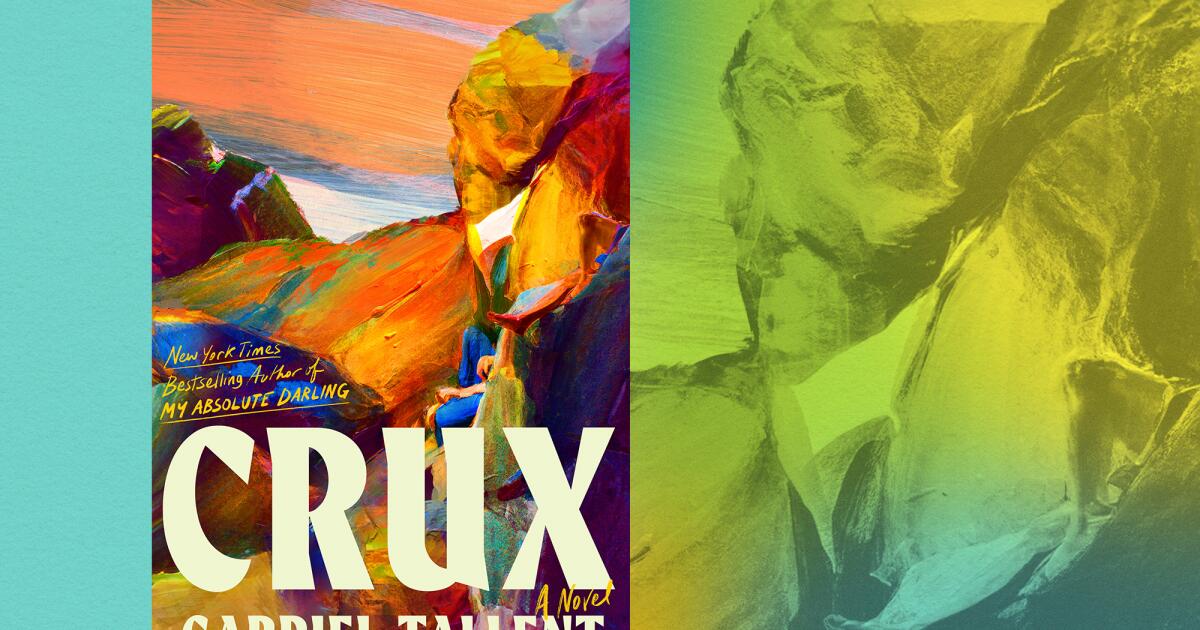
Book Review Crux By Gabriel Tallent MCD: 416 pages, $30If you buy books linked on our site, The Times may earn a commission from Bookshop.org, whose fees support independent bookstores. As metaphors for the American dream go, Gabriel Tallent’s taut and engrossing second novel, “Crux,” is exceedingly direct: It’s literally a book about climbing.Its two main characters, Dan and Tamma (short for Tamarisk) are 17-year-old high-schoolers living in the scruffy outskirts of Joshua Tree National Park. Whatever free time they can scrape together is wholly dedicated to climbing boulders, despite their lack of equipment — neither can afford pads or ropes to break their falls, and Dan salvaged his climbing shoes from a dumpster. (Hard living is Tallent’s specialty: His 2017 debut, “My Absolute Darling,” centered on a tween girl living by her wits in a forest near the Mendocino coast.)No romance is in the offing between the two — Dan is straight and Tamma is exuberantly profane about being gay — so their bond is built almost entirely around climbing. “Any day you were going to climb granite was the best day in the world,” Tallent writes.Tallent is well-versed in the lingo of the sport, and some of the book’s finest, most lyrical passages are constructed around it: “Her left foot greased out from beneath her, and she came cheesegrating down the slab,” he writes of Tamma slipping on a boulder. There’s no glossary, but the main terms are clear enough: to “send” a climb is to finish it; a “crux” is a crucial pivot point. The language is infused with intensity, lust and earthy rudeness: Climbs have names like Fingerbang Princess and Tinkerbell Bandersnatch.Dan and Tamma are climbing toward something, of course: He’s pursuing a college scholarship and she is determined to infiltrate the world of professional climbers. If that doesn’t pan out for either of them, Tamma figures they’ll just chuck it all and live off the grid in Utah: “After graduation, you just go, ‘I’m not going to college! PSYCH! I’m going to Canyonlands with Tamma! Later, bitches!’ Then spike your diploma to the floor and walk out.”But as her intensity suggests, both of them are running from things too. Each of their families are struggling, laid low by astronomical, ever-escalating medical costs and poor relationship decisions. Tamma’s mother is partnered with a drug-dealing layabout; Dan’s mother, a onetime successful novelist, has a worsening heart condition.It doesn’t help that civilization seems determined to cut them off from the desert’s wonders. Crowds of weekend warriors limit their ability to climb in isolation, and the region is rapidly filling up with “mansions, survivalist compounds, movie-star bungalows” and more.“Don’t ever mistake this for a country in which you can set off on your own,” Dan’s father tells him. “It’s not a place dreams come true, at least not anymore.”If the novel stayed in that lecturing, gloomy zone, it’d be easy to lose patience with it. More often, though, Tallent demonstrates his characters’ precarity rather than declaiming about it. Dan has legitimate reason to wonder whether his college applications are worth filing in an era of late capitalism and a dying mother. Tamma is trying to find the emotional stillness to deal with a dysfunctional family that makes plenty of demands but offers little support. In that regard, “Crux” recalls the best recent novels that have drilled deep into the physical and emotional damage of life on America’s lower rungs: Atticus Lish’s “The War for Gloria” (2021), Barbara Kingsolver’s “Demon Copperhead” (2022) and Ayana Mathis’ “The Unsettled” (2023).Such a list might also include “My Absolute Darling” too. But where that novel was intentionally defined to make the reader feel closed in, here the Mojave Desert vistas are free and expansive; whenever Dan and Tamma make a break for the boulders, it’s as if their hearts have cracked wide-open. “Every crunching footstep was real,” Tallent writes. “And when you were up on the rock, then every crystal, crack, and ripple was endowed with indissoluble, life-saving importance, each dike and chickenhead inalienably itself.”But if the desert offers a source of inspiration and possibility, it’s also an inescapably punishing landscape, and the main theme of the novel is how much success — especially now, especially in America — is going to have to depend on individual resolve. Culturally, this typically gets framed as alpha-male, gym-rat bluster about bootstrapping. Here, a woman commands most of the stage. Tamma’s best lines in the novel are unquotable in a newspaper — they involve physically strenuous sexual fantasies involving Ryan Reynolds and various members of Fleetwood Mac — but her exhortations are typically 10 parts insult to five parts inspiration, with a dash of terror that she may fail. “I’ve seen into your heart, dude,” she tells Dan. “Your mom, she doesn’t know who you are, but I do. You’re not that guy. You don’t want to be safe.” It’s fun, headlong reading with a shot of melancholy. She’s trying to convince him, and her — and maybe us.Dan, as bookish as he is athletic, approaches matters in a calmer register: “How should I conduct my life? Do you trust yourself, or do you not?” Still, the fear and frustration are much the same, and in this novel the tension, smartly and lyrically rendered, is at once wide as the horizon — how do we survive in this country? — and narrow as the slightest of nearly invisible footholds its characters require to get even a little bit ahead.Athitakis is a writer in Phoenix and author of “The New Midwest.”