High exchange rates reshape holiday travel choices
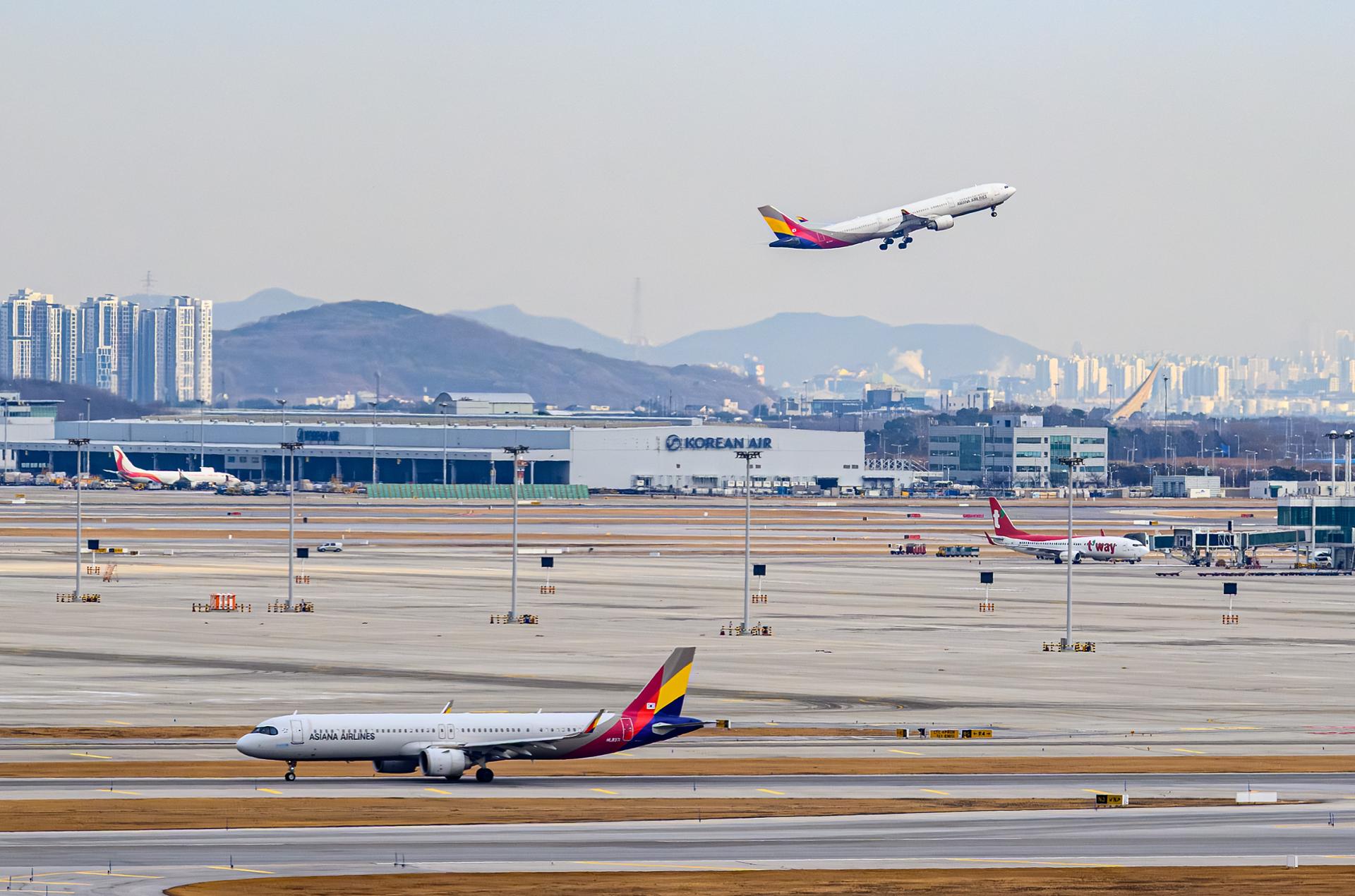
An Asiana Airlines plane takes off from Incheon International Airport, Jan. 14. Korea Times photo by Shim Hyun-chul Kim, who resides in Guri, Gyeonggi Province, had planned a trip to the United States during the Lunar New Year holiday next month but changed his destination to Sokcho, Gangwon Province.The 34-year-old, who works at an IT startup, said he revised his plans after the total cost of the trip turned out to be much higher than expected due to the won's weakness against the U.S. dollar and rising local prices. The won-dollar exchange rate has climbed into the mid-1,470 won range during intraday trading this month. “If I went to the United States, daily expenses would be a burden because of the high exchange rate,” Kim said. “Domestic travel involves shorter travel times and more predictable costs, which makes it less stressful. The plan is to stay at a good resort and relax.”Bae, who lives in Incheon and works for a large corporation, is in a similar situation. She chose Sapporo, Japan, as her family’s holiday destination. The 42-year-old had originally considered a long-distance overseas trip to warmer regions such as Australia or New Zealand for the sake of her two young daughters, but rising costs led her to opt for a relatively affordable short-haul route instead.“The weak yen means prices still feel reasonable and the shorter flight time is easier on the children,” Bae said.As high exchange rates and global inflation make long-distance overseas travel increasingly expensive, travelers are shifting their preferences toward domestic destinations and nearby countries such as Japan and China.According to market researcher Consumer Insight, the average per-person cost of an overseas trip last year stood at about 1.75 million won ($1,200), significantly higher than the average domestic travel cost of 233,000 won. Average daily spending amounted to 273,300 won for overseas trips, compared with 78,400 won for domestic travel.When demand for overseas trips surged immediately after the COVID-19 pandemic, many travelers were willing to absorb the higher costs of trips to far-off regions such as North America and Europe. However, current economic pressures are driving a shift toward shorter trips and destinations that place less strain on household budgets.The duty free area at Incheon International Airport is crowded with travelers, July 23. Yonhap According to the Consumer Insight report, interest in traditionally expensive regions including the South Pacific, the Americas and Europe has generally weakened. The decline has been especially steep for the United States and Canada, where the effect of exchange rates are felt most directly.Demand for Southeast Asian countries, once hailed as budget-friendly options, has also softened as lingering concerns over safety issues such as crime and fraud in some areas have weighed on sentiment.By contrast, travel demand is becoming more concentrated on short-distance routes to nearby countries such as Japan and China. These destinations benefit from shorter travel times, relatively lower accommodation and other costs, as well as increased flight capacity and intensified airfare competition.Data from the Ministry of Land, Infrastructure and Transport show that passenger traffic on Japan-bound routes totaled 27.31 million last year, marking an 8.6 percent increase from a year earlier and a 44.8 percent jump compared with 2019.The prolonged weakness of the yen, along with the expansion of air routes beyond major hubs such as Tokyo and Osaka to regional cities including Yonago and Takamatsu, is widely cited as helping drive this growth.Passenger numbers on routes to China also rose to 16.8 million last year, up 22 percent from the previous year and recovering to 91.2 percent of pre-pandemic levels. A significant rebound in demand for long-distance, high-cost destinations is considered unlikely this year amid continued pressure from a weak won.“Exchange rates now demand much larger budgets than before. As economic conditions tighten, travelers are increasingly excluding impractical destinations involving long distances, extended stays and high costs,” a Consumer Insight official said. “This downward trend in demand is expected to persist. Travel spending is shifting from expansion to restraint, with the balance clearly tilted toward cutbacks. The most straightforward way to reduce costs is to steer clear of faraway, long-duration and expensive destinations," he added.