What AI could do for construction
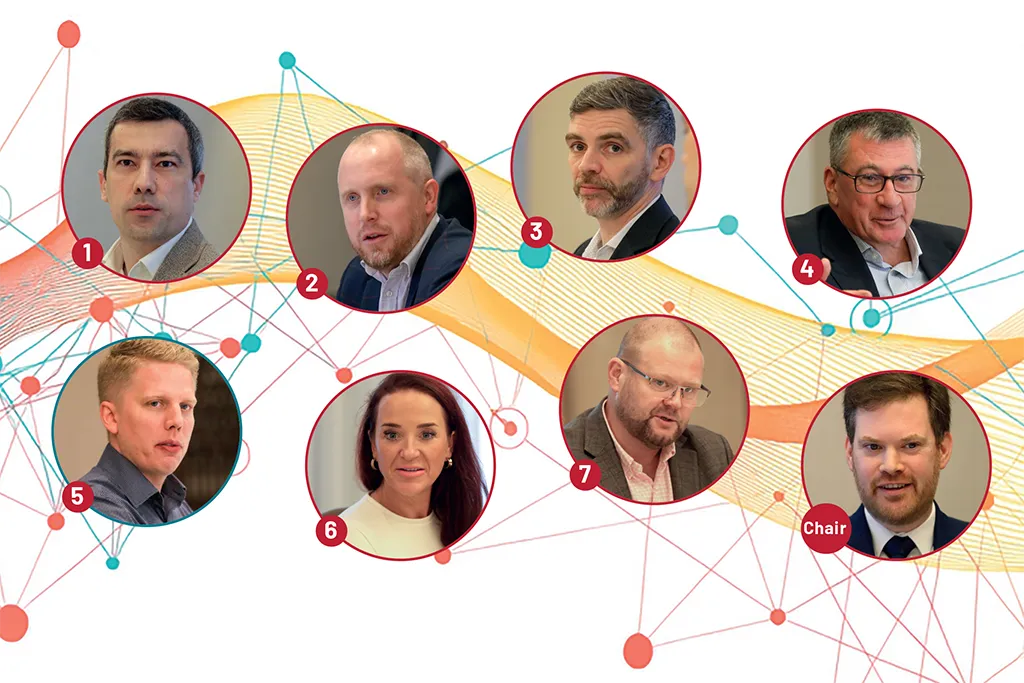
A recent roundtable hosted by Construction News and IFS examined the key areas where artificial intelligence could boost the sectorOn the panelAmador Caballero Ruiz, enterprise architect, Willmott DixonGary Denham, group procurement & operations director, Watkin JonesThomas Flannery, head of digital information management, McLaren GroupKenny Ingram, vice president of construction & engineering, IFSBen Jowett, head of digital transformation, SES Engineering ServicesDella McCaughey, enterprise account executive, IFSLee Ramsey, digital director, Morgan Sindall ConstructionChair: Ian Weinfass, journalist, Construction News“The [construction] sector is awash with ideas about where AI might prove most beneficial. These range from taking notes at meetings to managing procurement to removing human bias from project management. In a fragmented industry where knowledge is narrowly held within different projects and different terms used even within parts of the same companies, ensuring information can be better shared would produce greater outcomes,” says Morgan Sindall Construction digital director Lee Ramsey. He envisages an AI-enhanced management and planning system driving consistency by pre-emptively identifying issues.“People don’t proactively look for knowledge, so if you can have it practically served up… that could really superpower people”Lee Ramsey, Morgan Sindall“People don’t proactively look for knowledge, so if you can have it practically served up and tell them not only what the potential pitfalls are but what solutions could look like, that could really superpower people,” he says. “Consistency is key in construction.” But despite the enthusiasm and ideas about where to use AI, examples of where the tools are being used successfully are harder to come by. So, which areas of the industry are best suited for deploying artificial intelligence? And what barriers need to be overcome to move them from theory to reality?A roundtable held in London by Construction News, sponsored by IFS, gathered leading industry figures to share their insight into these questions.Identifying needs“Each business needs to identify which are the problems that they have and where they think AI can help. In our business we identified two areas: winning more projects […] and construction verification, removing the subjectivity from people on site,” says Willmott Dixon enterprise architect Amador Caballero Ruiz.“Sometimes when people do a report, they want to picture a better situation than there actually is, because they’re human,” he says. Machines, on the other hand, will be better at flagging that a project is delayed, even when people are reporting that everything is going smoothly. “We’ll be able to drill down in much more detail on why we are late,” he says.“It can be massively efficient to use, as long as you check it to make sure it is correct”Della McCaughey, IFSNevertheless, human accountability will remain a big part of the picture, he adds, giving the example of a Microsoft Teams Premium meeting summary being used by design managers. Despite the tool being able to write up meeting minutes, managers themselves remain accountable for verifying that the information in the summary is accurate. IFS enterprise account executive Della McCaughey agrees. “It still has to be sense checked. It can be massively efficient to use, as long as you check it to make sure it is correct.”Human contractThe sector’s wider contractual model also remains very human, notes Ben Jowett, head of digital transformation at mechanical and electrical specialist SES Engineering Services. “I feel like the environment isn’t right for some of the more generative design tools that produce a model, drawings and that kind of stuff,” he says. “Because it’s mostly startup businesses [developing the tech], they can’t carry the insurance and the risk of taking on the design responsibility and holding AI responsible for the design outcome. There’s still a very human contractual element even though the technology is capable.”He believes an area that could change quickly due to AI is design consultancy, which he says usually sees companies charge by hours worked as much as outcomes produced. “If design consultants aren’t on the front foot, you could see the whole business model being completely disrupted. We’ve seen it in other industries where technology-led businesses come in and completely flip the business model on its head – Uber is a great example.“There’s still a very human contractual element even though the technology is capableBen Jowett, SES“Out of convenience and efficiency, accuracy of data etcetera, you can see a similar shift coming with design consultancy,” Jowett says. “You’ll start seeing technology-led businesses come to the fore because they’re not pricing based on hours worked, they’re pricing based on pure deliverables and speed to delivery.”Consistent dataFor contractors, one barrier to using the tools is having sufficiently organised and accessible data. “Before you even consider deploying AI within your organisation you’ve got to have your data sorted, you’ve got to rationalise your technology stack where possible and understand what the processes are within your organisation that are driving the data points that […] AI is going to use to consume to give the outputs you need,” says McLaren Group head of digital information management Thomas Flannery.IFS vice president of construction and engineering Kenny Ingram notes that the industry has historically seen enterprise resource planning as a finance tool rather than an end-to-end project control system. The situation may now change, he says, but firms need to ensure they have robust inputs.“You’ve got to get to a consistent set of data and use of data across your project otherwise you’re never going to learn anything from project to project because the data is completely inconsistent, the coding structure is different, the way you work is different. For me, AI is forcing the issue. There was never a compelling enough reason why you had to do it before, [but] now there is a compelling reason, because if you don’t get your data in order you’re never going to take advantage of AI – in which case you’re going to fall behind your competition,” he says.“You’ve got to get to a consistent set of data and use of data across your project otherwise you’re never going to learn anything from project to project”Kenny Ingram, IFSJowett says the construction industry is no better or worse in this respect and points out that major tech companies flag poor data collection as an issue for AI deployment across many different industries.In the short term, using AI for supplier appointments could be a quicker win than for some other functions, even for businesses still trying to get their data in order, believes Gary Denham, group procurement & operations director at contractor and developer Watkin Jones. “Sometimes you have to look at where the opportunity is. To fully integrate it would take years [because of data issues] but if you’re starting off a new process with supplier selection you don’t need that: you’ve got the people, you can train the QSs [quantity surveyors].”AI tools could be used to analyse standardised submissions from potential suppliers, such as materials firms, Denham believes, and to examine future inflationary trends as part of an analysis. If multiple projects are being procured at the same time, it could highlight the same materials being bought at different sites at once and let managers try to strike better deals for them, he says. “In a few years we can see which suppliers have delivered on a fixed-price contract. If a QS madea deal that wasn’t transparent, you’d also be able to see that,” he adds.Long-term goalsAlthough many senior directors are the ones driving a push towards the technology, making a business case for buying new AI solutions is not always easy, the discussion hears. But although the return on investment (ROI) might not be instant, some think the longer view is the correct way to look at the tech.“We’ve got quite a low patience threshold in our industry. It’s a cultural trait: we expect to buy AI and see an ROI in a month,” says Jowett. “These are long-term strategic decisions: you’re talking about ontological layers, data governance and standards, enterprise architecture.“At SES we’ve got an eight-year strategy to take a longer term view, which gives us a bit more breathing space to be more long-termist and patient about how we want to go through with it, to see it through properly.”“In a few years we can see which suppliers have delivered on a fixed-price contract”Gary Denham, Watkin JonesIngram also believes a long-term approach is key. “AI is happening very fast but I don’t think we’re going to wake up in a year’s time and things are going to be massively different – it’s going to take 10 years for this to unfold and you have to take a big-picture view.“We need to be here [talking about and planning its use] in five- or ten-years’ time. You’re not going to get massive benefits in a week or two weeks, it’s very early technology, very early adoption.”Flannery adds that to succeed it is important for companies to “do small-picture and big-picture thinking at the same time”. He adds: “The first and most important step for an organisation is to get your strategy in place: understand where you want to be in 12 months, 24 months and five years down the line, and work with existing vendors, speak to partners and figure out where they sit within your AI strategy.”Several panellists called for better cross-industry collaboration to ensure everyone can succeed in the space. “Some of these solutions are bigger than just one organisation and we need to really work with leaders in the marketplace to help inform that level of technical ability and capacity,” says Ramsey.