What Comes After Viral Fashion?
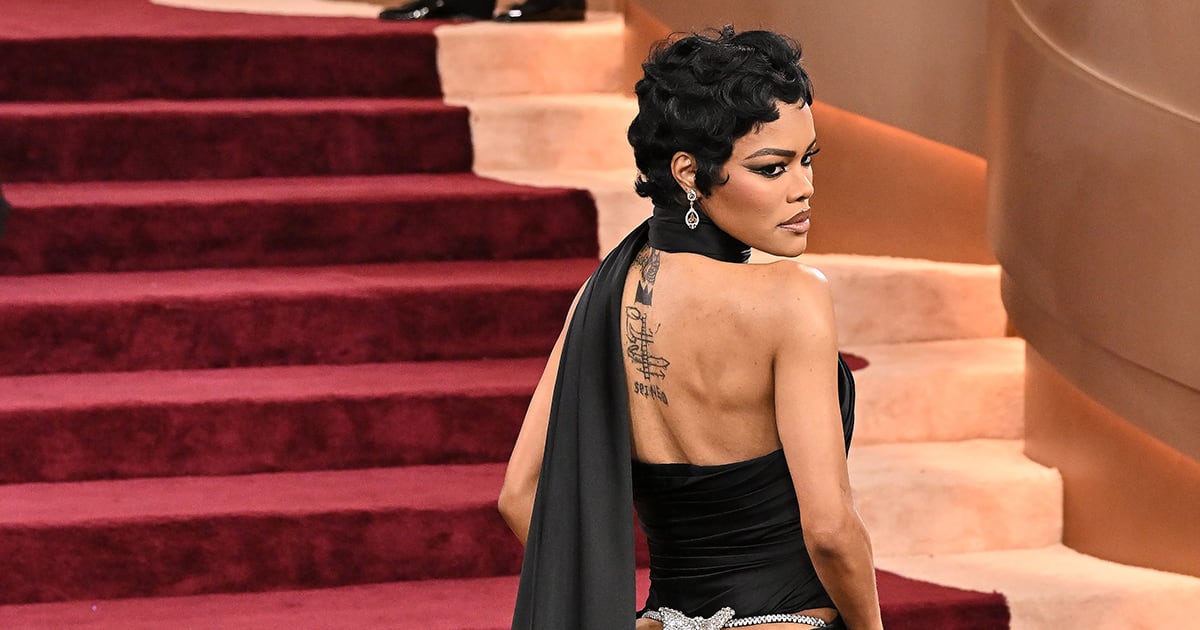
Subscribe to High Margin by Robert Williams: perspectives on creativity and business in the world of luxury — from fashion and watches to art, wellness, travel and more.What did you think about the Golden Globes red carpet Sunday? I thought this year was a particularly good vintage. Riskier looks made statements without veering into the viral gags that we’ve seen in recent years, while the evening’s more classic ensembles were still clean, modern and visually arresting. In this edition of High Margin: Golden Globes recap, Brunello Cucinelli and Richemont report quarterly sales and a Milan men’s week preview.Rather than an evening that was too classic or too crazed, the Globes gave us fashion that respected viewers’ aesthetic intelligence with slightly more nuanced looks. Some attempts at retro Hollywood style were a bit too on the nose, but those were fewer than one might have expected following last year’s ultra-nostalgic Golden Globes (not to mention a September womenswear season that featured a renewed preoccupation with traditional glamour across several key brands).Teyana Taylor was a standout, looking at once majestic and daring in a Schiaparelli bumster gown by Daniel Roseberry. The dress’s revealing back was sure to ruffle some feathers — and did — but didn’t read as a ploy for virality. The look resonated with her own persona as well as her winning performance as an uncompromising guerrilla fighter (and sexpot) in “One Battle After Another." Her co-star in the film, Chase Infiniti, also took a big swing, showing up in a sort of interplanetary Tiffany lamp by Louis Vuitton. (That one looked better than it sounds). Dior and Chanel look like they are still finding their way under new creative directors. Some highlights: Rose Byrne in sleek, Lamborghini-green Chanel reaffirmed Matthieu Blazy as a moderniser at the house, while Priyanka Chopra’s sashed-waisted Dior gown (styled with Bulgari) seemed to signal a willingness to play ball with more straightforward prettiness after previous red carpet sashes and bows during Jonathan Anderson’s reign had placed the focal point lower on the body.Rose Byrne and Priyanka Chopra attend the 2026 Golden Globe Awards. (Getty Images) Balenciaga’s new designer Pierpaolo Piccioli continued to soften the brand’s red carpet image. There were some punchy colours and textures (chartreuse, tangerine, spearmint, allover sequins), but the cut of the dresses and their styling was far less severe. (Speaking of Pierpaolo: Balenciaga is set to release his first menswear looks Thursday as part of its co-ed pre-fall collection. Yours truly has the exclusive, so look out for my in-depth interview with the designer on his reworking of the brand tomorrow morning.)A mixed showing for Saint Laurent: Mark Ronson and Zoë Kravitz didn’t look like they were going to the same party as everyone else in their respective windbreaker and lingerie looks. But Miley Cyrus looked fantastic in a gown by Anthony Vaccarello that was part glam rock, part Belle Epoque high society. There was a whiff of Yves Saint Laurent’s costumes for the Bal Proust in 1971 (a touchpoint for YSL this season), underscored by Tiffany & Co. jewellery that called back to its aesthetic under Jean Schlumberger during the same era. Connor Storrie also looked great pairing YSL with a Schlumberger-era Tiffany, a Bird on a Rock broach pinned to his tux. The way fashion and jewellery worked together may have actually deserved fashion stylists’ all-time favourite adjective: intentional. Miley Cyrus and Connor Storrie attend the 2026 Golden Globe Awards. (Getty Images) Overall, it feels like brands are managing to thread the needle: signalling renewed design creativity following a season of designer shakeups while continuing to pull back from a phase of over-the-top stunts aimed at cutting through the noise on social media at all costs. It seems like the industry is getting a bit savvier about taking social listening metrics like EMV (earned media value) with a pinch of salt—better prioritising visibility that is both desirable and on-message. In a luxury market where traffic remains depressed, stirring the pot online may have more downside than previously thought: Turning off existing fans is a bigger risk when new customers aren’t coming into the market to replace them. Consultancies that offer those metrics have been adapting, too, with the likes of Quilt.ai and Launchmetrics leveraging artificial intelligence to help brands track the quality and not just the volume of buzz. Cartier, Cucinelli Drive Double-Digit Growth Brunello Cucinelli storefront. (Shutterstock) The numbers gang will have to wait a few more weeks to find out how most of the big luxury fashion groups closed the year. Topline: After signalling modest improvement in Q3 (notably in China) most groups are expected to fare a bit worse in Q4 as they annualise last year’s post-election bump in North America. After that, analysts expect growth to accelerate from Q1.Brunello Cucinelli opened reporting season with its fourth-quarter sales update Monday. The brand continues its steady ascent, with sales up 12 percent for both the quarter and the full year. Analysts expect it to continue to outperform the market this year — powered by a focus on top-spending clients and consistent, controlled expansion of its footprint in both retail and wholesale. Bernstein (buy) sees the bad buzz from being accused of selling in Russia as having provided an attractive entry point for the stock. RBC Capital Markets (sector perform) is slightly less bullish, calling the company “a defensive stock supported by its 100 percent HNWI customer base” but that “marketplace discounting and a potential shift from ‘quiet luxury’ to fashion-forward trends into 2026 are potential headwinds.” The company will need to carefully navigate the fallout from Saks Global’s bankruptcy (confirmed Wednesday), as its footprint in the North American market depends heavily on its partnership with the Neiman Marcus and Saks Fifth Avenue parent. Richemont reports quarterly sales Thursday. HSBC is forecasting double-digit growth for the Swiss group’s Jewellery Maisons, with sales up 11 percent. Cartier is “firing on all cylinders” and concerns of brand fatigue brewing at Van Cleef & Arpels are “misplaced,” the bank says. Expect flat sales in watches and 2 percent growth for its “Other Brands” division comprising Aläia, Chloé, Dunhill, Peter Millar, Montblanc. Luckily for Richemont, the group’s jewellery business is 2.5 times bigger than its other units combined.“Branded luxury jewellery is a great place to be it: seems in the luxury sector today as the value proposition works (many brands having been reasonable in price hikes relative to handbag peers), creativity abounds, the segment’s visibility has increased with more efficient marketing and products speak to different generations and hold their value,” HSBC says. Milan Fashion Week PreviewPrada Spring/Summer 2026 Menswear (Courtesy Prada) The men’s fashion season, which kicked off Tuesday at Pitti Uomo in Florence, will migrate to Milan on Friday, where Zegna has moved to the opening slot, followed by Ralph Lauren — which hasn’t done a full-on runway show in the city since 2006, (though the brand has sometimes staged presentations and activations for its Purple Label line in Milan).Dolce & Gabbana shows Saturday, followed by Prada on Sunday. The fashion week ends Monday, when Giorgio Armani will stage its first men’s show since its founder’s death.After that, most of the big brands are opting for presentations or sitting the season out. Absentees include Emporio Armani, Gucci and Fendi. It’s unclear when any of those will be coming back. Armani’s successors may not see the continued need for regular shows at both the Emporio and Giorgio lines. Plans for menswear at Fendi under Maria Grazia Chiuri have yet to be announced.Gucci, too, might stay off the men’s calendar for the foreseeable future: new creative director Demna always staged co-ed shows during his tenure at Balenciaga, as did Alessandro Michele during Gucci’s boom years. Still, two big runway moments per year may not be enough for a brand at Gucci’s scale (six per year was announced as the new target toward the end of Michele and CEO Bizzari’s reign; but the brand has changed creative director and chief executive twice since then).With those key players M.I.A., the Camera della Moda has sought to cultivate younger labels to fill the calendar: LVMH Prize alum Setchu is staging his third runway show after debuting at Pitti last January. He’s joined by Simon Cracker, Qasimi, Pronounce and Daniel Orefice (a newcomer to the calendar), to name a few.