U.S. unveils Palestinian technocratic group to administer post-war Gaza
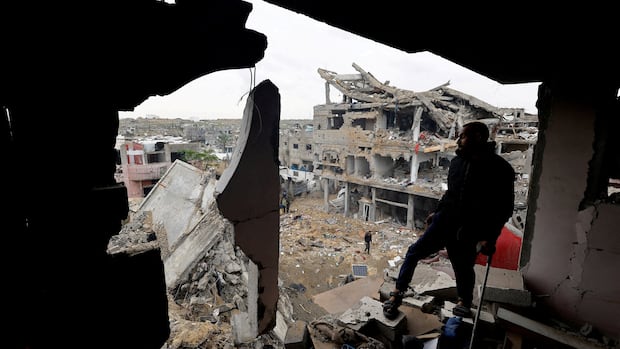
U.S. President Donald Trump's special envoy, Steve Witkoff, announced on Wednesday the establishment of a technocratic Palestinian body that will play a role in administering the war-ravaged territory under a phased U.S. plan for Gaza's future."Today, on behalf of President Trump, we are announcing the launch of Phase Two of the President’s 20-Point Plan to End the Gaza Conflict, moving from ceasefire to demilitarization, technocratic governance, and reconstruction," Witkoff said in a post on social media platform X.It remains unclear how Hamas, which has regrouped since a fragile ceasefire began in October, will be disarmed as required under the plan.Israel and Hamas signed off in October on Trump's plan, which says that the technocratic body will be overseen by the international "Board of Peace" that is meant to govern Gaza for a transitional period.The 15-member Palestinian body launched on Wednesday will be headed by Ali Shaath, a former deputy minister in the Western-backed Palestinian Authority who had been in charge of developing industrial zones, according to a joint statement by mediators Egypt, Qatar and Turkey.Other members tapped by Nickolay Mladenov, a former United Nations Middle East envoy who is expected to represent the Board of Peace on the ground, include people from the private sector and NGOs, according to a list of the names obtained by Reuters.Witkoff did not say how many members the body would include or name them.Another announcement related to the Board of Peace was also expected to be made in Davos, Switzerland, next week, a European diplomat said. Demilitarization challenge remainsAlong with setting up the Palestinian body, known as the National Committee for the Administration of Gaza (NCAG), Witkoff said in his post that the second phase of Trump's plan "begins the full demilitarization and reconstruction of Gaza, primarily the disarmament of all unauthorized personnel.""The U.S. expects Hamas to comply fully with its obligations, including the immediate return of the final deceased hostage. Failure to do so will bring serious consequences," Witkoff said.Hamas, which has so far not agreed to lay down its weapons, agreed in October to hand over governance to a technocratic committee.WATCH | Trump, Netanyahu meet last month to discuss second phase of truce deal:U.S. President Donald Trump met with Israeli Prime Minister Benjamin Netanyahu to discuss next steps for the ceasefire in Gaza. Trump said there will be hell to pay for Hamas if it doesn't disarm but said Israel withdrawing forces was 'a separate subject.'But it has previously said that other matters, including the future of Gaza and Palestinian rights, should be addressed within "an inclusive Palestinian national framework, of which we will be an integral part and to which we will contribute with full responsibility."In the West Bank, in a statement posted on X by Palestinian Vice-President Hussein Al-Sheikh, the Palestinian Authority (PA) welcomed Trump's effort to move ahead with the Gaza phased plan and voiced support for the committee.He said institutions in Gaza should be linked to those run by the PA in the West Bank, "upholding the principle of one system, one law, and one legitimate weapon." U.S. to introduce 2nd phase despite violenceThe first phase of Trump's plan, which included a ceasefire and hostage release deal, has been shaken by issues including Israeli airstrikes in Gaza that have killed hundreds of people, a refusal by Hamas to disarm, the remains of one last Israeli hostage still not having been returned and Israeli delays in reopening Gaza's Rafah border crossing with Egypt.Although the two sides accuse each other of breaching the deal, Trump says he wants to move on to the second phase, a progression that would entail the establishment of the Board of Peace and a yet-to-be-agreed deployment of peacekeeping forces.The ceasefire reached under Trump's 20-point plan took effect in October. Gaza's Health Ministry says more than 440 people were killed by Israeli fire and their bodies brought to hospitals since then. Of the 440, at least 100 were children, according to UNICEF.WATCH | At least 100 children killed since ceasefire plan was signed in early October:At least 100 children have been killed in Gaza since the ceasefire between Israel and Hamas in early October, says UNICEF spokesperson James Elder. The number represented only cases for which sufficient information is available, and it could be much higher, he said, especially with more severe winter weather coming.Hamas leaders and other Palestinian factions are in Cairo for talks on the second phase, the group said, where members of the technocratic Palestinian committee were expected to meet with Mladenov.Egyptian sources said talks with Hamas would now focus on the group's disarmament.Further Israeli withdrawals within Gaza are tied to disarmament, though Hamas says it will only give up its weapons once there is a Palestinian state.Hamas and its rival Fatah group, led by Palestinian President Mahmoud Abbas, have both endorsed the list of members, Egyptian and Palestinian sources said.It will also include the head of the Gaza Chamber of Commerce, Ayed Abu Ramadan, and Omar Shamali, who has worked for the Palestine Telecommunications Company, Paltel, Palestinian sources said.The sources said the list would also include Sami Nasman, a retired senior PA security officer and a longtime critic of Hamas. Nasman, a member of Abbas's Fatah movement, is originally from Gaza but has been living in the West Bank since 2007.Israeli officials did not immediately respond to a request for comment.The United Nations has estimated that reconstruction will cost more than $50 billion US. The process is expected to take years, and little money has been pledged so far.