EU and UK capital markets remain strongly interconnected post-Brexit
The interconnectedness of EU and UK financial markets remains a ‘fact of life’ according to a new report from the City of London Corporation and New Financial.
In many areas the connectedness between both financial markets is still strong. For example, EU banking activity involving UK institutions has surged 60% since the 2016 referendum and while UK banks have successfully diversified to other global markets (reducing their overall share of EU lending by 20%) the overall value of UK bank lending into the EU still remains higher than vice-versa (12% vs. 8%).
The report, “The Interconnectedness of EU and UK Financial Markets,” reveals that while both the EU and UK financial markets have sought to internationalise post-Brexit, the activity between them remains significant.
However, the UK capital markets are nearly twice as deep relative to the size of the economy than EU capital markets.
Both, however, trail far behind the US which are three times as deep as the EU. The UK also has a significantly larger pool of long-term capital compared to the EU (204% of GDP vs. 169%). Both, however, trail far behind the US at 436%.
The report states that at a time where the EU and the UK face common challenges and need to increase investments, it is time for a more serious conversation about how both sides can work more closely together to reduce frictions and boost growth.
It comes as UK Prime Minister, Keir Starmer, said he would like to pursue greater access into the EU’s Single Market.
Key findings include:
Cross-border venture capital ties remain strong: 25% of EU VC deals involve UK investors, and 28% of UK VC deals involve EU investors.
Two-thirds of euro-denominated derivatives trading still happens in London.
A fifth of EU-domiciled investment funds are managed in the UK.
The percentage of EU equity shares held by UK investors even increased from 30% to 36% of all cross-border equity holdings by UK investors.
But the report warns of the risk of new frictions and highlights a major threat: the Capital Requirements Directive, which from 2027, will block any non-EU banks from lending into the EU unless it sets up a local branch. This could potentially choke investment from London at a time when the EU’s economy is stagnating and needs large sums of additional investment. These restrictive rules will limit the flexibility and efficiency that UK-EU investment channels currently provide.
With the EU lacking deep pools of long-term capital, the UK’s markets remain essential for funding growth and innovation now and provide much needed investment in Europe.
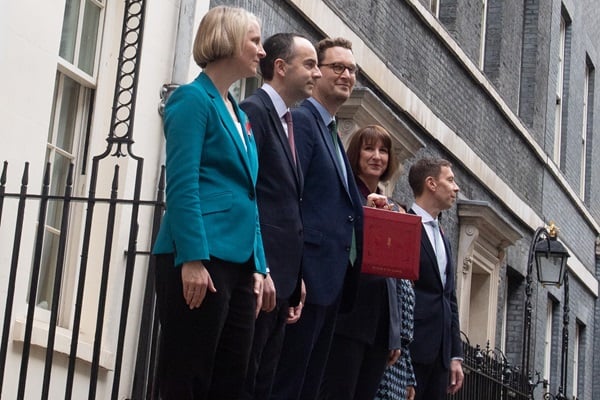
The report was launched at the City of London Corporation’s Annual Brussels Reception where the UK Economic Secretary to the Treasury, Lucy Rigby KC, delivered the keynote speech. The event was attended by EU policymakers, regulators, MEPs and representatives of the financial services industry.
Recommendations include:
An enhanced EU-UK regulatory dialogue to discuss closer cooperation in new areas such as sustainability or digital assets.
A focus on technical improvements that make a real difference for market participants engaging in cross border activities.
UK rejoin all EU and European statistics agencies such as Eurostat to establish one definitive source for data on the European economy.
Exploring new forms of cooperation, such as binding bilateral frameworks instead of unilateral equivalence decisions, ensuring certainty for businesses on both sides.
Simpler provisions for short-term business visitors.
A programme of secondments and exchanges between UK, EU and EU Member State financial regulators and supervisors (inspired by the ECB’s Schuman programme).
Mutual recognition of professional qualifications.
Policy Chairman of the City of London Corporation, Chris Hayward, said, “Almost 10 years after the Brexit vote, this report shows that the interconnectedness of EU and UK financial markets remains a fact of life. The EU and the UK face many common challenges – from defence and security to climate change and demographic shifts, from poor economic growth to low levels of investment.
“Let’s rethink initiatives like the ban on cross-border bank lending in the Capital Markets Directive, which hinder connectivity and reduce investment in the European economy.
“As this report shows, the prosperity and security of the UK and the EU are indivisible, and greater UK-EU connectivity in financial and professional services – in those areas where we’re already aligned – can accomplish those wider objectives which we all share.”
Managing Director of New Financial, William Wright, said, “Despite all the noise in recent years, the EU and the UK are relatively similar markets facing largely similar challenges of investment and growth. They are tackling many of the same challenges for the same reasons in broadly the same way.
There are areas in which the EU and the UK need to develop their own capital markets to better support their economies, but we think it is time for a more serious conversation about how both economies can work more closely together to reduce friction, better address common challenges, and help each other.