Inside Rap's Return to the Art of the Album Rollout
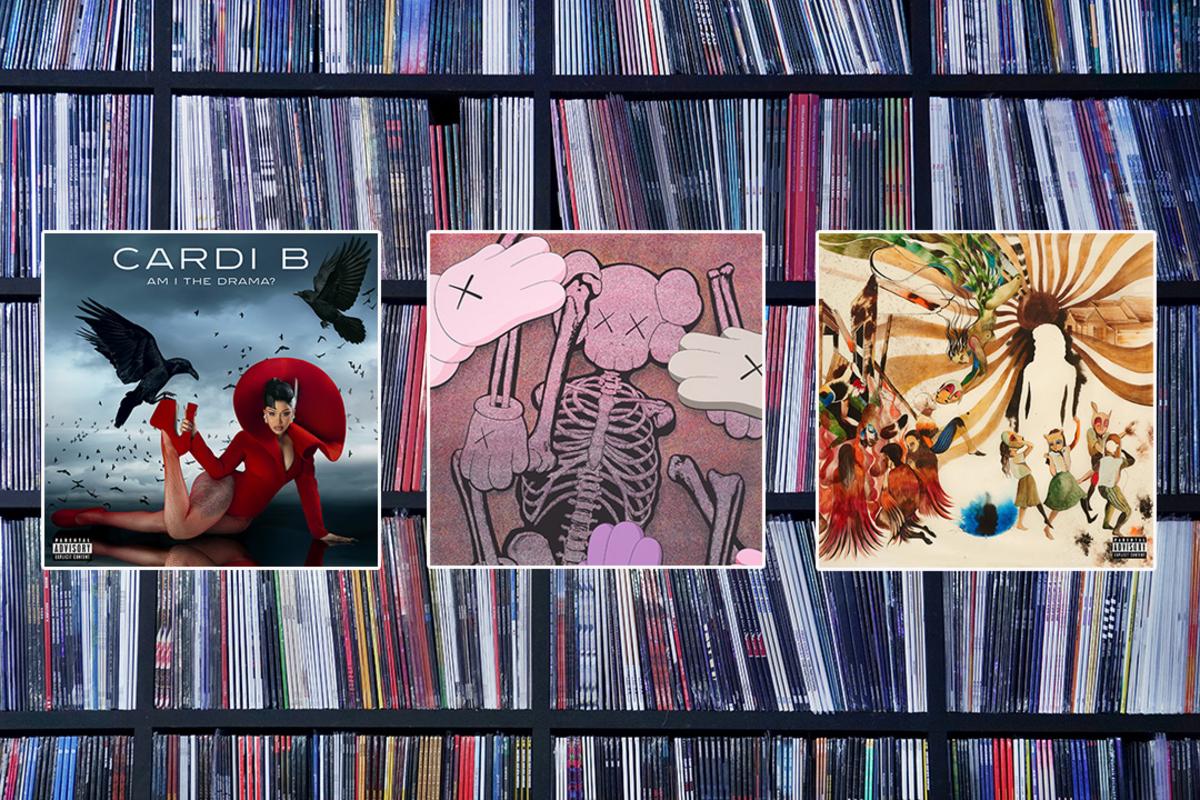
Back in ActionAlbum rollouts may seem outdated, but rappers are still embracing the concept, just in different ways. Change has come, and the no-rollout era may finally be coming to an end.Words: Grant RindnerEditor’s Note: This story appears in the Fall 2025 issue of XXL Magazine, on newsstands now and available for sale on the XXL website.There was a stretch where it seemed like the orchestrated album rollout was deceased, buried in the same graveyard as New Music Tuesday, iPods and concert tickets under $30. However, 2025 showed that the discipline isn’t dead; it’s largely shape-shifted, with fewer releases that take on six-month lead times until release, but plenty of creative strategies where streamer hangouts are as important as NPR’s Tiny Desk concerts and TikTok is emphasized just as much as street team activity.Every rap fan over the age of 35 remembers the heavyweight bout-style hype campaign when Kanye West and 50 Cent released albums on the same day in 2007, or how Lil Wayne used burgeoning online mixtape culture to release Da Drought series in 2003, and The Dedication in 2005, to build anticipation in between Tha Carter album installments. Back in the early aughts, MCs would release a project’s first single months in advance and push for its video to reach the top of TRL or 106 & Park. It’s all a far cry from Yeat’s Dangerous Summer EP this past July, which he explicitly stated would have “no rollout.” His words could be seen as a rollout in itself, given that he dropped the project five days later.The spontaneous approach can be attributed to the growth of hip-hop’s SoundCloud scene and the proliferation of DSPs, meaning artists could release music with minimal lead times. In the late 2010s and early 2020s, this was the cool way to do it, but very few of the unannounced projects from these young artists have lasted in the zeitgeist. Clipse’s Let God Sort Em Out was one of the most acclaimed rap albums of 2025, but its traditional rollout—ironically deemed nontraditional these days—has earned equivalent praise.There were song previews at Louis Vuitton fashion shows and foreshadowing merch pieces before the record was even announced, to their first single, “Ace Trumpets,” marking their comeback in May (plus viral lyrics like Push’s “Yellow diamonds look like pee-pee” line from the track). A Kendrick Lamar feature on “Chains & Whips” was the talk of the town across the internet all the way from Paris, where a snippet was recorded before it officially dropped, only adding to the buzz. A sense of nostalgia washed over the hip-hop community, not only for Clipse’s return and most notably Malice’s as well, but for the celebration of the traditional album rollout.In a time when rappers want to hide from the media, Pusha T and Malice were front and center with multiple media outlets over a month before the album’s arrival on July 11. There was a GQ profile where the duo lamented the state of modern rap; they were busy. Pusha shared his issues with Travis Scott and Kanye in that discussion, and those quotes went viral.They kept it going with The New York Times’ Popcast podcast interview, with more headline-grabbing quotes. They seemed to be everywhere.As the album’s visual components began to take shape, stylish videos for “So Be It” and “Chains & Whips” emerged, followed by a signature performance of “Ace Trumpets” on the COLORS YouTube platform. Additionally, a vintage Clipse KAWS LP cover was unveiled. It had been 16 years between Clipse albums, and while Pusha T remained a fixture on the scene, Malice lived an entire life outside of the spotlight. From a timeline perspective, Clipse is now a legacy act, and there have been plenty of cases where a once-successful rap group attempts a comeback that doesn’t capture a fraction of the popular conversation that Let God Sort Em Out did.Bianca Edwards, Vice President of Marketing at Roc Nation Distribution, who worked closely on the marketing strategy with Clipse for this album, lays out a few reasons why they bucked the trend. “First, an artist has to be a visionary,” Edwards says. “Second, the artist has to have an incredible work ethic. And patience is the last part. Most artists, when they produce a diamond like Let God Sort Em Out, they want to just give it to the world [immediately].” Patience was a virtue in this case. Over two months dedicated to a carefully curated and planned rollout culminated in Let God Sort Em Out debuting at No. 4 on the Billboard200 with 118,000 units sold.Dealing with a visionary who can get impatient is something Barry “Hefner” Johnson and Zeke Nicholson are used to. The cofounders of record label, publishing company and management firm Sincethe80s manage J.I.D and EarthGang, two wildly creative Dreamville Records signees whose LPs are heavily conceptual and need marketing plans that respect that. Barry and Zeke reel off a litany of rap rollouts that built the narrative around the artist and the project: J. Cole’s Cole World: The Sideline Story, Kendrick Lamar’s good kid, m.A.A.d. city, Drake’s So Far Gone. To the Sincethe80s cofounders, the formula hasn’t changed, and the success of J.I.D’s God Does Like Ugly, released in 2025, or the Clipse album, isn’t some wild innovation; it’s just checking the boxes. People just took it all for granted.“I heard a lot of chatter on the internet about the Clipse rollout,” Johnson shares. “We love the Clipse. They’re the homies, but what did they do that was crazy? They did the things that everybody was taking for granted. They sat down with people and gave real interviews, real personality. They weren’t trying to be so cliché or to be mysterious. They gave you real stories from real people and it connected.”Looking back a bit farther, 50 Cent’s Get Rich or Die Tryin’ built momentum from the prior year’s 8 Mile soundtrack ahead of “In Da Club” in January of 2003. That same year, Jay-Z’s The Black Album included a concert film released theatrically and a retirement narrative, and Lil Wayne’s Tha Carter III leveraged online mixtape culture of 2008 to build unparalleled hype. Veteran music industry executive Brian Nolan, President of Global Marketing & Sync for Artist Partner Group, where he works with established rappers such as Kevin Gates and newcomers like BabyChiefDoit, recalls the rollout of Nas’ Illmatic in 1994 as particularly resonant for him as a young rap fan.“The [electronic press kit] that Columbia put together in the early ’90s, where they interviewed all the different producers on Illmatic is still on YouTube today,” Nolan recalls. “That was one of the first times as a fan of hip-hop where I got to see behind the scenes and get a sense of how a label would engage to showcase what this project was about.”Like a lot of music industry shifts, the flurry of sudden releases can be traced back to Beyoncé, who surprise-released her self-titled album on Dec. 13, 2013, via iTunes. It was a seismic moment in pop culture, one that began a trend of unexpected releases that stopped the music world in its tracks and dominated social media (Drake’s If You’re Reading This It’s Too Late in 2015, Jay-Z’s 4:44 in 2017, Kendrick Lamar’s GNX in 2024).But the last decade saw the proliferation of no-promo releases, inspired by the ease and accessibility streaming brought to the industry. While power players initially used this approach, it quickly became adopted by artists at all levels, usually with a focus on generic rhetoric around wanting to serve the fans in a no-frills way. Unfortunately, most artists aren’t Kendrick Lamar or Jay-Z, and minimal promo records from the average rapper tend to be quickly shuffled out of the game.As non-rollouts became common in the mid-2010s, it became abundantly clear that only a small percentage of the industry could command the attention of its audience. Think of how many rappers have bragged that they don’t write down their lyrics in the vein of Jay, Lil Wayne or The Notorious B.I.G. In the streaming era, where album covers are tiny, liner notes barely read, and deluxe editions are an expectation, an involved rollout is one of the clearest ways a rapper can differentiate their album and showcase their personality. To highlight the changing times, Barry “Hefner” Johnson emphatically taps his phone during this conversation to emphasize how the album release experience has shrunk to fit six-inch screens.Ask a millennial rap fan which rollouts stuck with them the most, and there’s a good chance they’ll say Kanye West’s Graduation vs. 50 Cent’s Curtis (2007), Ye’s My Beautiful Dark Twisted Fantasy (2010) or Tyler, The Creator’s Call Me If You Get Lost (2021). Tyler’s release brought back Gangsta Grillz nostalgia and combined it with Wes Anderson-inspired visuals, the 2007 showdown garnered massive media coverage in part because 50 threatened to retire if he was outsold, and Ye teased his MBDTF album for weeks through the G.O.O.D. Fridays series of free singles.It sounds obvious, but the more complex the rollout, the more is asked of the artist in question. Releasing a surprise record straight to streaming and announcing it with an Instagram post is a lot easier than the scheduling commitment of a truly inspired release, which is why it seems more rappers than not choose to forego rollouts these days.“Pusha and Malice were coming back and forth to New York every week when we were shooting COLORS and knocking out interviews with journalists and DJ playbacks, giving everyone their time and banking all of these things that would eventually be tools for us to amplify the music,” Bianca Edwards explains. “They were going back to Virginia, shooting music videos and to L.A., for a day just to come to New York to sit with [The New York Times journalist and pop music critic] Jon Caramanica.”Other established rappers who put in the work in 2025 to promote a project are Cardi B and Kevin Gates. Cardi's Am I The Drama? album found her going back to her mixtape roots when she was on the ground herself promoting her music. Before the LP arrived last September, the Bronx native hit the streets to sell the album. She pulled up to a New York City block and put out a sheet with copies of the album and vinyl on it in the spirit of the mixtape hustlers back in the day. She also went underground, literally, to the train station and hopped on a New York City subway to bring her project to the people. Being the global superstar rapper that she is, Cardi doesn't really need to employ these marketing tactics but it brought back the creativity and real grassroots feel of the album rollout that has been missing from rap lately.For Luca Brasi 4, 2025’s installment of Gates’ signature mixtape series that began in 2013, Brian Nolan and APG leaned into the Louisiana rapper’s unique charisma and philosophical musings. The rollout focused on the length and significance of the series, with a stirring black-and-white movie trailer narrated by Gates. There were also social media breakout posts about what the series means to him. Gates also partnered with the Black-owned coffee company A Coffee Called Folks to release a special brick-shaped blend that includes lyrics from the project. Additionally, he held an online album listening with streamers Zias and B.Lou.Cinematic trailers and tuxedo-clad live appearances with streamers highlight Gates’ magnanimous personality first, while in the case of J.I.D and Earthgang, Johnson and Nicholson help their artists focus on their story first. When their Dreamville-signed supergroup Spillage Village put out Spilligion in 2020, in the thick of COVID-19 pandemic, the rollout focused on its unique recording circumstances earlier in the pandemic, sharing a rented home in Atlanta that member J.I.D originally intended to use for solo work.Interviews ahead of the project emphasized relatable aspects of these artists’ quarantine, from competitive Monopoly games to intense home workouts. The keyword of this rollout was relatability. “How can [we] drop an album talking about what the f**k is going on outside and partying when nobody’s partying,” Johnson says. “That was art imitating life. It was a timestamp.”Each of J.I.D’s last two albums have followed roughly three-year gestation periods, so the rapper and his team focus on honoring both the music and the patience of the fans with his rollouts. His 2022 album, The Forever Story, was punctuated with a scavenger hunt to find a Pontiac G6 (based on J.I.D’s own old ride) in one of three cities—Atlanta, New York and Chicago— to hear the album early. For 2025’s God Does Like Ugly, J.I.D played a series of shows in five cities under the banner “Dollar & a Dream,” which was previously used by J. Cole. Tickets were $1 and fans had input on the setlist.J.I.D and his team also smartly played on the ubiquity and diminishing returns of deluxe albums in rap by dropping a “preluxe” called GDLU (Preluxe), one month before the album release, featuring Eminem, 6lack and Lil Yachty. This only increased excitement among fans. While changing release dates may not seem like a creative strategy, it certainly can be a way to pique interest and get supporters to pay attention by deviating from the standard Friday release model. In recent years, Kevin Gates (2025’s Luca Brasi 4) and J.I.D (2018’s DiCaprio 2) found success with early releases on a Wednesday and Tuesday, respectively, allowing them to dominate discourse before the rest of the week’s drops.The approach requires an artist more concerned with long-term impact than first-week sales numbers. Rap fans on social media can be so fixated on chart position and streaming numbers, so not every artist is going to be willing to make that sacrifice. “Releasing on a Friday for chart position is one aspect, but that doesn’t necessarily need to be the driving aspect of why this project is going to be successful,” Brian Nolan maintains. “Rules can be broken.”The secret of album rollouts is that while most people focus on the pre-release work, it doesn’t stop once the LP is out. Take “Surround Sound,” J.I.D’s lead single from The Forever Story, which the team continued to push for over two years until it became a triple platinum social media sensation. “Like I always tell people, it’s like climbing up the mountain,” Johnson says. “No one gets up the mountain clean. You always gotta get dirty.”In the era of short attention spans, bringing focus back to an LP that was carefully and creatively pushed in the traditional sense of a rollout only makes sense after all the time and energy was put into it in the first place. “There’s so many things you can do with an album,” Zeke Nicholson continues. “You don’t have to just give up on the album. You have to continue to keep pushing the album.”The success of well-orchestrated marketing plans by Clipse, J.I.D and Kevin Gates this year isn’t going to put an end to surprise releases. Young artists like Yeat and mercurial superstars like Kendrick Lamar will likely keep employing the practice, but 2025 has shown that combining the old-school promotional tactics like legacy media interviews, music videos and pop-up shows with new social media strategies will make a rapper’s album feel more three-dimensional and important in the overstuffed aisles of today’s music economy. Ultimately, the consumer decides how they want to sort ’em out.The fall 2025 issue of XXL magazine featuring a look at the change in album rollouts over the years highlighted by Clipse's Let God Sort Em Out album is available to purchase here. The issue also includes Joey Bada$$ and J.I.D's cover story interviews, conversations with Chance The Rapper, Rob49, Curren$y, Hit-Boy, Wallo267, Bay Swag, KenTheMan, Hanumankind, Babyfxce E, Ghostface Killah, Hurricane Wisdom, Conway The Machine, Pluto, TiaCorine, Isaiah Falls, comedian Josh Joshson, Vice President of Music at SiriusXM and Pandora Joshua “J1” Raiford and more.