How to smooth and plump wrinkly hands. It's a notoriously tricky area that gives away your age. Now top experts reveal what really works... and what's a waste of money
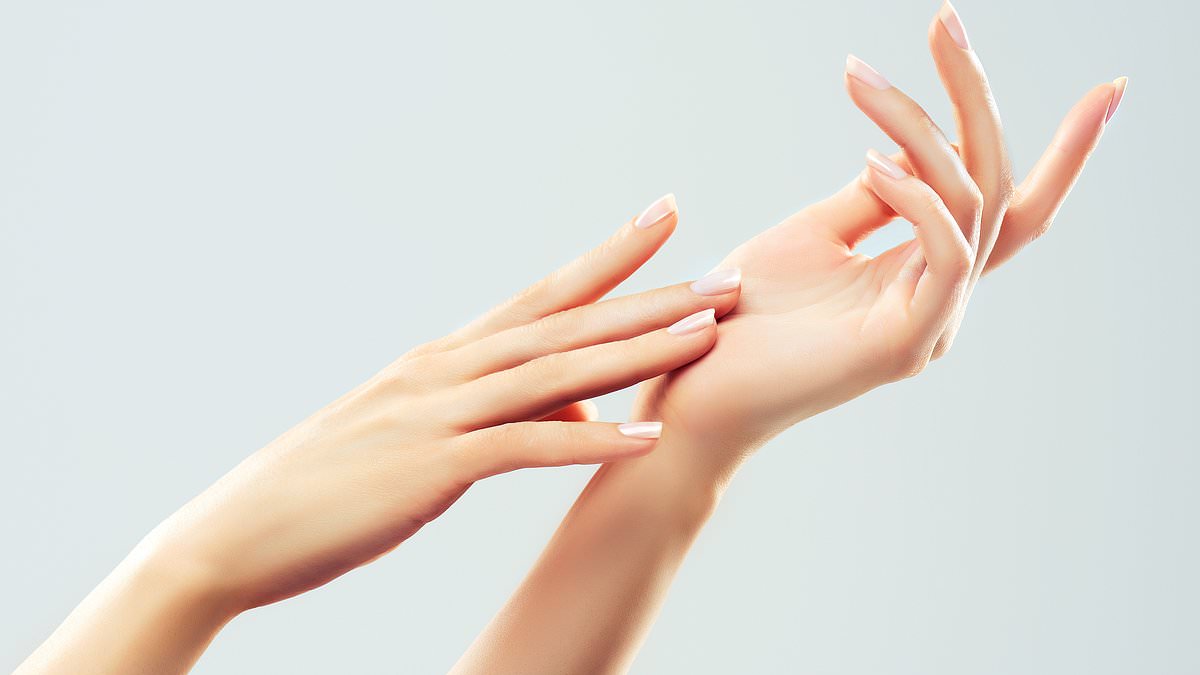
As the ‘momager’ of one of the world’s most famous families, Kris Jenner is used to generating headlines for the Kardashian clan.But in 2025 it was the 70-year-old matriarch who caused a media storm when she showed off the results of a £188,000 facelift – her second since 2011 – which left her looking the same age as her fortysomething daughters.Jenner told Vogue Arabia it was her take on ‘ageing gracefully’.She said: ‘I decided to do this because I want to be the best version of myself, and that makes me happy.’However, pictures taken of Jenner boarding a luxury yacht in St Barts last month revealed a striking contrast. While she looked decades younger, her hands – veiny, wrinkled, gnarled and puffy – remained very much those of a septuagenarian.Dr Mo Akhavani, founder of The Plastic Surgery Group and a specialist hand surgeon, told The Mail on Sunday our hands age differently – and often faster – than the rest of our bodies. He said: ‘Our hands naturally lose volume as we age. There’s not much fat in them to start with, and as the skin gets thinner, the bones and tendons beneath become more visible.‘Furthermore, we use them daily, so they’re under a lot of stress.’Another key ageing factor is sun damage. As most people aren’t as diligent about slathering SPF on their hands as they are on their face, they are often exposed to harmful UVA and UVB rays. Her face is one of a fortysomething, but recent photos of her hands reveal her true age Kris Jenner's hands show her veins as she boards a luxury yacht in St Barts Hand rejuvenation procedures are most popular with women aged 50 and over.To really make hands look up to ten years younger, Mr Akhavani recommends a two-pronged approach that replaces lost volume and improves skin texture.For volume replacement, he says the ‘gold standard’ is fat grafting – where a surgeon removes fat from elsewhere on the body, refines it, then injects it into the backs of the hands.‘Fat grafting is permanent, but a hyaluronic acid filler such as Profhilo also works well because it’s a little bit more concentrated,’ he says.Once the crepey texture has been addressed, skin quality can be improved with a range of non-invasive treatments to tackle discolouration and fine lines.However, while the backs of the hands can be aesthetically improved, there is no treatment for bony, gnarled fingers.It’s also important to understand that both fat grafting and fillers come with risks.Mr Akhavani says: ‘There is always a risk that the procedure could hit a blood vessel, nerve or tendon in the hand. Another potential complication is necrosis.’ To really make hands look up to ten years younger, specialist hand surgeon Mo Akhavani, recommends a two-pronged approach that replaces lost volume and improves skin textureNot deterred by the possible death of your hand tissue? If so, here he explains the main treatments, and reveals which are worth the time, money and discomfort.Fat graftingWhat it does: Plumps up the back of the hand.Method: A liposuction procedure is performed, removing up to 30ml of fat from a patient’s stomach using a thin, flexible tube called a cannula. The fat is treated in a centrifuge to separate the fat cells from blood and other bodily fluids. After this ‘washing’ procedure, a portion of the fat is injected into the skin on the back of the hands. Patients are sedated with either local or general anaesthetic.Downtime: Full recovery takes around a week, with some soreness around the fat removal area.Cost: £5,000Surgeon’s verdict: ‘50 per cent of the grafted fat is reabsorbed by the body, but this procedure is permanent and the best treatment for old-looking hands.’FillersWhat it does: Plumps up the back of the hand.Method: After a numbing cream is administered to the backs of the hands, a small amount of hyaluronic acid – a man-made version of a substance naturally produced by the body which helps the skin to retain moisture – is injected. Typically, less than 10ml is needed.Downtime: None, but light bruising is possible.Cost: £500 – £1,000Surgeon’s verdict: ‘It’s cheaper than fat grafting as it doesn’t require any time in theatre, and fillers are available off the shelf.’Surgical skin liftWhat it does: Pulls the existing crepey skin taut, tightening it and giving it a smoother appearance.Method: A serious surgical procedure performed under general anaesthetic. A ‘belt’ of skin is removed from around the wrist before the two ends are sewn together. It creates a thin ‘bracelet scar’ which can be hidden beneath a watch strap.Downtime: One to two weeks.Cost: Up to £4,500Surgeon’s verdict: ‘This is a drastic solution which I would never, ever recommend.’Laser resurfacingWhat it does: Removes signs of sun damage, fine lines, redness and liver spots.Method: Also known as IPL treatment, intensive pulses of light are blasted at the hands which breaks down patches of pigmentation and, by stimulating collagen production, improves skin texture. The skin is numbed for up to an hour before the procedure. Sensations are described as feeling like a rubber band being snapped against the skin or mild stinging.Downtime: A few hours to a day.Cost: £75 – £150 per session.Surgeon’s verdict: ‘This is a very good and very gentle treatment which will improve pigmentation.’MicroneedlingWhat it does: Forces the body to create collagen and elastin as part of its natural repair process, which firms and plumps up the skin naturally.Method: After being numbed, tiny needles are rolled across the backs of the hands, creating microscopic wounds. Then nutrient-rich products are applied – and, in some cases, a serum made from the patient’s own blood, called PRP, which helps boost the skin’s texture from within.Downtime: 48 hours to a weekCost: Up to £350 per session.Surgeon’s verdict: ‘This improves some of the collagen production in your skin.’