Iran in turmoil again: What it means for India's Chabahar port and INSTC
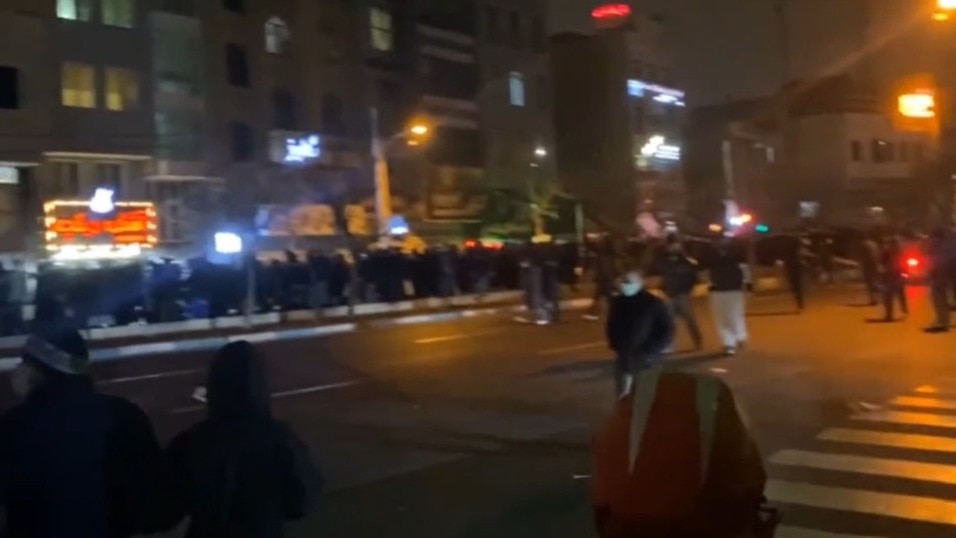
Protests have escalated across Iran, pushing the country into yet another period of political and economic uncertainty. For India, this is not a distant crisis. Iran sits at the heart of some of New Delhi's most important regional connectivity, making stability in Tehran directly linked to India's strategic and commercial interests.
This is the second time in less than a year that Iran has plunged into crisis, after facing a period of war and heightened confrontation with Israel and the United States in June 2025.
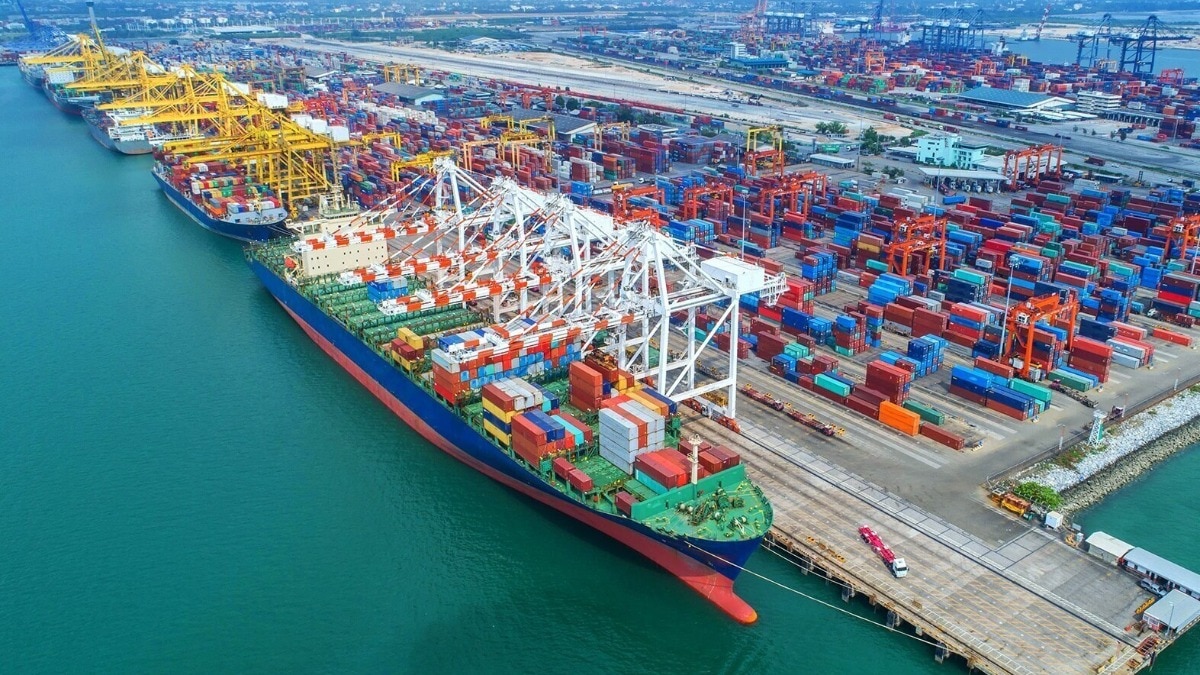
India has invested heavily in projects designed to deepen its access to Central Asia, Russia, and Europe, with Iran acting as a critical transit hub. Among the most important is the Chabahar port on Iran's southeastern coast, which gives India a direct route to Afghanistan and Central Asia while bypassing Pakistan.
Alongside this, the International North-South Transport Corridor (INSTC), a multi-modal trade network linking India to Russia and Europe via Iran, is a cornerstone of India's regional trade strategy, reducing dependence on longer and costlier maritime routes.
Former diplomat Anil Trigunayat said the stakes for India are significant, particularly as unrest spreads. "For us, Iranian stability is very, very important. We also have a very large population of Shia in India. Both the Chabahar port and the INSTC are very critical objectives and projects for India," Trigunayat told Moneycontrol.
He warned that prolonged instability could directly hurt India's interests. If there is definite, continued volatility for prolonged periods in Iran, he added, that will be very adversely impacting India's own interests.
In May last year, Hindustan Times reported that work was underway to expand the Chabahar port's capacity from 100,000 TEUs (twenty-foot equivalent units) to 500,000 TEUs and to connect the port to the Iranian railway network by completing 700-km of tracks to connect Chabahar and Zahedan. Both projects are expected to be complete by the middle of 2026.
Trade relations
According to the data shared by the Department of Commerce, India-Iran bilateral trade reached approximately $1.68 billion in FY 2024-25 (April 2024-March 2025), with India exporting $1.24 billion and importing $0.44 billion, resulting in a $0.80 billion trade surplus for New Delhi.
In practical terms, political and economic turmoil in Iran could slow operations at Chabahar, disrupt cargo movement along the INSTC, and complicate India's broader engagement across Eurasia. Any disruption to port operations, customs processes, or inland transport infrastructure would ripple across supply chains linking India to Central Asia, Russia, and Europe.
Trigunayat said the risks go well beyond a single project. "New Delhi wants to ensure that trade and regional connectivity continue smoothly. Any significant disruption in Iran, especially if infrastructure or ports are affected, will have direct ramifications for India's regional logistics and economic engagement," he said.
This comes at a time when India is trying to expand its footprint in Eurasian trade, strengthen links with West Asia, and build alternative transport corridors. A volatile Iran could translate into longer transit times, higher logistics costs, and greater uncertainty for Indian exporters, importers, and investors.
What India imports and exports
India has been among Iran's five largest trade partners in recent years. Major Indian exports to Iran include rice, tea, sugar, pharmaceuticals, manmade staple fibres, electrical machinery, and artificial jewellery, while major Indian imports from Iran consist of dry fruits, inorganic/organic chemicals, glassware, etc.
Cultural Cooperation
The long history of civilisational and cultural links between India and Iran continues to be the source of robust people-to-people and cultural ties. The Indian Cultural Centre, established in Tehran in 2013, is furthering these cultural ties. This centre was renamed the Swami Vivekananda Cultural Centre (SVCC) in 2018. The major tourist destinations in India and Iran continue to attract tourists of all ages from both countries.
Prime Minister Narendra Modi met Iran's President Masoud Pezeshkian on the sidelines of the 16th BRICS Summit in Kazan, Russia in October 2024, where the two leaders discussed ways to further strengthen the bilateral relations. This was their first meeting since Pezeshkian assumed office in July 2024.
In July 2024, Nitin Gadkari, Minister for Roads Transportation and Highways, represented the Government of India at the swearing-in ceremony of President Pezeshkian.