Davina McCall fights back tears as she reveals she has finished radiotherapy after breast cancer diagnosis
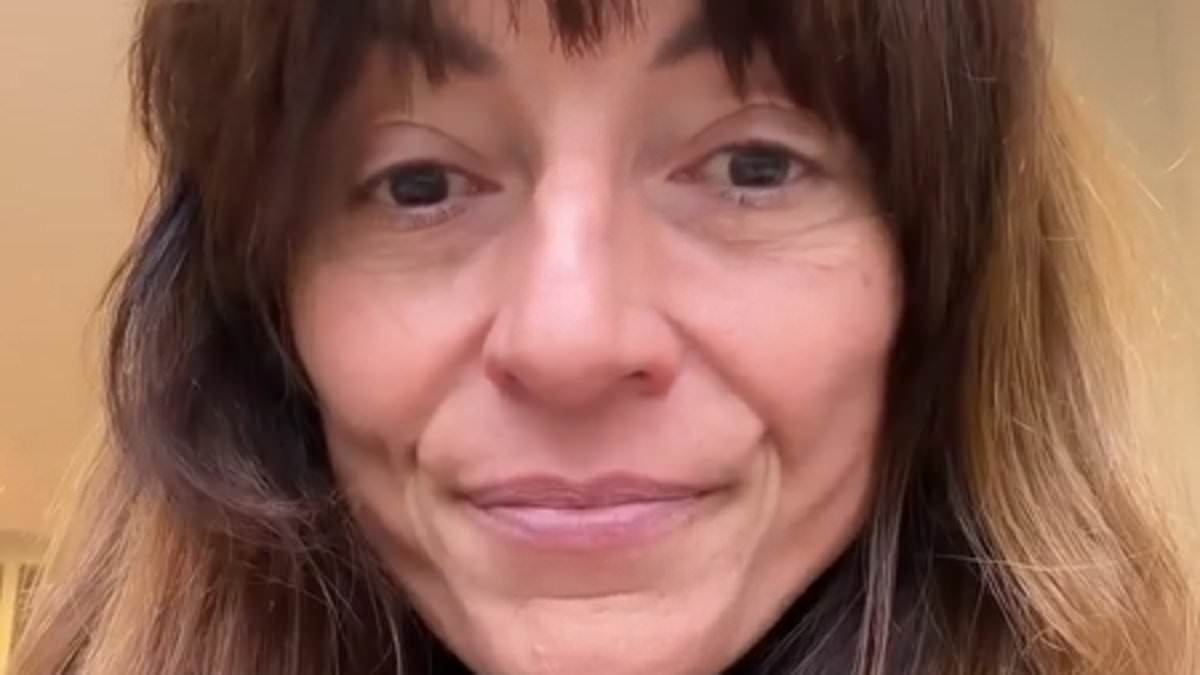
Davina McCall held back tears as she revealed she has finished her radiotherapy after battling breast cancer last year.The TV presenter, 58, revealed last November that she had detected it early after noticing a lump and getting it checked, leading to a successful lumpectomy.She has now completed her course of preventative radiotherapy and became emotional about the treatment coming to an end.Speaking in an Instagram video, she said: 'I finished my radiotherapy today, and it was very, very emotional.'Davina then paused for a moment and held back tears as she added: 'Much more emotional than I thought it would be. 'And I need a bit of positivity and brilliance, so I'm going to go and watch Julia Bradbury on Begin Again.' Davina McCall held back tears as she revealed she has finished her radiotherapy after battling breast cancer last year The TV presenter, 58, revealed last November that she had detected it early after noticing a lump and getting it checked, leading to a lumpectomy (pictured on Stand Up To Cancer)Davina recently revealed she is stepping back from full-time work after her breast cancer diagnosis served as a stark wake-up call.The TV star described the overhaul as essential after facing two major health scares in quick succession - a rare brain tumour in 2024, followed by cancer.Speaking candidly on the Miss Me? podcast on Monday, the Masked Singer judge admitted the double health blow had forced her to confront a lifetime of running from change and overworking.'Change is something that all my life, I spent running away from,' she confessed. 'I absolutely hated it. Change was something that really frightened me. I always loved the status quo, knowing what I was doing and feeling safe in that.'For over three decades, Davina has maintained a punishing schedule, fronting everything from Big Brother and Long Lost Family to The Masked Singer and My Mum, Your Dad. But the mother-of-three revealed her perspective has shifted dramatically following her recent health battles, acknowledging that her most significant personal growth has emerged from difficult periods.'What has happened, actually, is that I have realised that all my really big growth has come from change - and often quite painful change,' she said.Davina, who married hairdresser Michael Douglas, 49, last month, explained while her brain tumour had initially prompted reflection about reducing stress, it was the subsequent breast cancer diagnosis that truly forced her hand. Davina recently revealed she is stepping back from full-time work after her breast cancer diagnosis served as a stark wake-up call For over three decades, Davina has maintained a punishing schedule, fronting everything from Big Brother to The Masked Singer (pictured with fellow judge Maya Jama) Davina underwent an operation to remove a colloid cyst in her brain last year and almost one year later found a lump on her breast'I had an amazing breakthrough when I got clean in the early nineties,' she said, referring to her heroin and alcohol addiction in her twenties. 'I had another huge breakthrough after I had my brain tumour removed. I realised that I needed to de-stress my life.'Interestingly, I realised that - but then the breast cancer, which I thought was a very, very frightening thing, made me realise that I really, really had to put that into place. And I have now.'She continued: 'I'm going to work a four-day week. I feel so much better now about my life and trying to get it more balanced.'So now, really, as I hit this stage of my life, I want to take more care of myself. That is my latest project: me, because I can't take care of anyone else if I'm not okay.'The 14mm growth was discovered during a health scan offered as part of her menopause advocacy work. Following a six-hour operation, Davina spent several days in intensive care before making what doctors described as a remarkable recovery.She shares three children - Holly, 24, Tilly, 22, and Chester, 19 - with ex-husband Matthew Robertson, a former Pet Rescue presenter.The couple were married for 17 years before divorcing in 2017, and have maintained an amicable co-parenting relationship.Last month, she married Michael, whom she has been dating since 2019. The couple tied the knot in a low-key ceremony in London, with Davina later sharing that the experience of facing serious illness had only strengthened their bond.Breast cancer is one of the most common cancers in the world and affects more than two MILLION women a year Breast cancer is one of the most common cancers in the world. Each year in the UK there are more than 55,000 new cases, and the disease claims the lives of 11,500 women. In the US, it strikes 266,000 each year and kills 40,000. But what causes it and how can it be treated?What is breast cancer?It comes from a cancerous cell which develops in the lining of a duct or lobule in one of the breasts.When the breast cancer has spread into surrounding tissue it is called 'invasive'. Some people are diagnosed with 'carcinoma in situ', where no cancer cells have grown beyond the duct or lobule.Most cases develop in those over the age of 50 but younger women are sometimes affected. Breast cancer can develop in men, though this is rare.Staging indicates how big the cancer is and whether it has spread. Stage 1 is the earliest stage and stage 4 means the cancer has spread to another part of the body.The cancerous cells are graded from low, which means a slow growth, to high, which is fast-growing. High-grade cancers are more likely to come back after they have first been treated.What causes breast cancer?A cancerous tumour starts from one abnormal cell. The exact reason why a cell becomes cancerous is unclear. It is thought that something damages or alters certain genes in the cell. This makes the cell abnormal and multiply 'out of control'.Although breast cancer can develop for no apparent reason, there are some risk factors that can increase the chance, such as genetics.What are the symptoms of breast cancer?The usual first symptom is a painless lump in the breast, although most are not cancerous and are fluid-filled cysts, which are benign. The first place that breast cancer usually spreads to is the lymph nodes in the armpit. If this occurs you will develop a swelling or lump in an armpit.How is breast cancer diagnosed?Initial assessment: A doctor examines the breasts and armpits. They may do tests such as a mammogram, a special X-ray of the breast tissue which can indicate the possibility of tumours.Biopsy: A biopsy is when a small sample of tissue is removed from a part of the body. The sample is then examined under a microscope to look for abnormal cells. The sample can confirm or rule out cancer.If you are confirmed to have breast cancer, further tests may be needed to assess if it has spread. For example, blood tests, an ultrasound scan of the liver or a chest X-ray.How is breast cancer treated?Treatment options which may be considered include surgery, chemotherapy, radiotherapy and hormone treatment. Often a combination of two or more of these treatments are used.Surgery: Breast-conserving surgery or the removal of the affected breast depending on the size of the tumour.Radiotherapy: A treatment which uses high energy beams of radiation focused on cancerous tissue. This kills cancer cells, or stops them from multiplying. It is mainly used in addition to surgery.Chemotherapy: A treatment of cancer by using anti-cancer drugs which kill cancer cells, or stop them from multiplying.Hormone treatments: Some types of breast cancer are affected by the 'female' hormone oestrogen, which can stimulate the cancer cells to divide and multiply. Treatments which reduce the level of these hormones, or prevent them from working, are commonly used in people with breast cancer.How successful is treatment?The outlook is best in those who are diagnosed when the cancer is still small, and has not spread. Surgical removal of a tumour in an early stage may then give a good chance of cure.The routine mammography offered to women between the ages of 50 and 71 means more breast cancers are being diagnosed and treated at an early stage.For more information visit breastcancernow.org or call its free helpline on 0808 800 6000