Thorpeness: The Suffolk holiday village under attack from the sea
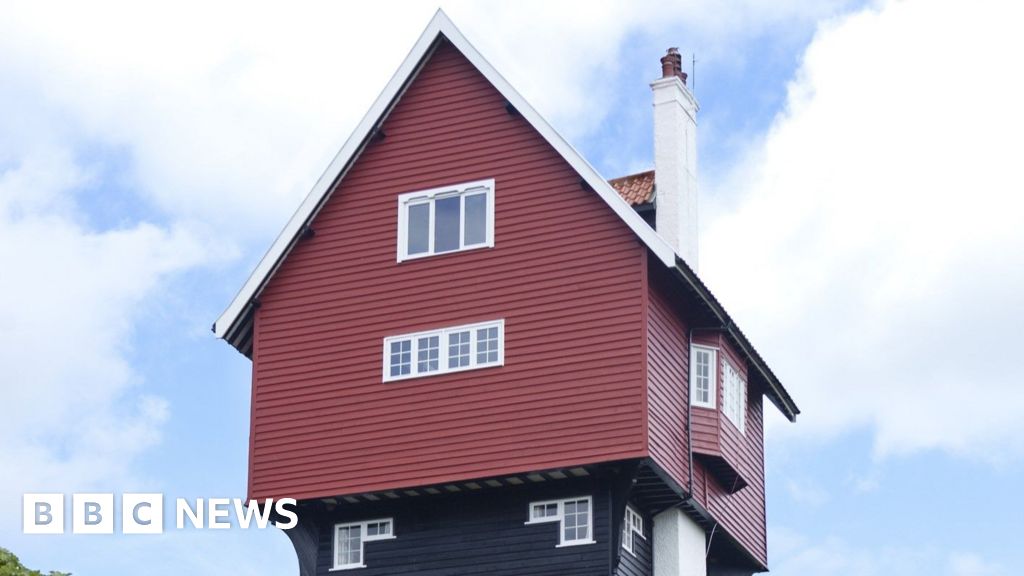
Getty ImagesThorpeness has been a holiday destination for more than a century but is losing homes to coastal erosionIt was built as an exclusive resort for wealthy Edwardian holidaymakers, but Thorpeness faces a threat.The Suffolk coastal village, a holiday hotspot for more than a century, is under attack from the North Sea, forcing the demolition of several homes with more at risk.It was developed by playwright and barrister Glencairn Stuart Ogilvie, whose great-great grandson Hamish Ogilvie now owns Thorpeness Meare, its 64-acre (26-hectare) boating lake.He described the damage inflicted by coastal erosion as a "tragedy" and said his illustrious ancestor would be very concerned by it.Richard Daniel/BBCEast Suffolk Council previously said coastal erosion in the village was "slowing down"Originally a fishing hamlet known as Thorpe, it was later developed into a holiday village by Glencairn Stuart Ogilvie in the early 20th Century.He was the son of a wealthy Scottish railway engineer who, in 1859, had bought a holiday home, Sizewell House, later known as Sizewell Hall.After the estate had been expanded along the coast to just south of Thorpe, Ogilvie inherited it in 1908.He had dreamed of turning the hamlet into a holiday village for the wealthy, and set to work on his plans.Historic England ArchiveThe Meare is a shallow boating lake at the heart of the villageNew homes were built, Thorpeness Meare was created, and the village's country club and golf club were established, providing an idyllic setting for family summer holidays.The Meare, just 3ft (1m) deep, was inspired by the Peter Pan stories of JM Barrie, a good friend of Ogilvie, with the Pirates' Lair, Wendy's House and Crocodile Island among its features.Named Thorpeness to distinguish it from other villages called Thorpe, the resort was formally opened in 1914. Later came the iconic House in the Clouds, a water tower whimsically disguised as a house, perched high above the village.Hamish OgilvieHamish Ogilvie's great-great grandfather built Thorpeness and transformed it into a holiday village"It was my great-great grandfather's idea to build a holiday village, and he had a vision of, as he described it, a Merrie England," Hamish Ogilvie told BBC Radio Suffolk's Sarah Lilley."People would come and holiday; enjoy the countryside; enjoy the boating lake he built, the country club to play tennis and play golf, and just enjoy the beautiful countryside that we have in Suffolk."Thorpeness is just one of two purpose-built seaside holiday villages in Britain, the other being Portmeirion, Gwynedd.Ogilvie described it as "unique" and said it was widely known across the country."The number of times I've been travelling and said, 'Oh, I come from Thorpeness – you won't have heard of it' and they'll be at the other end of the country [and say], 'Oh no, we've been there.'"The idea with Thorpeness is that it is a quirky village but therein lies its charm; that it is a throwback to a simpler time."Charlotte de Mille/Ogilvie familyThe village's windmill stands close to The House in the Clouds and its country clubFour homes have been demolished on the Thorpeness coastline since 2022, three of them in the last few months. Another is expected to be taken down in the coming days and East Suffolk Council warned nine other properties in the area were now also at risk of being lost. At the end of last year, experts believed the erosion was slowing and would settle down. However, it worsened at the start of this year following bad weather.Local residents have attempted to pay for their own sea defences, but an application was turned down by the council, which said they had not been properly planned. The council said nothing could be done in the short-term, but that it would work on longer-term strategies and was working to keep people safe. Richard Daniel/BBCSea defences have been put in place in a bid to halt the speed of coastal erosion in Thorpeness, but residents want to see moreOgilvie said there had been a "sense of sadness" in the village and that he hoped action could be agreed with the council soon.He said he was "very concerned" - and that his ancestor would have been, too."He spent most of his life trying to build up the village and was very successful," he said."He would obviously want the village to continue and be the place so many people love and enjoy visiting." He continued: "First and foremost, especially to all the residents whose properties have been affected, my thoughts are with them."But it does go to show that a long-term plan should be discussed to help maintain the village as it is."