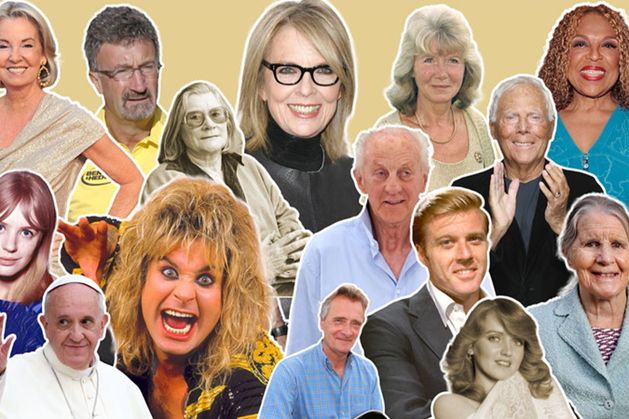
In memoriam: Remembering some of the greats we lost in 2025
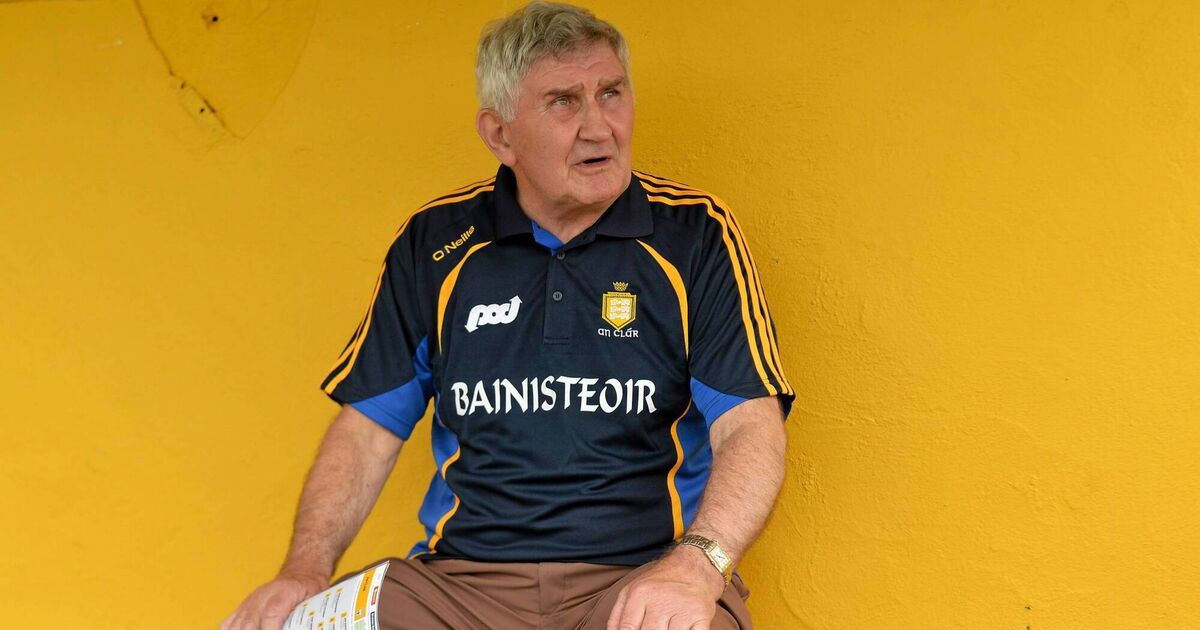
Pat Ingoldsby belonged to a rare category: Instantly recognisable, impossible to imitate, and entirely uninterested in fitting anywhere in particular. Poet, television presenter, performer, columnist, street philosopher — he moved freely between the whimsical and the profound, often within the same verse. For many Irish people, Ingoldsby first arrived via children’s television, where his gentle absurdity and love of language felt like permission to be strange.Later, he became a fixture on Dublin streets, selling handwritten poems, chatting, observing, always alert to the odd poetry of everyday life. His work was playful but never slight. Beneath the jokes and repetitions lay a deep compassion for outsiders, animals, loneliness, and fragile joy. Ingoldsby understood instinctively that humour could be a form of kindness. In losing him, Ireland lost not only a poet but a reassuring sense that there was still room for the gloriously odd.Pat Ingoldsby understood instinctively that humour could be a form of kindness. Picture: Moya NolanPaddy Cole Cole’s career stretched so far back it almost seemed to belong to folklore. A titan of the showband era, he was a working musician in the truest sense: Night after night, town after town, playing for people who wanted to dance, forget, and feel briefly lifted.As bandleader of the Capitol Showband, Cole helped shape a uniquely Irish musical circuit — long before arena tours or streaming statistics — when live performance was the country’s social bloodstream. Those decades on the road produced not only endurance but generosity; musicians who worked with him frequently spoke of his professionalism and warmth.Cole never chased reinvention or nostalgia. He simply kept going, powered by love of music and audience alike. His passing marked more than the loss of a performer: It quietly closed another door on an era when music was local, communal, and carried from hall to hall by people who knew exactly who they were playing for.Musician Paddy Cole played for people who wanted to dance, forget, and feel briefly lifted. Picture: Gareth Chaney/CollinsMick O’Dwyer Mick O’Dwyer’s name carried weight long before mythology gathered around it. As a player, and later as manager, he reshaped Gaelic football, redefining what ambition, preparation, and belief could look like in an amateur game. Kerry under O’Dwyer did not just win — they dominated with an intensity and a style that raised standards across the country. Yet, his legacy was never confined to silverware. He was a figure of fierce loyalty, famously demanding, occasionally divisive, but deeply invested in the idea that people could exceed their own expectations. Later chapters — including controversial managerial stints elsewhere — only humanised him further, revealing a man reluctant to fade quietly. O’Dwyer’s death marked the passing of a generation of sporting leadership rooted in personality rather than systems. He reminded Ireland that games are shaped not only by tactics but by belief, defiance, and a refusal to accept limits too easily.Mick O’Dwyer reshaped Gaelic football, redefining what ambition, preparation, and belief could look like in an amateur game.Paul Costelloe Paul Costelloe brought Irish elegance to an international stage without ever losing his grounding. From his Dublin beginnings to the salons and runways of London, he built a fashion career defined by clarity rather than spectacle.His clothes were wearable, thoughtful, quietly confident — much like the man himself. He became best known for dressing Britain's Princess Diana, but Costelloe never allowed that association to eclipse his broader achievement: Sustaining an independent fashion house in a brutal industry across decades. He believed in tailoring, proportion and discipline, resisting trends that felt hollow or hurried. Costelloe also understood fashion as service — clothing as something that should make people feel themselves, only better. In an era obsessed with churn, he valued continuity. His death removed one of Ireland’s most consistent creative ambassadors, someone who demonstrated that international success need not require abandoning modesty or restraint.Paul Costelloe's clothes were wearable, thoughtful, quietly confident — much like the man himself.Eddie Jordan Eddie Jordan was never built for the background. Loud, charismatic, opinionated, and endlessly entertaining, he brought colour to Formula One — both as team owner and later as broadcaster — in a sport not always known for warmth or accessibility. His Jordan Grand Prix team punched far above its weight, launching careers — most notably Michael Schumacher’s — and doing so with flair rather than corporate coldness. Jordan believed motorsport should be fun, risky, and occasionally chaotic. His enthusiasm was infectious; even casual viewers understood his joy. Later, as a media personality, he became something of a national eccentric — blunt, bullish, generous with praise and criticism alike. Beneath the bravado lay real instinct and knowledge. Jordan’s passing felt like the loss of a loud laugh in a quiet room: The kind of presence you only appreciate fully once it’s gone.Former F1 team owner and BBC pundit Eddie Jordan brought colour to the sport. Picture: Dean Mouhtaropoulos/Getty
Hugh Wallace Hugh Wallace welcomed architecture into Irish living rooms without dumbing it down. As a judge on Home of the Year, he articulated design principles with clarity and generosity, always returning to the idea that homes should nurture life rather than impress strangers. Off-screen, Wallace was a respected architect whose professional impact matched his public one. Yet what endeared him to so many was his openness about addiction, recovery, dyslexia, and love. In sharing his vulnerabilities, he quietly dismantled the myth that creative success requires perfection. His sudden death felt especially cruel because of how alive he seemed — engaged, curious, encouraging. Wallace believed in second chances, in thoughtful space, and in kindness as a professional value. He leaves behind buildings, broadcasts and — perhaps most significantly — a permission structure for honesty that many found both reassuring and rare.RTÉ 'Home of the Year' presenter Hugh Wallace articulated design principles with clarity and generosity, always returning to the idea that homes should nurture life rather than impress strangers. Picture: Andres PovedaGeraldine O’Grady Geraldine O’Grady’s career was a series of quiet firsts. The first Irish woman to graduate from the Paris Conservatoire. The first woman to lead the RTÉ Symphony Orchestra. Achievements earned not through noise but through excellence. A violinist of international standing, she performed with orchestras across Europe and the United States — yet remained deeply connected to Ireland. Her musicianship was rigorous, disciplined, and emotionally precise. She believed in preparation over drama, craft over ego. O’Grady also served as a model of what sustained artistic seriousness looks like, particularly for women who came after her. Her passing felt like the extinguishing of a steady light rather than a blaze, but its absence is keenly felt. She leaves behind recordings, students, and a standard of professionalism that continues to resonate quietly.Geraldine O’Grady was the first woman to lead the RTÉ Symphony Orchestra.Manchán Magan Magan was an Irish cultural explorer in the richest sense — curious, restless, and deeply engaged with language, landscape and belonging. Through writing, broadcasting and documentary work, he asked questions that sat just outside comfort: What does it mean to live well? To belong responsibly? To pay attention? He had a gift for connecting ancient wisdom to modern anxiety without resorting to nostalgia. Magan’s work resisted speed, encouraging audiences to slow down, listen, and reconsider assumptions about progress and success. Often self-deprecating, sometimes contradictory, he was never disengaged. His interest in Irish language, folklore and sustainability felt lived rather than performative.Magan’s death deprived public discourse of a voice willing to wander thoughtfully rather than argue loudly — a loss felt keenly in a culture that increasingly rewards certainty over curiosity.Manchán Magan, Irish writer, traveller, author, and television programme maker, asked questions that sat just outside comfort. Picture: Marc O'SullivanRobert Redford Actor, director, and activist Robert Redford embodied a particular kind of American idealism — handsome, principled, restless, and increasingly sceptical of power. His acting career produced iconic performances, but it was his work behind the camera, and through the Sundance Institute, that ensured his influence would endure. Redford believed in independent voices and creative risk. Sundance became a sanctuary for storytellers outside the mainstream, altering the film landscape permanently. His politics were quiet but clear; his activism persistent rather than theatrical.As he aged, Redford stepped back gracefully, refusing to cling to relevance. His death marked the passing of a generation of Hollywood figures who understood fame as responsibility rather than entitlement. He leaves behind a body of work — and an institutional legacy — rooted in the belief that stories matter, especially those told from the margins.Robert Redford believed in independent voices and creative risk. Picture: Eric Zachanowich/Fox Searchlight via APGene Hackman Gene Hackman never needed charm. His greatness lay in credibility, the sense that every character he played existed long before the camera arrived. From volatile authority figures to worn-down anti-heroes, he brought gravity without grandstanding. Hackman’s performances were rarely showy, often devastating. His range — from The French Connection to The Royal Tenenbaums — was extraordinary. He excelled at portraying men shaped by compromise, ego, and regret. Even at his most villainous, he remained recognisable, disturbingly human. Retiring quietly from acting years before his death, Hackman seemed uninterested in legacy management. He trusted the work to speak. It does. His passing felt like the removal of bedrock — an actor whose presence grounded films in something real. In a profession that rewards spectacle, Hackman’s career stood as proof that understatement can be the most enduring power of all.From volatile authority figures to worn-down anti-heroes, Gene Hackman brought gravity without grandstanding. Picture: Vera AndersonVal Kilmer Val Kilmer’s career was marked by brilliance, resistance, and vulnerability. A classically trained actor with movie star looks, he seemed destined for easy success, yet consistently complicated expectations. His performances were daring, sometimes unruly, and always committed.From Top Gun to The Doors, Kilmer embraced intensity, refusing to dilute eccentricity. Later health struggles - which altered his voice and energy — revealed extraordinary resilience. His eventual return to screen work carried emotional weight far beyond the roles themselves. Kilmer’s artistry was personal, sometimes difficult, occasionally misunderstood. But it was sincere. His death closed the story of an actor who valued expression over approval. What remains is a catalogue of performances that dared audiences to meet him halfway — and a reminder that risk, though costly, is often where truth resides.From 'Top Gun' to 'The Doors', Val Kilmer embraced intensity, refusing to dilute eccentricity. Picture: Mark Humphrey/APJennifer Johnston Jennifer Johnston, beloved and prolific writer of novels, plays, and short stories, left behind a unique and considerable legacy. For many people, she will be forever associated with Big House novels. Many of her imagined worlds exist in that lost universe of the Protestant ascendancy class, but it was not an association she welcomed.
It’s so damaging. People call me a ‘Big House’ writer, whatever that means; it drives me mad
Labels aside, Johnston’s work certainly has a preoccupation with conflict created by class, culture, and nationality. How Many Miles to Babylon? is her most famous novel and looks at a friendship that bridges conflict — in this case, one of class. Shadows on Our Skin, shortlisted for the Booker in 1977, is set within the turbulence of the North. Indisputably a writer’s writer, fans of her work celebrate it for its terseness and emotional accuracy, a sharpness, and economy that seemed only to increase as she aged.Indisputably a writer’s writer, fans of Jennifer Johnston's work celebrate it for its terseness and emotional accuracy. Picture:Arthur Carron/CollinsDavid Lynch David Lynch never explained his work — rather, he invited. His films and television catalogue — from Eraserhead to Twin Peaks— resisted interpretation as much as they rewarded immersion. He trusted mood, sound, and subconscious logic over narrative certainty. Lynch’s influence extended far beyond cinema. He altered how stories could be told, how dread and beauty might coexist, how silence could speak. His work unsettled because it refused reassurance. Privately gentle, publicly eccentric, Lynch cultivated creative discipline through transcendental meditation, believing art emerged from inner stillness. His death felt like the dimming of an entire frequency rather than a single voice. He leaves behind worlds that continue to breathe, disturb, and enchant — asking not for understanding but attention.David Lynch trusted mood, sound, and subconscious logic over narrative certainty. Picture: Vittorio Zunino Celotto/GettyDiane Ladd Diane Ladd’s career was defined by resilience and emotional intelligence. A formidable screen presence, she specialised in women shaped by strength, sorrow and endurance — characters rarely allowed neat conclusions. Nominated multiple times for major awards, she brought ferocity and warmth to roles across film and television. Her off-screen life, including her relationship with daughter Laura Dern, was marked by mutual artistic respect rather than competition. Ladd understood agEing not as diminishment but as deepening. She continued working, mentoring, and advocating well into later life. Her death felt like the loss of a quietly radical presence — someone who expanded what female longevity in cinema could look like. Her work endures as testament to emotional truth delivered without apology.Diane Ladd specialised in women shaped by strength, sorrow, and endurance. Picture: Richard Shotwell/Invision/APTom Stoppard Tom Stoppard wrote with dazzling intelligence, but never forgot the human pulse beneath ideas. His plays challenged audiences to laugh while thinking — often about history, morality, and identity — without turning theatre into lectures. From Rosencrantz and Guildenstern Are Dead to Arcadia, Stoppard fused philosophy with wit, trusting audiences to keep up. He respected language deeply, believing it could entertain without simplifying thought. A playwright of ideas who never abandoned character, Stoppard shaped modern theatre immeasurably.His death marked the loss of a mind capable of holding complexity lightly — a rare balance. What remains is a body of work that continues to reward rereading, reminding us that intelligence, when paired with humour, can be profoundly generous.Tom Stoppard fused philosophy with wit, trusting audiences to keep up. Picture: Ian West/PABrian Wilson Brian Wilson heard music other people hadn’t yet imagined. As the creative engine of The Beach Boys, he transformed surf pop into something symphonic, fragile, and emotionally expansive.
Pet Sounds remains one of popular music’s great acts of bravery. Wilson’s life was also marked by profound struggle — mental illness, exploitation, isolation. Yet even through pain, his work retained tenderness. His melodies carried longing without bitterness, hope without naivety.In later years, Wilson received long-overdue recognition, performing his work with dignity and vulnerability. His death felt like the passing of a sound — a particular harmony that made people feel less alone. He leaves behind songs that remain luminous, reminding us that beauty can emerge even from profound fragility.Even through pain, Brian Wilson's work retained tenderness/ Picture: Harry Langdon/GettyMary (May) McGee In taking up the fight for access to contraception as a married woman in the 1970s, Mary (May) McGee paved the way for how reproductive care is given in Ireland today. In her late 20s then, she had four babies in just 23 months, between December 1968 and November 1970.After suffering several health challenges in pregnancy, the family GP advised Ms McGee and her husband Séamus to start using contraception to protect her health. At the time, it was not illegal to use contraceptives, but it was illegal to sell, offer, advertise or import them. When the couple ordered spermicide jelly from the UK, it was intercepted by Customs officials. The couple was told they could be fined or even jailed.Mary McGee, left, and her husband SÉamus won their case against the Attorney General and effectively overturned a 1935 ban on the sale of contraceptives in Ireland. Picture: National Women's Council/Dermot Barry In 1972, they took their case to the High Court. There, Ms McGee told the judge: “Religion is important, but I still think we have a right to live as human beings. We are husband and wife, and we cannot live as brother and sister.” That case was rejected, but overturned in a Supreme Court appeal the following year, which ruled contraception was a matter for husband and wife and should be free of interference from the State.Chris Rea He defined a particular kind of homecoming nostalgic sentiment for a generation with his festive hit Driving Home For Christmas, and had separate success with other songs, but Chris Rea was never a typical 'hit'-maker.Chris Rea performing in London in 2014.He was most comfortable with quieter venues and with the blues as a genre, and highly valued what he saw as the Irish influences in that music (he was half Irish through his mother). Rea's later ill health threw his musical career off course for a period, but he remained an antidote to brasher, flashier personas in the music industry, and flourished in a quieter way late on, playing his beloved blues.The people remembered here shared little in common stylistically, geographically, or temperamentally — yet each enlarged the world in some way. They built things, said things, played things, imagined things that outlast them. In mourning them, we don’t merely catalogue loss. We acknowledge inheritance. Their work remains — not frozen in tribute, but active, still shaping thought, feeling, and possibility. That, perhaps, is the gentlest consolation of all.