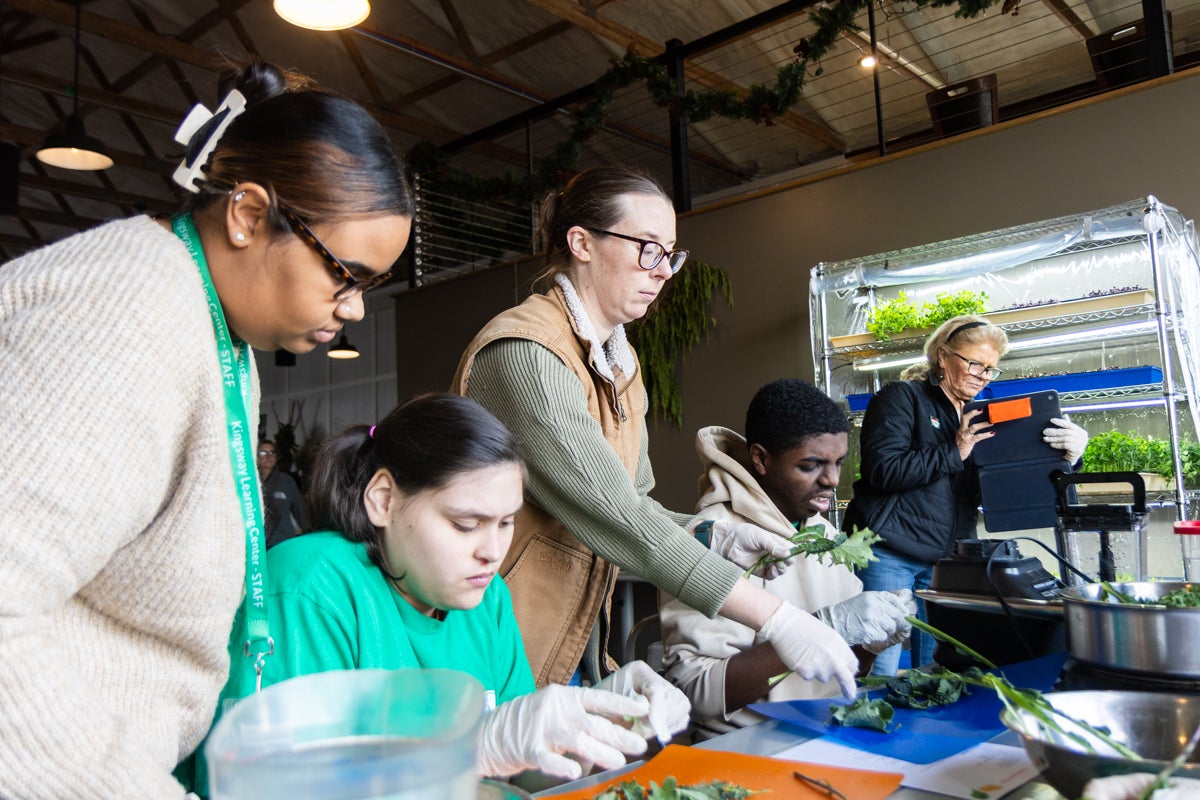
At a South Jersey farm, a garden classroom helps students grow skills for life
An arugula pizza and a turning point
One of the most vivid examples of impact came during an arugula harvest. Staff decided to work with Alex to make a pizza topped with a simple arugula salad.
“I really enjoyed making and eating the arugula pizza and trying the bread with tzatziki! I have already started helping to cook at home. These classes helped me to try new foods,” he said in his review of the course.
Instructors and parents have found that repeated exposure to cooking and unfamiliar produce, paired with supportive, accessible instruction, becomes a key part of building self-confidence, widening food choices and strengthening a sense of independence.
Romano said she saw her son move beyond years of rigid eating tied to Avoidant Restrictive Food Intake Disorder, or ARFID, a condition common among children with autism who rely on “safe” foods with predictable textures and tastes. For years, Alex ate little more than macaroni and cheese, grilled cheese sandwiches and french fries. Once he began working hands-on with food, something shifted, she said. He started trying meatballs, pepperoni, and even pork loin — a transformation she called practical and deeply personal.
“I used to feel like a scientist in the kitchen, trying anything to keep him healthy when he would only eat three things,” she said. “Now he has a real diet, real protein, and it has opened him up as a person.” She said the changes extend beyond the table, noting stronger communication skills, more confidence and a growing ability to read emotions and connect with others at school.
Adaptable scissors designed to cut vegetables sometimes used for classes at Reed’s Farm. (Kimberly Paynter/WHYY)
Beyond the kitchen toward independence and inclusion
According to the National Library of Medicine, cooking-based programs improve cooking knowledge, self-efficacy, confidence, self-esteem and, in some cases, better home food availability.
The impact of culinary engagement extends beyond food. For many participants, learning to cook is a step toward self-determination and independence. Some programs have also demonstrated improvements in mood, mental health and general well-being.
In New Jersey and across the country, many adults with developmental disabilities face barriers to employment and community participation. For more than 600 students, Reed’s Farm has provided real-world work experience, transferable job skills and a supportive environment that values their abilities.
Reed put it simply: “Being able to connect with students and encourage them to try new foods and practice culinary skills — that can open doors for them in their future. But it is also just so powerful to change their everyday life.”
Pasta and cheesy kale balls made by students with developmental disabilities at Reed’s Farm culinary class. (Kimberly Paynter/WHYY)
A kitchen classroom for life skills
For students who rarely have access to kitchen tools or real cooking opportunities, the class delivers more than produce.
More than 200 kids from the Boys and Girls Club have participated in Reed’s culinary classes. The collaboration brings teens into the garden for hands-on maintenance, then out to the farm for tours and seasonal activities like making pickles. They also participate in a “Healthy Habits” session that blends nutrition lessons with kitchen skills. These programs give kids a chance to grow crops in Atlantic City, turn them into fresh meals and see how agriculture and the culinary arts can become meaningful career paths.
The kitchen classroom is a place where students learn to trust themselves and see what they are capable of one meal at a time.
__
Editor’s Note: This story is part of a series that explores the impact of creativity on student learning and success. WHYY and this series are supported by the Marrazzo Family Foundation, a foundation focused on fostering creativity in Philadelphia youth, which is led by Ellie and Jeffrey Marrazzo. WHYY News produces independent, fact-based news content for audiences in Greater Philadelphia, Delaware and South Jersey.
WHYY News is partnering with independent journalists across New Jersey to spotlight the people, communities, cultures and distinctive places that shape the Garden State. This work is made possible with support from the Geraldine R. Dodge Foundation.