Nigel Owens: ‘I’m wondering if rugby has lost its way’
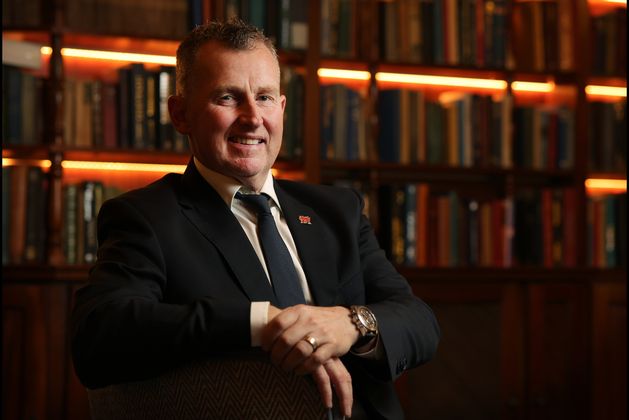
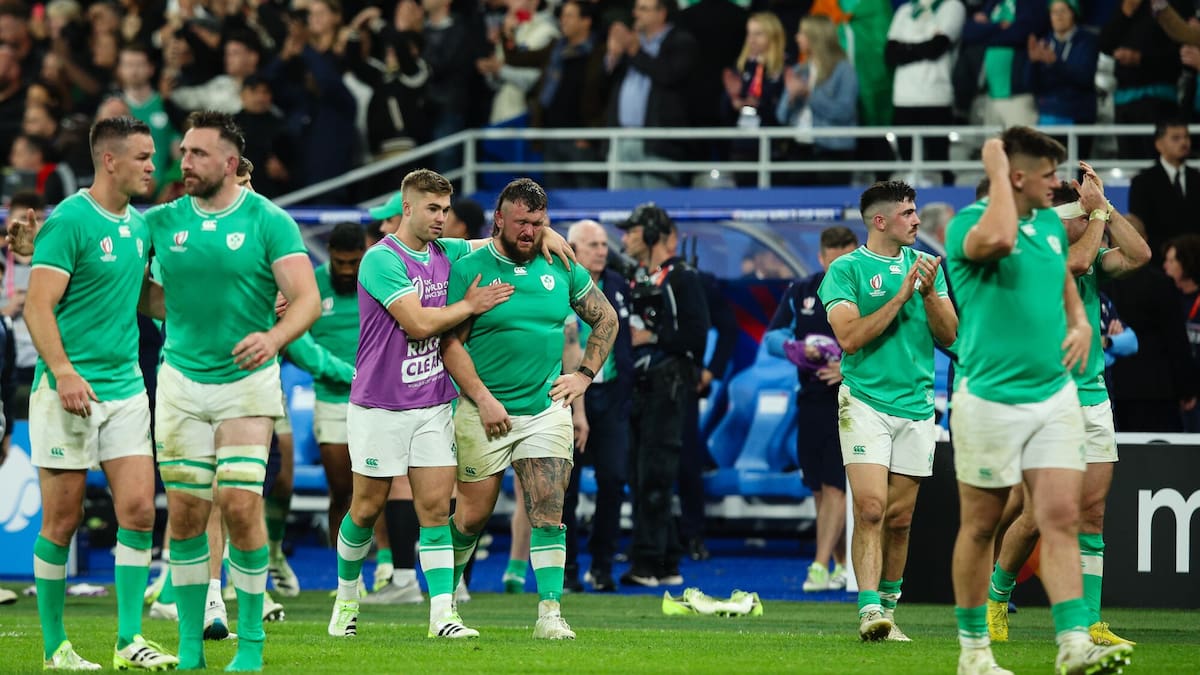
The legendary referee may have hung up his whistle, but he remains involved, as a pundit on Welsh television, and presents a weekly show about the big decisions in the international game on YouTube called Whistle Watch for World Rugby.For many, he is the voice of rugby refereeing, with his natural ability to communicate clearly his common sense approach to the game. Yet even he is no longer sure of what he is seeing.“People are saying to me, ‘I didn’t expect that decision. I expected that to be a straight red’. But it wasn’t given. Or I’m saying, ‘that’s not a straight red’. But they gave a straight red,” he says. “Even as a referee, although I’ve retired a couple of years, I’m just thinking, ‘I don’t know what to expect here’. And that shouldn’t be happening.“So, they really need to grasp this pretty quickly and somehow get rid of all these layers and layers and layers and just get back to being as simple as you possibly can for, to be fair, a complex game.”Referee Nigel Owens during the 2019 PRO14 final between Leinster and Glasgow Warriors at Celtic Park in Glasgow. Photo: Brendan Moran/SportsfileOwens does not miss refereeing, but he still cares deeply about the game. We meet in Navan’s Newgrange Hotel an hour before he is due to appear as a guest of Navan RFC at their sold-out business lunch, a reminder that he remains a popular figure.Public speaking is a big part of what he does now, whether addressing corporate events to tell his story or regaling a rugby audience with tales of his long and distinguished career in the game.One begets the other in many ways, with Owens having hailed rugby’s reaction to his coming out and the sport’s inclusivity — something that begins at club level.But the 54-year-old from Mynyddcerrig in Carmarthenshire believes rugby must guard against complacency when it comes to upholding its own values. And, he warned, that must start at the top level of the game.“It’s Catch 22, you’ve got to show a clear message at the top but you’ve also got to show the clear message at the bottom because that’s when that difficult journey will start,” he says.“The difficult journey hasn’t started when you’re 25 years of age dealing with it at the top of the game. It’s started when you’re in your teens or whenever you start that journey.“And if you’ve got an environment around you in that grassroots environment which encourages people to be themselves, the value of respect and the diversity and everything that’s in the sport of rugby, then you’ve got the base, you’ve got the groundwork right then. It’s hugely important.”Now, though, his fear is that rugby — which he says had led the way — is losing its way.“When there have been issues in rugby — whatever they could be — racist abuse of a player, referee abuse, whatever the issues are, where rugby has sort of led the way, it’s dealt with them. In football, you can see the players swearing at the referee but then nothing seems to be done about it. Now if it happened in rugby, it would be dealt with.“The biggest issue I think rugby has, and this ties into [things] around the personal journey as well, is if you’ve got players playing a certain way, or using an illegal tackle or leading with the shoulder or a finger in the eye, for example, if that is not dealt with strongly at the top of the game, then the kids playing the game think that it’s alright to do it. So there has to be a standard and a strong message sent.The Irish scrum struggled in their defeat to South Africa at the Aviva Stadium last month. Photo: David Fitzgerald/Sportsfile“Rugby has always led the way in dealing with issues. At the moment it’s struggling with that consistency of a player charging into a [player] shoulder first, totally reckless and then you get a six-week ban, reduced to three weeks for saying sorry, and then go to ‘tackle school’ and get a two-week ban for something that can cause a serious, serious injury, particularly where the game is at the moment. Well, that’s not sending a strong enough message to the players or to the grassroots.”Owens believes an over-reliance on technology is at the heart of rugby’s issues.“For somebody who refereed from when technology was being used just for goal-line offences and nothing else to where it is now ... I always said that the more you bring technology into the game, the more difficult you’re going to make it for yourself.“Because what will happen is, in a few years down the line, everybody will expect every decision to be scrutinised and be perfect. If you try to be perfect, then perfect will become the enemy of good.”“When I started refereeing, [former international referee] Derek Bevan gave me one great piece of advice. Always start refereeing the game: ‘keep control, keep it tight. Set your standards in that first five or 10 minutes’. When players know the standard you’ve set, they’ll play, and then you can let it go. If you start off the game letting them do anything they want, it’s impossible to get it back under control.“That’s what I fear has happened now with technology, it’s gone so far that the TMO can come in for pretty much anything during the game. It’s going to be very difficult now to claw this back to where it needs to be and get rid of all these grey areas.”Another element that appears to be muddying the waters at the top level is the layers of bureaucracy referees must go through, between the 20-minute and straight red cards and the TMO and the bunker review process.“You need to sort out what actually is a red and keep it as a red,” he says. “Then, if it’s a yellow card for foul play but not reaching the threshold of a red, make it a 20-minute sanction. And for technical infringements, keep it at 10 minutes.“What they’ve done now, to try to counter unlucky reds which shouldn’t have been reds in the first place, they’ve brought in the bunker and that’s just added another layer for referees to deal with.“Without being disrespectful to them, the people in the bunker are not international referees. If I was refereeing now, I’d want to make that decision myself.“Or, if I had to send it to the bunker and had no control over the decision, I’d want it to go to someone like John Lacey, Wayne Barnes, Romain Poite — people who’ve been there and know the feel of the game. Some of the bunker officials have never refereed at the professional end of the game, let alone internationally. That’s a problem.“The two most important people now are the referee and the bunker referee. The TMO still allows the referee to have the final say. Once you send it to the bunker, you play no part in that process. That can’t be right.”Having said that, Owens does not have an interest in going into the bunker himself. Rugby remains a passion, but he’s at peace with his decision to retire.“I didn’t want to do the travelling anymore. My dad’s in his 90s. I didn’t want to be on the other side of the world for three weeks. I always wanted to have a small holding on a farm. And the travelling, plus the way the game was going — far too technical. All these referee camps, hours and hours of meetings discussing clips. I thought it was time to get out.“I wouldn’t want to go somewhere else in the world for three weeks just to sit in a bunker. For me, it was about being on that field. That’s why you’re not seeing referees who’ve finished in the last few years going into that sort of role. It’s probably not for them. Their expertise is probably more needed in coaching and other aspects of the game.”Scrummaging was the other aspect of the sport that came under scrutiny in the international window, especially in the wake of Ireland’s defeat to South Africa.“Scrums should never be the most important part, but they still need to be integral,” he says. “Otherwise, where are the likes of Adam Jones, Tadhg Furlong, John Hayes going to play? They can’t play anywhere else — their body shape doesn’t suit other positions.“If you remove the contest and reward from scrums — whether that reward is keeping the opposition on the back foot, spreading the ball, winning a penalty, or gaining an advantage, what happens then? You’ll end up with six-foot-eight back-rows playing in the front-row like rugby league. That’s not what this game is about.“Players need to get better at scrummaging, and referees need to get stronger at dealing with negativity in the scrum.”Owens was in charge on the day the Irish scrum crumbled at Twickenham in 2012, but he never reached for his pocket.“You should never yellow-card a player who’s done nothing wrong. If a prop deliberately takes it down three or four times, he deserves to go, that’s how you change behaviour. But don’t punish someone who has no option.“When was the last time you saw a lot of five-metre scrums? The goal-line dropout law is the first one I’d scrap [as] it’s only brought negativity.“If you’ve got a strong scrummaging side, why shouldn’t you be rewarded? You’re rewarded for a good lineout, a good maul, a creative backline, or a back-row that steals ball. The scrum should be no different.“What needs to happen is small changes to make scrums better and quicker — set them faster, deal with players who collapse them. It’s not the referee’s fault when scrums collapse, but it becomes their fault if they don’t deal with the culprits. So improve the scrum, don’t depower it.”Refereeing, he says, is still something he’d recommend to any youngster interested in taking up the whistle as long as they have the right motivation.“I would definitely recommend it, but get into it for the right reason What we see now, and I think it’s the same all over the world, is a huge influx of young referees because they see it as a career, as publicity, being on TV, being a mini-celebrity in rugby. Some get into it for the wrong reasons.“So, you’ve got to get into it because you love the game, you can’t play anymore, coaching’s not for you, and you want to give refereeing a go. That’s the right reason.“I’d say ‘give it a go’. But be prepared, it’s going to be difficult along the way. The positives will outweigh the negatives by a long, long way.”