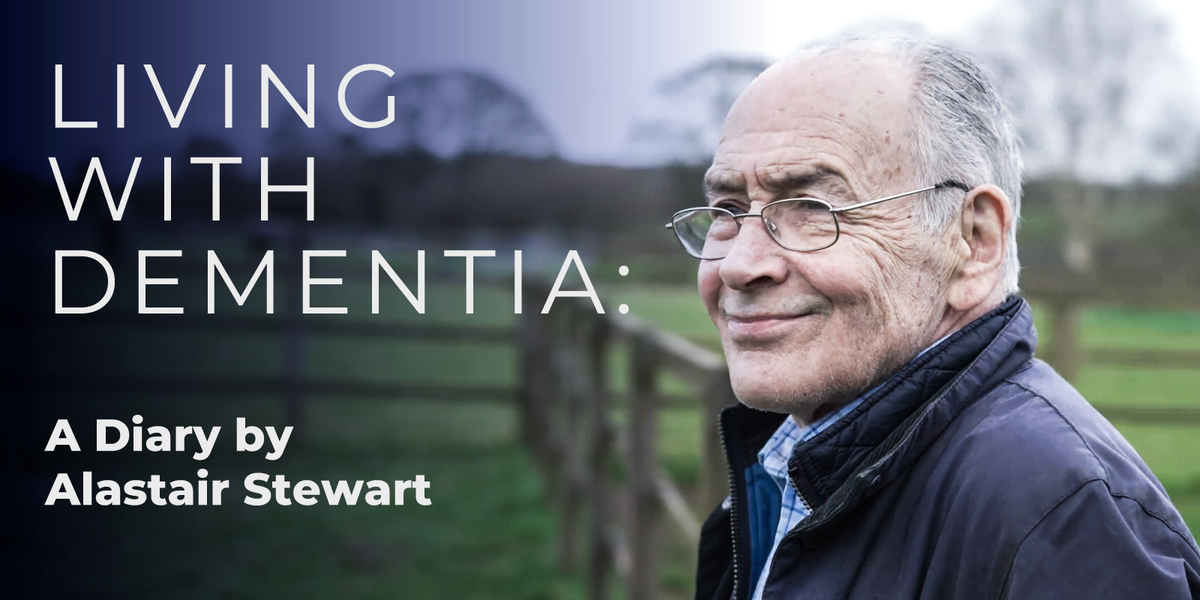
Alastair Stewart: I can tell you from experience - navigating dementia can be a nightmare in the run-up to Christmas
In the run-up to Christmas, I suspect we all rely on plastic and online shopping more than is wise.I can tell you from personal experience that, for those of us with dementia, it is a nightmare.This week, I have had several cold calls from credit card companies, some of which I am genuinely a customer of, and others offering new cards with silly credit limits.With the real cards, they often talk about “unusual expenditure,” such as rail tickets I’ve never purchased, and then they offer you the chance to press a number to approve it or another number to talk to the fraud team. Do not do either. Hang up and block the number. It is a scam.As the great Nick Stapleton has pointed out on his excellent Scam Interceptors programme (which I thoroughly recommend), these so-called “fraud departments” just want your personal and banking details. Don’t touch it with a bargepole.Amazon isn’t much better. I keep getting cold calls and emails about opening a “business account.” I neither want nor need one. Again: delete and block. It is a scam.I was pleased to do a podcast this week for a friend of a friend, mainly for people working in wills and probate, especially solicitors.This really matters to people like me with dementia. It is worth checking your Will, especially with the future costs of care and with guardianship for children. You may also need to consider Power of Attorney, particularly for financial matters. Our own solicitor has been very helpful, I’m glad to say.It is also Christmas card season, and a growing number of people have messaged or emailed us to say they are no longer sending cards by post. Instead, they send electronic messages and make a donation to charity.That is kind, but it doesn't matter: Christmas cards are an important revenue stream for many charities, as well as an awareness tool.On the global stage, Trump has featured heavily in my thoughts and reminiscences.His antics over Ukraine and Europe brought George Orwell’s 1984 to mind.In the novel, the UK is reduced to the status of an airfield or landing strip for the mighty “Oceania”, Orwell’s name for the USA, in its never-ending conflict with Eurasia and Eastasia.1984, along with Brave New World, were the two most influential books I read as a teenager.Both are well worth revisiting or reading for the first time.The relationship between the USA and Europe is historically fascinating, especially from the end of the Second World War and the formation of the EEC and later the EU.After WWII, spheres of influence were largely defined at the Yalta Conference (Feb 1945) and then confirmed, or disputed, at Potsdam (July–Aug 1945).The “Big Three” (Stalin, Churchill/Attlee, Roosevelt/Truman) carved up Germany into zones, discussed Eastern Europe (with Soviet dominance emerging), and established reparations, setting the stage for the Cold War.The USA and Europe, Germany aside, had become anti-Nazi allies, though even the Americans were Johnny-come-lately players in the actual fighting.As the world settled into two superpowers, the democratic, free-market West and the dictatorial Communist East, the founders of the EEC built an economic and political bloc designed to maintain peace on the continent.Initially, the USA welcomed this, seeing the EEC as an ally in opposing the USSR and its Warsaw Pact. NATO was formed in 1949, with the USA the clear senior partner.When Thatcher began to question the EEC’s ambitions about “state-building” and being a third superpower, America grew uneasy.Reagan valued Europe strategically but had doubts about its economic ambitions. George H. W. Bush shared those concerns.As the UK drifted away from the EEC/EU, becoming, in Orwellian terms, “Airstrip One” - offering US access to European markets - US presidents also became concerned about Europe’s share of NATO spending.This week, under Trump, those tensions came to a head. He effectively warned that Europe was no longer vital as an ally and appeared to back Russia’s demand that Ukraine never become a NATO member. The post-war settlement is unravelling.Trump’s interests seem increasingly focused on Asia, especially India, and on his war on drugs and “socialism” in South America, particularly Venezuela.This week, I also enjoyed a fine lunch with my Anglo-American friend John Barlow and dinner with my friend Robert Sperring, who has many American friends and business interests in the States, and confirmed in conversation that I wasn’t going mad. They shared much of my analysis.Having been in the US during the Reagan and Bush Senior years, my memories flooded back, which was reassuring.I’m not sure the prospects for world peace are equally reassuring.As I wrote last week, I wouldn’t be reassured if I were Sir Keir Starmer.A Street–Rayner ticket against him might sound silly to some, but to many Labour supporters, and those flirting with Corbyn or the Greens, it would be music to their ears.Trump’s suggestion that visitors to the US may have to submit their social-media history would have been music to the ears of East Germany’s Stasi.Orwell’s Big Brother would have applauded. Stay at home if you ever criticised Trump on Twitter, X, Facebook, or anywhere else.