Americans Set to Receive Up to $2000 Refund Checks in 2026
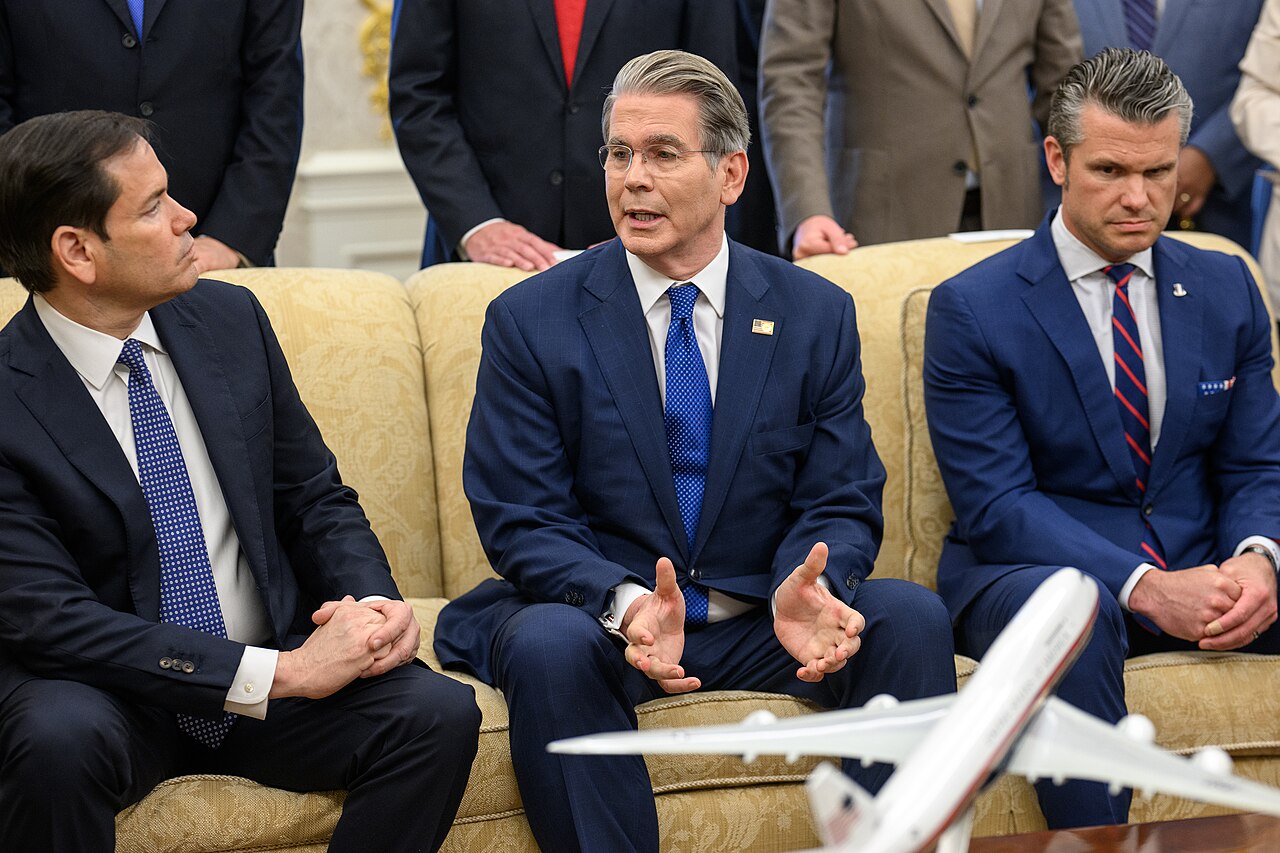
US Treasury Secretary Scott Bessent has announced that millions of American households can expect to receive tax refund cheques of up to $2,000 (£1,500) in early 2026 as a result of President Donald Trump's 'One Big Beautiful Bill'.The refunds, which Bessent estimates will total between $100 billion and $150 billion (£75 billion and £112 billion), stem from delayed adjustments to tax withholding following the implementation of the legislation's flagship policies, including the elimination of taxes on tips.Provisions Allowed for These RefundsBessent explained that the rebates are a temporary consequence of the bill's core provisions, which include auto-deductibility and the exemption for tips. Because many employees have not yet updated their payroll forms, they have been overpaying taxes since the law took effect in July.Bessent said that after receiving the refund, Americans are expected to change their withholding status for less taxes to be deducted from their salaries. This, according to the Treasury head, will see wages increase.The underlying economic theory of the bill is rooted in supply-side principles: by reducing the tax burden on labour and consumption, the administration aims to stimulate spending and investment. The initial refunds, while technically a correction for over-withholding, serve as a highly visible, lump-sum injection of cash into the economy ahead of the 2026 midterm elections.Bessent's remarks follow those of White House National Economic Council Director Kevin Hassett on Monday. Hassett said Americans are likely to receive refund checks between $1600 (£1,200) and $2,000 (£1,500) in 2026, mainly through tax refunds.Lower Deficit in NovemberWhile Bessent said Americans are set to receive these refund checks, the Treasury has also reported a $173 billion (£129.3 billion) deficit in November, as the tariffs placed on imports have increased revenue. This was compared to October's deficit, which was down $193 billion (£114.3 billion) or 53 per cent from the $367 billion (£274.4 billion) reported in November 2024.Economists originally predicted that the budget deficit would be at $205 billion (£153.2 billion). The shortfall from the first two months of the 2026 fiscal year amounted to $458 billion (£342.4 billion). This is lower compared to the $624 billion (£466.6 billion) during the same period in the 2025 fiscal year.The outlays for November amounted to $509 billion (£380.6 billion), down from $669 billion (£500.2 billion) in November 2024. According to a Treasury official, this was partly because of delays in payments following the end of the 43-day government shutdown.Treasury to Launch Inquiry Following Minnesota Fraud ScandalSeparately, Bessent addressed a major fraud investigation in Minnesota. On Friday, he said the Treasury will be issuing a geographic targeting order to ensure that any illegal activity would be reported to its Financial Crimes Enforcement Network (FinCEN). The department will also be boosting financial reporting requirements for money service businesses to help keep track of money flow.A geographic targeting order is a temporary but powerful tool that compels financial institutions in a specific area to report all transactions over a certain threshold, often as low as a few hundred dollars. This allows investigators to trace illicit funds that would otherwise fly under the radar of standard anti-money laundering protocols.
'This will empower investigators to develop additional leads through increased scrutiny on funds going to areas of concern such as Somalia,' said Bessent on a post on X.The order is a direct response to a scandal in which 77 people from the local Somali community in Minnesota were charged with funnelling COVID relief funds that were supposed to provide meals to children. Bessent said the scandal cost taxpayers millions of dollars, with funds sent to Somalia through money businesses instead of banks.Bessent also said that the Treasury had tasked personnel to investigate the money service businesses and FinCEN will soon be issuing notices of investigation. The department will also be looking into the allegations that tax dollars from Minnesota might have been diverted to the Somali militant group al-Shabaab.