WestJet pauses move to install non-reclining seats after blowback
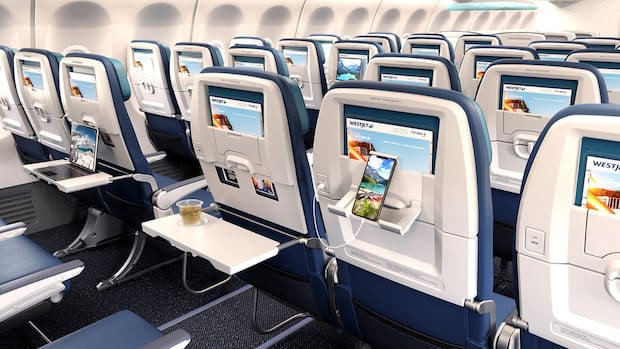
Listen to this articleEstimated 4 minutesThe audio version of this article is generated by AI-based technology. Mispronunciations can occur. We are working with our partners to continually review and improve the results.WestJet has paused a move to install non-reclining seats on a big slice of its fleet after pushback from employees and passengers.The airline announced in September it would reconfigure the seating on 43 Boeing 737 jets to install an extra row and divide the cabin into several tiers, some with more space — and pricier tickets — than others.Many of the economy seats would have less legroom than the previous layout and feature what WestJet called a "fixed recline design," meaning they could not be tilted back.In an internal memo obtained by The Canadian Press, WestJet vice-president Robert Antoniuk told staff that the new configuration will only go ahead on 22 planes "for the time being," with 21 of those already sporting the tighter interior.In the meantime, the Calgary-based company will conduct a review and "continue to gather feedback from guests and employees," he said in the message Tuesday.The notion that passengers would have to pay for a reclining seat — or else occupy a static one with less space — generated some blowback from passengers as well as flight attendants over the past few months.In a bulletin to members, the union pointed to reduced legroom "comparable to ultra-low-cost carriers like Spirit, Wizz Air and Frontier." It said the more cramped conditions made it harder for guests with "varying mobility," car seats and pets, on top of limited overhead bin space "despite an increase in guest capacity," according to the August update from the WestJet contingent of the Canadian Union of Public Employees.The change would raise the risk of "guest frustration" and result in less rest for crew members who would have more difficulty sleeping on board while commuting to an upcoming shift, the union said.WestJet has not responded to requests for comment.In September, the airline announced it was "investing in a consistent onboard guest experience" by creating multiple seating tiers on more than 40 jets from former subsidiary Swoop Airlines, the newly integrated Sunwing Airlines and the now-defunct Lynx Air.The plan was to install a dozen premium seats and 36 more so-called extended comfort seats, which would have more space and come at higher cost."The layout for our refreshed cabin caters to our guests' diverse preferences. Whether they opt for premium seating with extra amenities and legroom or for more affordable ticket prices with less space, we're excited to introduce this range of products for our guests to enjoy," said chief experience officer Samantha Taylor in a release at the time.A WestJet plane on the tarmac at Yellowknife Airport on July 22, 2025. An internal memo shows unionized employees worried the reconfigured seating would raise the risk of 'guest frustration.' (Jeff McIntosh/The Canadian Press)Some took a more skeptical view."If you're anything over five-foot-ten, your knees are under your chin," said John Gradek, who teaches aviation management at McGill University."They're dense-ing up the airplane."The altered layout fits into a broader pattern across the industry whereby economy-class trips are defined by shrinking legroom, narrower cushion space and, especially, myriad fees as airlines increasingly offer top-up options on their tickets.The extra money passengers pay for checked bags, pre-selected seats and onboard snacks makes up a growing share of airline revenue, even as a debate swirls around whether the charges amount to "junk fees" or the lower base price offers greater choice for travellers.Last year, WestJet introduced its new "extended comfort" service tier, where economy-class passengers can pay for more legroom, early access to overhead bins and a free alcoholic drink.Popularized by budget carriers more than 15 years ago and adopted by mainline players since, so-called ancillary revenue plays an increasingly critical role in the industry, helping to diversify income and insulate companies from fluctuations in fare prices, fuel costs and competition.