McDonald’s Issues Extremely Weird Response to Its Disastrous AI Ad
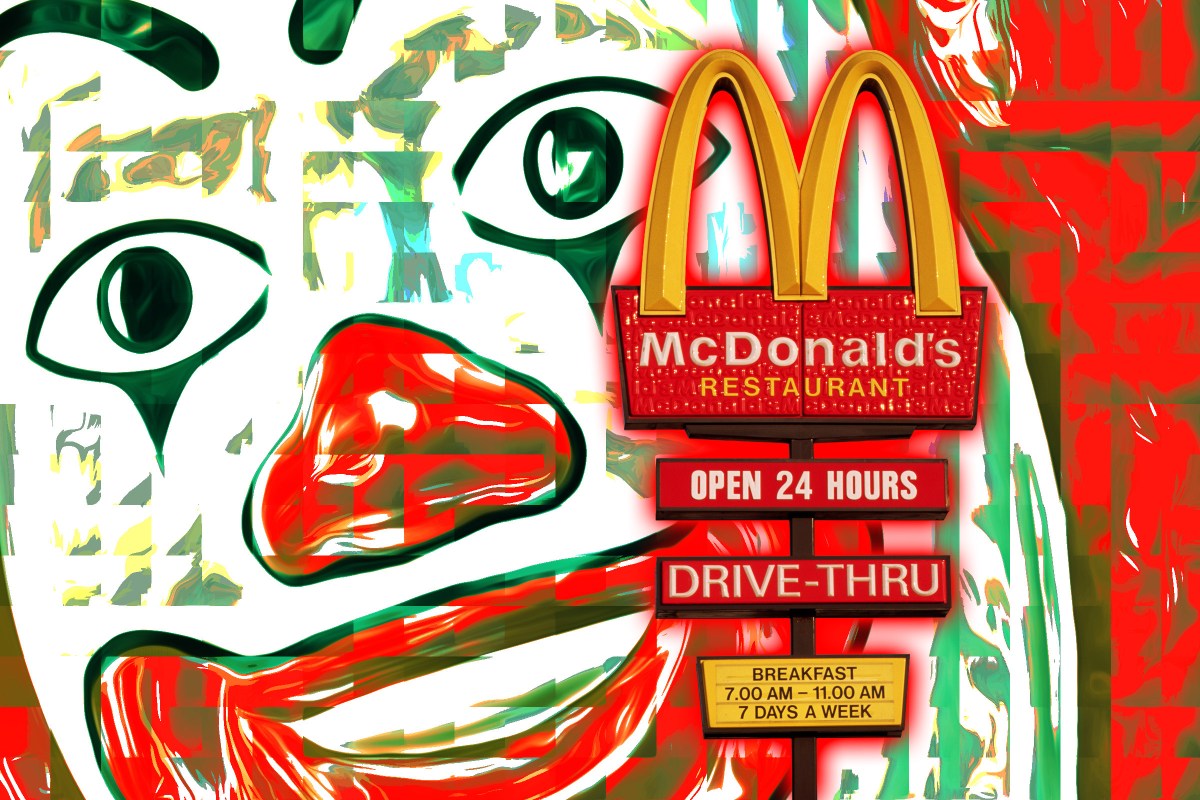
Illustration by Tag Hartman-Simkins / Futurism. Source: Getty Images
McDonald’s has become corporate enemy number one after its hideous AI holiday commercial went viral across numerous social media platforms for all the wrong reasons.
TBWA and The Sweetshop — the agency and production company behind the turd of an ad — have since tried to scrub it from the net, along with a bizarrely defensive statement by Sweetshop CEO, which is now unavailable.
“For seven weeks, we hardly slept, with up to 10 of our in-house AI and post specialists at The Gardening Club [our in-house AI engine] working in lockstep with the directors,” the Sweetshop statement read in part.
Even weirder than trying to memory hole the disastrous ad was the company’s response to the mess. When we asked the artery-clogging megacorporation why it had taken the ad down, it responded with a statement that’s the linguistic equivalent of a chicken nugget: unfulfilling, and strangely evasive about its origins.
“The commercial was produced for McDonald’s Netherlands, but we have decided to remove our AI-generated Christmas advert,” the statement read. “It was intended to reflect the stressful moments that can occur during the holidays in the Netherlands, but we recognize that for many of our guests, the season is ‘the most wonderful time of the year.'”
“We respect that and remain committed to creating experiences that offer Good Times and Good Food for everyone,” it continued.
The company was also extremely insistent that the incident be blamed on its Netherlands branch.
“It is important for accuracy that any references to the brand in your story and headline be to ‘McDonald’s Netherlands,'” it demanded.
Without further comment from either McDonald’s Netherlands or its parent company, McDonald’s proper, it’s tough to say what exactly is going on behind the scenes, though it’s easy to speculate.
Arguably the most dramatic explanation floating around is that McDonald’s — which has capital in McDonald’s Netherlands directly, as opposed to other royalty arrangements — directed its Dutch segment to run the AI ads itself. If this were the case, it would likely mean that McDonald’s headquarters forced its Netherlands counterpart to bite the bullet on the horrifying AI ad in order to test its feasibility for larger market segments.
While there’s no direct evidence of this, McDonald’s strategy of blaming the flap on its Netherlands branch would be the most effective way to contain the brand damage caused by the hideous AI experiment bearing its logo.
Do you work for a company using generative AI in its marketing campaigns? Email us at tips@futurism.com. We can keep you anonymous.
There’s also the “boiling frogs” theory: that corporate execs are trickling out AI slop to slowly wear consumers down and normalize this kind of low-budget swill. As Offensive Security engineer Ryan O’Horo observed, “there is no consequence these companies cannot survive, they can not be held accountable, therefore they do not actually respond to backlash.”
Whether that’s intentional or not is another story, but the point is compelling. As another commenter pointed out, the marketing firm TBWA is a major arm of the Omnicom network, which recently became the largest advertising firm in the world.
Why is this important? Despite its immense scale, Omnicom just announced it was laying off some 4,000 employees around the world, at the same time it expands its proprietary AI virtual assistant and in-house generative AI systems. Simply put, these advertising firms desperately want generative AI to become the new norm, in order to cut down on human employees and keep those profit margins strong.
When it comes to McDonald’s though, the most likely read of this story is also the most mundane.
Global brands like McDonald’s typically give their international segments significant freedom to decide how to operate. This lets smaller segments of the company tailor products and marketing to local conditions, while testing new “innovations” — like AI commercials — in smaller markets before feeding them up the chain.
In this scenario, though McDonald’s US might not have ordered it, it’s still learning and gathering data on the advertisement. Judging by what we’ve seen so far, the reaction may keep more AI commercials at bay for the foreseeable future.More on fast food: Taco Bell’s Attempt to Replace Drive-Thru Employees With AI Is Not Going Well