Tom Dunne: Carsie Blanton keeps the flame burning for protest songs
“Too many protest singers, not enough protest songs” sang Edwyn Collins in his 1994 hit A Girl Like You. It’s always hard to be sure what a writer has in his head, but I felt Edwyn was suggesting that there were performers in music who looked like they had something to say but really didn’t.I got that. The 1990s was the age of the lad mags that fetishised footballers, expensive cars, fashion and Kate Moss. People were too busy having it large to register any political complaint. And with the Berlin Wall gone weren’t we living in the post-political age anyway? Just live in your house, your very big house in the country, and leave it at that.It felt like the era of the protest song had passed. You could argue that it had peaked in the 1960s, and the early ’60s at that, with Bob Dylan. Hadn’t he simply set too high a bar: Blowin’ in the Wind, The Times They are a Changin’,
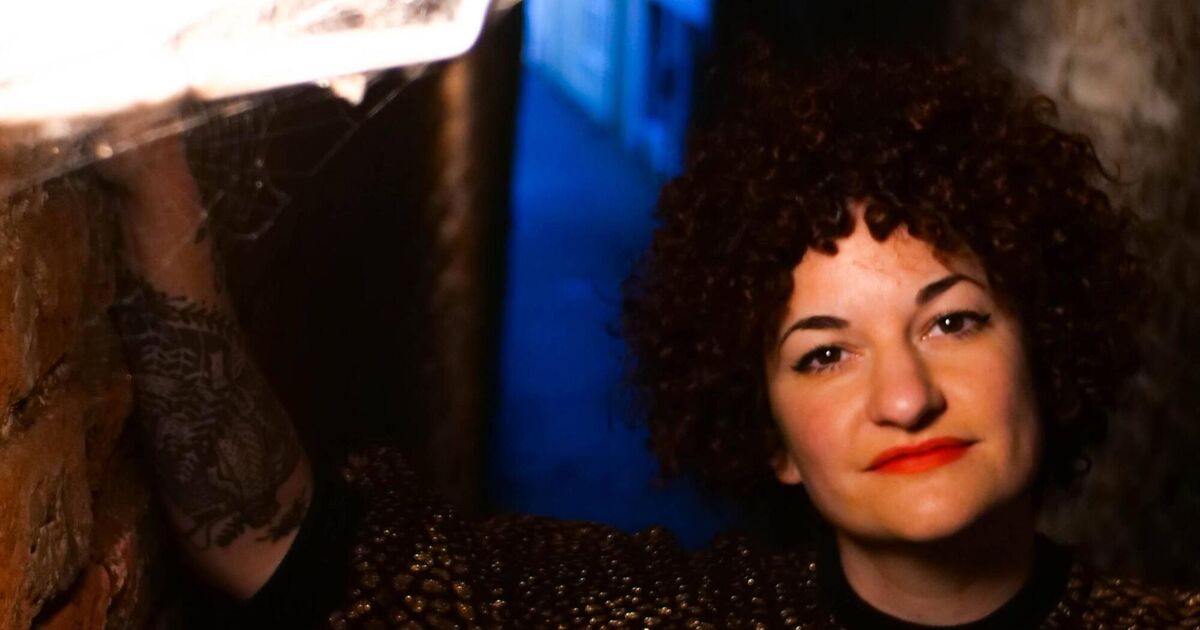
Masters of War. Who could live with those?Well, no one, apart obviously from Marvin Gaye and Gil Scott Heron. What’s Going On and The Revolution will not be Televised were seminal. They too chimed with the times. Gaye’s album had a weariness about it that suited the post-60s malaise. The Summer of Love had come and gone and nothing had really changed.Punk, DIY by nature and always socially engaged, had chosen more local targets. It was anti-National Front, and pro-gay rights. Margaret Thatcher presented as a pantomime villain and inspired great songs from Billy Bragg to The Beat to Elvis Costello.And they were great songs. Tom Robinsons Sing If You’re Glad to be Gay was so ahead of its time in 1978. Being gay in Ireland at that point was not only illegal but a crime punishable by hard labour. Tom asking gay people to simply sing out was such a powerful way of pointing out the law’s utter stupidity.Here Christy Moore captured the human cost of the Troubles as few others could. But the master was Costello. From wanting to Tramp the Dirt Down on Thatcher’s grave to subtly pointing out the sad futility of the Falklands War in Shipbuilding, he was as always peerless. But how many people truly got the line “They’re going to take me to task?” By the mid-1990s the protest song seemed to be the preserve of the hip-hop world. It wasn’t subtle at all. It was angry and rightly so. Outside of there, protest songs were hard find. And hard to write too. Finding the right words, the right tone, seemed beyond most writers. Until now.Carsie Blanton’s Little Flame is a song for the age, a song for 2025 and on. She wrote it in January 2024 after having toured here with Declan O’Rourke. A protest song he was performing nightly, A Change is Gonna Come, put it in her mind to write something similar.So, she sat down with tea, wine, a guitar and two rhyming dictionaries to write something she hoped would tie the loose ends of history into one long tapestry of solidarity. A kind, as she says, of a unified theory of liberation movements. To say she succeeded would be some understatement.A reference to Bobby Sands kicked it off, segueing into a reference to Bobby Seale, the Black Panther leader. Its Irishness – it also mentions Connolly – is part of its charm, because let’s face it if our country can’t inspire a protest song, whose can?Carsie says of the song: “I don’t feel ownership of it. The lyrics include many people and historic events, and it feels to me they flowed through me in order to be remembered and carried into the future, because we need them to help us find hope and courage for the hard times ahead.” As part of this, giving hope in hard times, Carsie has asked other artists to perform the song and get the audience to record the performance and share it. Some versions have gone viral, including ones by Marie Doyle Kennedy, the White Horse Guitar Band, and Clare Sands, performing it at the Bobby Sands mural on the Falls Road. It is a beautiful thing.So, there you go, just when you thought protests songs were dead the song we need, right here, right now just appears in the ether. Carsie tours in April, with gigs in Cork, Dublin, and other Irish centres. Book Now.