Economist issues inflation warning over Trump’s next Fed chair
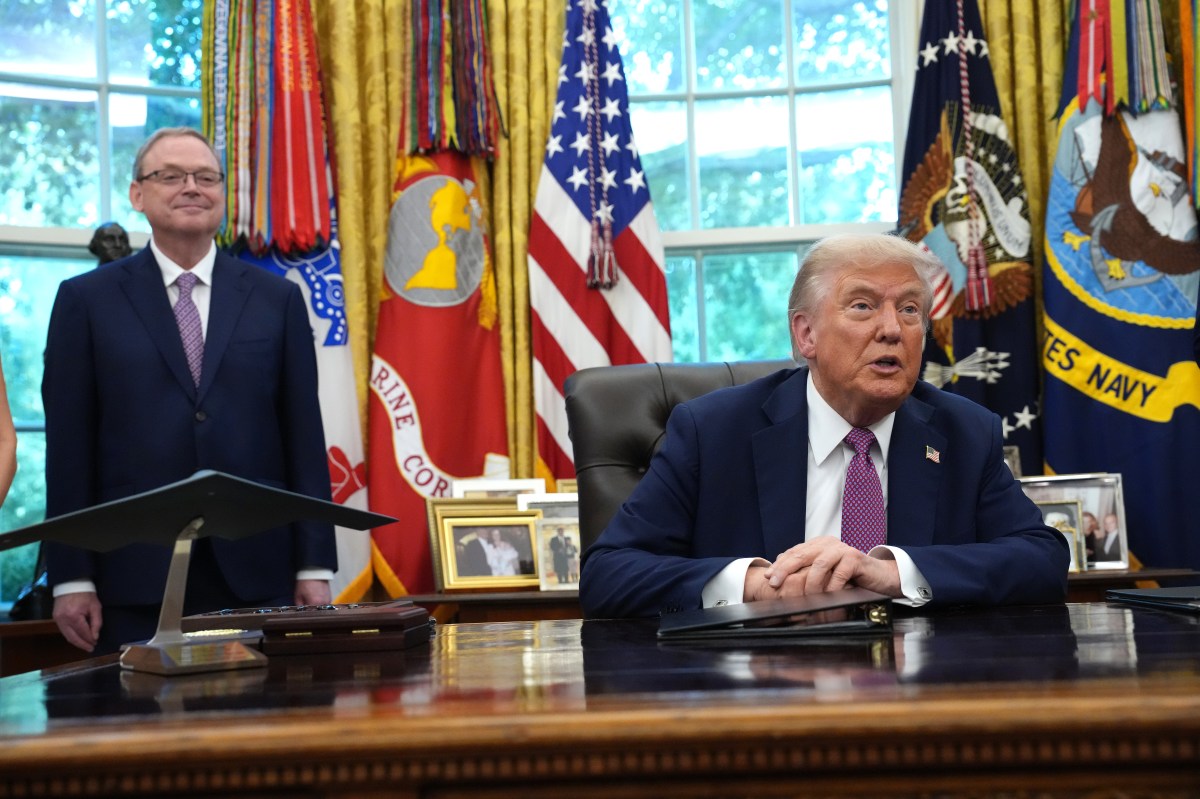
An economist has warned that Donald Trump’s apparent favorite to lead the Federal Reserve could invite political interference at the central bank and risk a runaway inflationary cycle.Kevin Hassett, director of the National Economic Council, is currently tapped to succeed Jerome Powell’s term ends in May, but Justin Wolfers said on Sunday that his ties to the president may mean indirect and undue executive influence over the independent body."We’ve seen it happen in other countries like Turkey—you appoint a loyalist, the loyalist puts in place policies that reflect the president’s idiosyncratic, utterly bizarre, dreamtime views about how the economy works," Wolfers told MS Now. "And what happened in Turkey was inflation rose to 80 percent."The White House did not respond to the criticisms when approached for comment. Spokesman Kush Desai told Newsweek: “Personnel decisions to be made by President Trump will be announced directly by President Trump himself. Any discussion until then is pointless speculation.”Why It MattersConcerns that the Fed’s independence was being undermined emerged earlier this year after the central bank decided at successive meetings to keep interest rates steady out of inflationary concerns, leading to a flurry of attacks and threats of legal action from Trump against the incumbent chair.With Powell's imminent departure, Trump will have the chance to fill what is arguably among the most influential economic positions in the country. While the Fed chair, like other governors, has only one vote in rate-setting meetings, they are seen as setting the central bank’s agenda and guiding its approach to inflation, employment conditions and overall economic stability.What To KnowIn pointing to the case of Turkey, Wolfers, a frequent critic of the Trump administration’s agenda, drew on one of the clearest modern examples of central bank interference cascading into an all-out economic crisis.Over a period of several years beginning with Turkey shifting to an executive presidency in 2018, President Recep Tayyip Erdogan, who once called interest rates "the mother and father of all evil," routinely pressured the central bank to cut borrowing costs even as inflation accelerated and officials urged a change of course. Erdogan fired several central bank governors who attempted to tighten monetary policy, and installed the loyalist Şahap Kavcıoğlu as its governor in 2021 to carry out his aggressive plans. Runaway prices followed, the annual inflation rate climbing above 80 percent for several months in 2022 and never fully cooling. This, and a series of ill-fated short-term fixes, further undermined the country’s currency as well as confidence in the Turkish economy.Wolfers on Sunday noted that many view the role as the "second most powerful job in the world," and said the U.S. has in the past benefited from "magnificent Fed chairs." He cited Janet Yellen and Ben Bernanke as examples, both of whom, like Hassett, were formerly chairs of the president’s Council of Economic Advisers.However, Wolfers said Hassett’s selection would mark a "complete and abrupt departure from the way we’ve typically done this," and said Hassett’s economic expertise had been replaced with a sense "that his role is to serve the president and the president’s whims."Trump’s top economic adviser is currently the runaway favorite to succeed Powell, with both Polymarket and Kalshi listing these odds at around 80 percent."I’d like to do what the president needs me to do," Hassett told CBS News when asked whether he would like to take on the Fed role.What People Are SayingEconomist Justin Wolfers via X: "A Republican president once picked Ben Bernanke—a future Nobel laureate—because expertise mattered more than spin. That norm, picking Fed chairs for brains not loyalty, does more to protect your paycheck than any campaign slogan."Michael Pearce, chief U.S. economist at Oxford Economics, told Newsweek: "The risk is that Kevin Hassett is seen as too political by other members of the FOMC, which reduces his influence. We see that with Stephen Miran, whose ideas have limited support on the rest of the committee. In practice, I think a lot of these fears are overblown. Once Hassett is nominated, he must be approved by the Senate, and then, as chair, would be held accountable by bipartisan committees in the House and Senate in congressional hearings.""With the president only able to remove a chair for cause, it is difficult to see why Hassett or any other chair would be beholden to Trump once put into the post," he added.William Silber, a former senior economist with the Council of Economic Advisers, told Newsweek that the 1913 Federal Reserve Act was "designed to limit the influence of the executive branch on the Fed," and that "appointing a political operative to the chairmanship of the Fed would undermine the intent of Congress."However, he said, whether Hassett falls within this definition will "depend on his testimony before Congress" once nominated.What Happens NextTrump has said he will make the announcement on his pick "early next year." Last week, the president said he knew who he would nominate for the role, and strongly suggested that it would be Hassett."I guess a potential Fed chair is here too," Trump said during an event at the White House. "I don't know, are we allowed to say that—potential? He's a respected person, that I can tell you. Thank you, Kevin."Other potential candidates on the shortlist include former Governor Kevin Warsh, current Governor Christopher Waller and asset manager Rick Rieder, with small bets also being placed on Treasury Secretary Scott Bessent and Governor Michelle Bowman.Update 12/8/25, 9:41 a.m. ET: This article was updated with a response from the White House.Update 12/8/25, 10:27 a.m. ET: This article was updated with comment from Michael Pearce.