How the SNP paralysed Scotland
I attended my first Christmas party of the year this week, a noisy mix of hacks, flacks, business folk and pollsters. The booze flowed, connections were made and renewed, all was jolly, as it should be.
Except… the conversation kept returning to the looming Holyrood election, and at that point the mood would drop. I’m probably approaching the age where the grisly epithet “veteran” starts being applied to me, and I can’t ever remember such dismally low expectations ahead of what should be an exciting moment of democratic renewal.
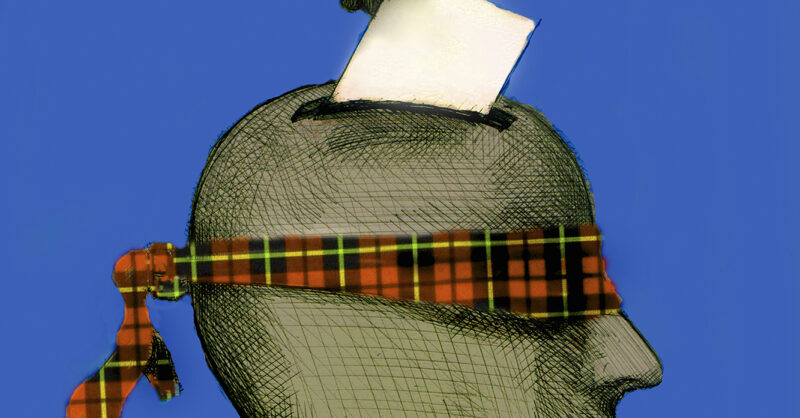
This is, in part, due to the fact that almost everyone outside of Scottish Labour HQ now expects the SNP to emerge as the largest party, ushering in a third consecutive decade of nationalist rule. I’m not sure even the Nats’ own supporters will back them with much enthusiasm, but back them they will. The party has dropped in the polls, but as things stand its electoral floor should still be high enough to see it over the line. The view of Labour’s prospects is that they have already dissipated, long before the campaign proper begins. There is a dangerous determinism setting in.
And what then? The past decade or so of devolved government has been a wretched period of challenges avoided, of missed opportunities, of weird fixations, of spiralling problems being kicked down the road. I didn’t speak to a single person at the party who thought this would change over the next five years. Optimism is near zero. What a state we’ve got ourselves into.
Treat yourself or a friend this Christmas to a New Statesman subscription for just £2
This mood stretches beyond one evening of pissed, grumbling Scots. A report this week by Our Scottish Future, Gordon Brown’s think tank, captured the spirit of the times. Based on interviews with senior civil servants working for the Scottish Government, local authorities and other public bodies, it argued that the government is failing because it is obsessed with short-termism over outcomes and spin over substance.
One civil servant was quoted as saying that “the requirement to avoid alienating any public support for the SNP and independence stymied politicians’ willingness to think about any idea that might require substantial short-term unpopularity. That grew and grew from 2010 to 2014 [the period leading to the independence referendum] and it’s never diminished since then, it’s become an established way of thinking.” It’s not a particularly new claim, but it’s interesting that even those working at the heart of government share the view of those looking in from the outside.
Audit Scotland, one of the few public bodies willing to challenge the SNP administration, has added its voice to the chorus. Its latest report warned that the NHS remains “financially unsustainable”. “Despite more money (+£3 bn since 2019) and more staff (+20,000 since 2019), NHS Scotland’s performance has not improved in line with commitments made by the Scottish Government,” it stated, adding that “improvements in productivity and reform of the health and care system are essential if health outcomes are to get better, health inequalities are to be reduced, and service delivery is to improve”.
My own think tank, Enlighten, released a paper on the astonishing rise in the number of children receiving additional support in schools. The total has risen from 33,000 to 284,000 – a ninefold increase – in recent years, as the concept of what constitutes “special” education needs has broadened. This is having a significant impact on teachers, who must provide the extra care in the classroom, and on school budgets. And it has in effect happened by accident – ministers admit they don’t know what to do about the situation.
One of the paper’s authors, former headteacher Frank Lennon, said that “the current unsustainable position has arisen from allowing an approach which is well-intentioned but has never been exposed to serious scrutiny. The vastly increased demand for ASN is creating the single biggest post-pandemic pressure in Scottish schools, and the Government must now address it as a matter of great urgency”. We have called for an independent national enquiry so that the problem can be better understood and addressed.
Barely a week goes by without some new version of the various critiques mentioned above, across the whole range of government activity. Scotland is facing a toxic mix: a crisis of performance and funding in its public services, and a political class that simply refuses to acknowledge the scale of the challenge and the nature of the measures required to tackle it, for fear of offending one constituency or another. The complacency displayed is staggering, and deeply disillusioning.
So on we go towards May, when off to the polls we will faithfully trot, without a song in our hearts or hope in our souls. Devolution remains an excellent idea in principle, but in practice it has been a sorry tale of timidity and party-political convenience. Such has been the prolonged duration of the disappointment that more and more of those who engage with Scottish politics for reasons either of professional obligation or basic human interest are losing any belief that matters will or can change.
I don’t know where all that ultimately leads, but I’m sure it’s nowhere good. From Christmas parties to research papers to open criticism from the public watchdogs, the same message is being dispatched towards Holyrood. What a grim legacy for today’s leaders to leave behind them. And what does it say about them that they are willing to do so?
[Further reading: Has Rachel Reeves’ Budget doomed Scottish Labour?]
Content from our partners
Related