


The right choice affects far more than visibility. It influences worker safety, productivity, energy bills, and the amount of maintenance needed over the coming decade. Partnering with an established led highbay light manufacturer gives buyers access to technical guidance that makes these decisions much easier. KML has been designing and producing professional LED lighting in Shenzhen since 2011, with a high bay portfolio that includes the HB series and several UFO-style models built for different ceiling heights and applications. The steps below explain how to match a high bay solution to the real needs of your space.
Start with the Activities in the Space
Before comparing catalogues, it helps to look closely at what actually happens under the lights. A distribution center with forklifts moving between tall racks needs bright, uniform illumination for safe navigation and accurate picking. A machining workshop needs strong task lighting with minimal shadows around equipment. A gym or indoor court needs even coverage without glare that distracts players. Each of these activities sets different requirements for brightness, uniformity, and visual comfort. Defining the main tasks, the hours of operation, and any safety-critical zones gives the whole selection process a clear foundation and prevents buying fixtures that look good on paper but fail in practice.
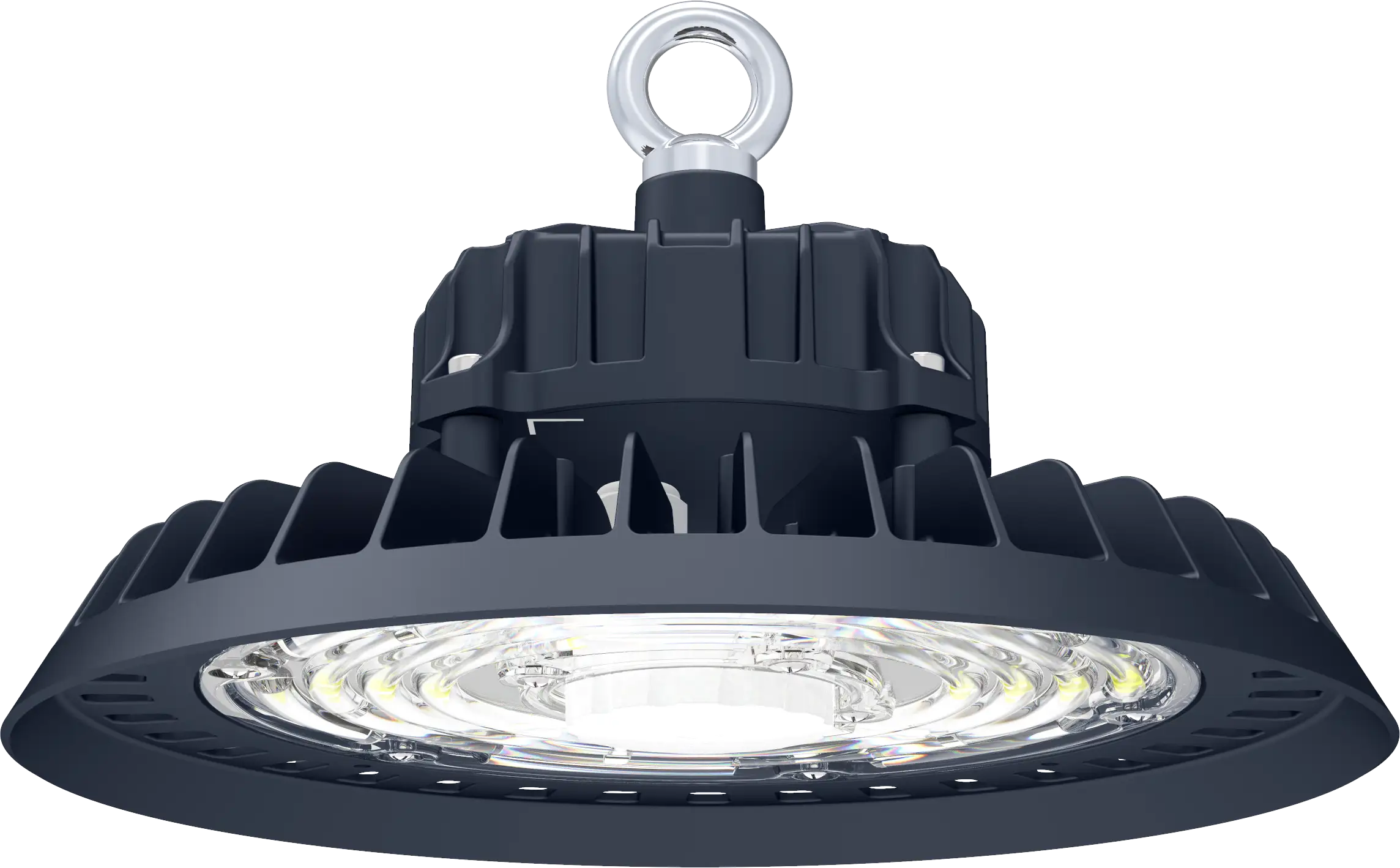
Calculate Lumens Rather Than Counting Watts
One of the most common errors in high bay projects is choosing fixtures by wattage. Watts only measure electrical consumption, while lumens measure the light a fixture actually produces. Because LED efficiency varies widely between products, two lights with identical wattage may deliver noticeably different brightness levels. Warehouses and production floors generally need high lumen output to support safe operations, whereas storage areas with less activity can work with lower levels. A professional manufacturer can carry out lighting simulations that show exactly how many lumens are needed and where each fixture should go, removing guesswork from the plan.
Match the Fixture to Ceiling Height
Ceiling height has a major influence on which fixture is suitable. Spaces under roughly 12 feet usually suit panel lights or low bay fittings that spread light evenly without glare. Between about 12 and 20 feet, mid-range high bays provide the extra punch required to reach the working plane. Above 20 feet, high-output high bay fixtures become essential to achieve proper illumination at floor level. Choosing a fixture that is too weak for the height leaves dark patches, while one that is too powerful for a lower ceiling creates glare and wastes energy. Matching output to mounting height is one of the simplest ways to get a project right.
Get the Beam Angle and Distribution Right
How light spreads matters just as much as how much light is produced. Narrow beam angles concentrate output into a smaller area, which works well for high-rack aisles or for highlighting specific equipment. Wider beams cover more floor space and suit open production halls and general warehouse lighting. Selecting the wrong distribution can lead to bright spots directly under fixtures and shadows in between. A proper layout plan considers rack positions, aisle widths, and fixture spacing together, ensuring consistent coverage across the entire floor and helping workers see clearly wherever they are standing.
Select Suitable Color Temperature and CRI
Color temperature influences both the atmosphere of a space and how alert people feel while working. Cooler white light around 5000K creates a crisp environment suited to industrial tasks, while neutral tones near 4000K feel slightly softer and are often preferred in mixed-use buildings. Color Rendering Index, or CRI, determines how accurately colors appear under the light. In areas where staff inspect products, read labels, or sort items by color, a higher CRI makes a real difference to accuracy. Getting these two values right improves comfort, reduces mistakes, and makes the space more pleasant for everyone who works there.
Account for Heat, Dust, and Moisture
High bay fixtures often operate in tough conditions. Foundries and some manufacturing halls are hot, food plants and cold stores can be damp, and many industrial sites carry heavy dust. These factors shorten the life of poorly protected fixtures. Buyers should check IP ratings, housing materials, and the quality of heat dissipation before ordering. Good thermal management keeps LED chips and drivers running at safe temperatures, which protects lumen output over the years. KML’s research and development work focuses heavily on heat dissipation, light distribution, and resistance to high temperatures and corrosion, which helps its fixtures stay reliable in demanding environments.
Build in Smart Controls for Extra Savings
Switching to LED already cuts energy use considerably, but smart controls can push savings further. Occupancy sensors turn lights down or off in aisles that are not in use, daylight harvesting reduces output when natural light enters through skylights, and dimming systems allow brightness to be matched to the task. Centralized lighting management also lets facility teams monitor and adjust settings remotely. Choosing high bay fixtures that are compatible with these controls from the outset makes it far easier to add them later, without replacing drivers or rewiring large sections of the building.
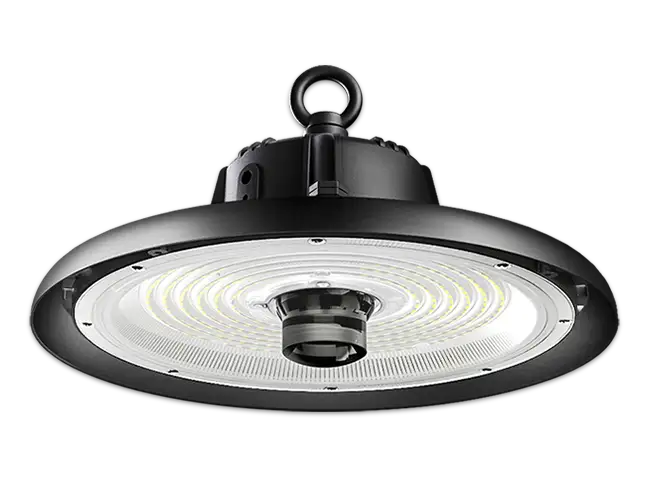
Check Efficiency Data and Long-Term Serviceability
Not every LED high bay offers the same efficiency, so buyers should compare lumens-per-watt figures supported by genuine test reports rather than marketing claims. Reliable manufacturers provide certified performance data and documentation to back up their specifications. Serviceability is another factor that is easy to overlook. Fixtures with modular designs and replaceable drivers can be repaired quickly instead of being discarded, which is a major advantage in large facilities where access equipment is needed for every repair. Thinking about the full lifecycle helps protect the investment well beyond the installation date.
Work with a Manufacturer That Offers Design Support
The most successful high bay projects combine a well-built product with expert planning. A manufacturer that can model the space, recommend fixtures, and verify the results before production saves buyers time and avoids expensive mistakes. KML offers free initial design consultation, DIALux lighting simulations that can be prepared in as little as two hours, sample delivery within about seven days, and bulk production within roughly thirty days. With strict IQC, IPQC, and OQC inspections behind every order, buyers gain confidence that their new high bay lighting will deliver bright, efficient, and dependable performance for years to come.
Comments (0)