


Prepainted aluminum coil coating line has quietly become one of the most versatile building blocks in modern manufacturing. It shows up on rooftops, in appliance casings, along highway sound barriers, and inside lighting fixtures, yet most people never see it until it has been formed into something else. Producing it well requires a continuous line that brings together chemistry, mechanical precision, thermal control, and automation in a single coordinated flow. This guide from HiTo Engineering walks through the complete production picture, from the raw coil entering the line to the finished painted coil leaving it, and explains the engineering decisions that determine whether the operation succeeds.
The Raw Material and Entry End of the Line
Production begins with mill-finish aluminum coil, wound tightly and delivered in weights that demand careful handling. At the entry end, an uncoiler pays off the strip while a stitching machine joins the tail of one coil to the head of the next, allowing the line to keep running through coil changes. An entry accumulator stores enough strip to cover the stitching operation, so the process downstream never has to stop and restart. HiTo designs this section to handle the coil dimensions and weights the customer actually plans to run, since an entry end that struggles with heavy coils becomes a bottleneck no amount of line speed can overcome.
Cleaning and Chemical Pretreatment
The strip then passes through the cleaning and pretreatment section, where rolling oils, particles, and surface oxides are removed before a conversion coating is applied. This stage is where adhesion is truly won or lost, and it receives considerable engineering attention for that reason. Bath chemistry, temperature, spray pressure, and dwell time all need to be controlled within narrow limits, and rinse stages must be thorough enough to remove chemical residues that could interfere with paint bonding. HiTo configures pretreatment with monitoring and circulation systems that keep conditions stable through long campaigns, because drift here often produces defects that only appear much later.
Primer and Topcoat Application
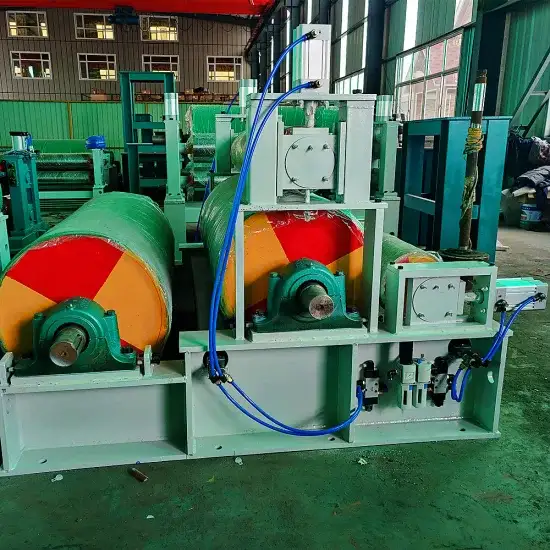
With the surface prepared, the strip moves into the coating room, where primer and topcoat are applied in sequence. Each coating station uses precision rolls to meter paint into a thin, uniform film and transfer it to the moving strip, and the settings on these rolls determine film thickness across the full coil width. Paint viscosity and temperature are managed alongside the mechanical parameters, since the way a coating flows affects how it deposits. HiTo builds its coating heads to hold these variables steady, supporting both single-coat and multi-coat configurations depending on the product specification and the performance the end application demands.
Curing and Cooling
After each coating application, the strip enters an oven where heat drives off solvent and cross-links the resin into a durable film. The temperature profile is arranged so the coating levels smoothly before setting, and airflow is balanced to avoid hot spots that would create uneven cure. Overbaking must be avoided, since it can embrittle the coating and affect the temper of the aluminum itself. Following the oven, cooling systems bring the strip down to a handleable temperature in a controlled manner, protecting both the finish and the flatness of the metal before it reaches the exit equipment.
Inspection and Quality Verification
Quality verification runs throughout the line rather than sitting at a single point. Coating thickness gauges monitor film weight continuously, surface inspection systems look for streaks, skips, and inclusions, and samples are taken for adhesion and mechanical testing at defined intervals. The purpose is to catch drift while it can still be corrected, rather than discovering problems after a coil has been finished and packed. HiTo integrates monitoring equipment with the line controls so operators can see the data where they work, making it practical to respond quickly instead of waiting for laboratory results to arrive hours later.
Rewinding, Packing, and Delivery
At the exit end, the finished strip passes through an exit accumulator that buffers the line during coil changes, then through edge trimming and surface protection application before being rewound into finished coils. Packing arrangements vary by customer and destination, with protection against moisture and mechanical damage being the common priorities. HiTo coordinates the exit section with the entry end so the line's overall availability is not limited by handling equipment at either end. Finished coils are then stored and shipped, carrying with them the accumulated quality of every stage that came before.
Bringing the Whole Process Together
What distinguishes a well-run coating line is not any single stage but the way all of them work as one system. Line speed changes ripple through pretreatment dwell, coating thickness, and oven residence time simultaneously, which is why HiTo designs its lines with synchronized drives and integrated controls governing the entire sequence. When the engineering is right, prepainted aluminum emerges with the consistency, durability, and appearance that customers in construction, appliances, and transportation depend on. Understanding the complete process is the first step toward running it well.
Comments (0)