


Sizing decisions have a habit of looking trivial on paper and turning into headaches on event day. An inflatable bull ride that seemed perfectly reasonable in a product listing can arrive and reveal itself as too wide for the hall doorway, too tall for the marquee ceiling, or too small to keep a queue of eager riders satisfied. The good news is that choosing the right size is a skill anyone can learn, and it mostly comes down to asking the right questions in the right order. This guide walks through the considerations that matter, from measuring the space to matching capacity with expected crowds.
Why Size Deserves Careful Attention Up Front
Planners sometimes treat dimensions as a detail to confirm after choosing a model, but the space available usually dictates which models are even possible. An inflatable bull ride needs room not only for its footprint but also for entry and exit paths, queue space, operator positioning, and a safety margin around the arena. Getting the size right protects against a cascade of problems: rides that cannot be set up, crowded layouts that compromise safety, or attractions too small to serve the expected turnout. Doing the measuring work early is far easier than renegotiating a venue or disappointing a crowd later.
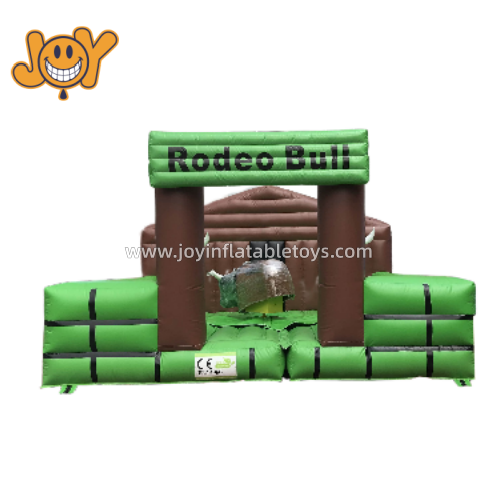
Measuring the Available Footprint Accurately
Accurate measurement starts with more than a quick glance at the room. Planners should record the length and width of the intended ride area, the height of any ceilings or overhead structures, and the width of every doorway, corridor, and gate the unit must pass through during load-in. It helps to account for irregular room shapes, pillars, and fixed furniture, since a technically large room can still have an awkward usable area. Drawing the space on paper with the ride footprint marked inside it, including a comfortable buffer around the arena, reveals problems before they become expensive.
Height, Clearance, and Overhead Considerations
Height requirements are easy to overlook because inflatable rides look shorter than they are in photographs. The arena walls, the rider's position on the bull, and any arches or signage all contribute to the total vertical requirement, and indoor venues often have lower ceilings than expected. Planners should check clearance at the highest point of the ride plus a safety margin, and remember that marquees, suspended lighting, and ventilation ducts all intrude on overhead space. Outdoor sites bring different considerations, such as tree branches and wind exposure, so the ride's placement should account for the sky above as well as the ground below.
Matching Capacity to Expected Attendance
A ride that is too small for its crowd creates long waits, and long waits sour the experience regardless of how good the ride itself is. Planners should estimate how many attendees will want a turn, how long an average session plus changeover takes, and how many riders the arena design can handle comfortably at once. Larger arenas accommodate more simultaneous riders and let queues move faster, while compact units suit intimate gatherings but struggle under heavy demand. This calculation is where a modest bump in size often pays for itself in guest satisfaction.
The Trade-Off Between Compact Units and Larger Arenas
Bigger is not automatically better. Compact inflatable bull rides offer quicker setup, easier transport, and lower power demands, which makes them ideal for smaller venues and mobile operators. Larger arenas provide more room for riders to fall safely and more capacity for crowds, but they demand more space, more air, and more handling effort. The right choice sits where venue constraints and attendance expectations overlap, and planners should resist the temptation to buy the biggest model available if their venues cannot comfortably accommodate it. Fit matters more than scale.
Logistics Around Transport and Storage
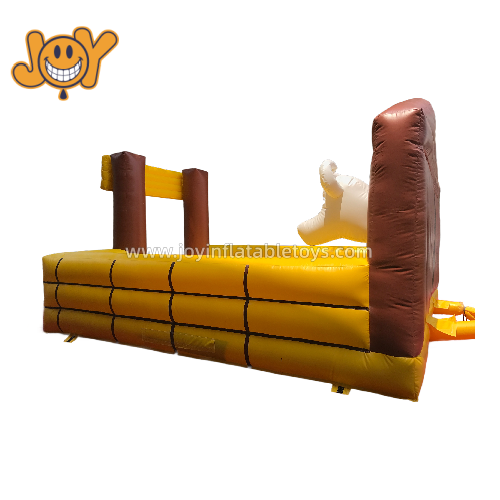
The size that works on event day must also work between events. Planners should measure the storage space at home base, check whether the packed unit fits the available vehicle or trailer, and consider who will physically handle the load-in. A ride that fits a venue but cannot be moved without renting a larger truck has a hidden cost that rarely appears in the purchase price. Joy Inflatable designs its inflatable bull rides with transport practicality in mind, but the final check always belongs to the buyer standing in their own storage space.
Confirming the Fit With the Manufacturer
Once measurements and attendance estimates are in hand, the last step is a direct conversation with the manufacturer. Sharing the venue dimensions, expected crowd size, and transport constraints lets the seller recommend a model with confidence rather than guesswork. Joy Inflatable can advise on specific units that fit the described space and explain any clearance or power requirements in detail. Asking for a dimension sheet for the exact model under consideration is always wise, and comparing it against the venue drawing one final time ensures the ride arrives ready to work rather than ready to return.
Comments (0)