


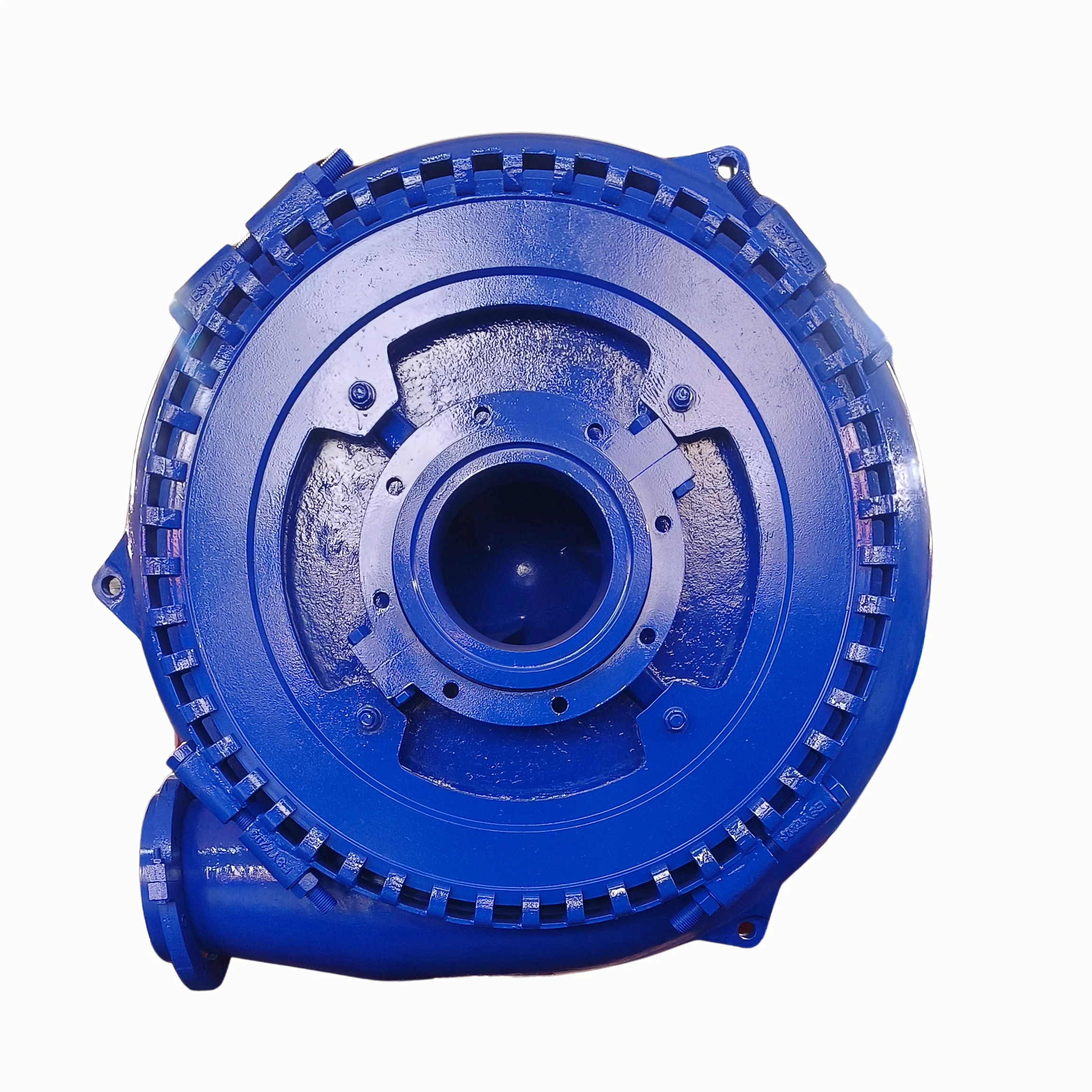
Ask any maintenance engineer on a dredging or mining site what shortens pump life fastest, and the answer is almost always wear. The wet parts of a gravel pump face a continuous barrage of sand, gravel, and sharp rock fragments, and the rate at which those surfaces erode determines how often the machine must be rebuilt. CNSME pump has made high-chrome alloy the standard for its gravel pump wet ends, a decision that reflects decades of field experience rather than marketing preference. This article explains what high-chrome alloy is, why it outperforms alternative materials in slurry service, and how the choice translates into tangible benefits for operators who measure success in uptime and cost per ton.
What Makes High-Chrome Alloy Different
High-chrome alloy is a cast iron family in which chromium content typically exceeds twenty percent, combined with carefully controlled carbon and alloying additions. That chemistry produces a microstructure rich in hard chromium carbides embedded in a tougher metallic matrix. The carbides are extremely hard, harder than the silica and quartz particles that dominate most slurries, and they act as a dense shield against abrasive attack. The matrix holds those carbides in place and provides the toughness needed to survive impacts from larger stones. This combination of hard particles within a supportive matrix is the fundamental reason high-chrome alloys outperform mild steel, ordinary cast iron, and many other materials in aggressive wear environments.
How Abrasion Actually Attacks Pump Wet Parts
To appreciate why material choice matters, it helps to understand how wear progresses inside a gravel pump. Fine particles sliding along a surface produce low-stress scratching that slowly removes material. Larger particles striking at an angle cause high-stress gouging and chipping. In dense slurries, particles can also become trapped between moving and stationary surfaces, crushing and grinding the metal in what is known as gouging abrasion. Each mechanism demands different material properties. A material that is merely hard but brittle will crack under impact, while a tough but soft material will be ground away quickly. High-chrome alloy is selected because it balances hardness and toughness across all these mechanisms, making it suitable for the mixed wear regimes found in real gravel pump service.
Why CNSME Pump Standardises on High-Chrome Wet Ends
CNSME pump builds its gravel pump impellers, volute liners, suction plates, and throat bushes from high-chrome alloy because the company's customers operate in conditions where anything less fails prematurely. Standardising on this material simplifies spare parts planning, since operators know exactly what they are getting with each replacement component. It also allows the pump's hydraulic geometry to be designed around a consistent wear response, so performance remains predictable through the wear cycle. Rather than offering a budget material that quietly shortens service life, CNSME pump treats wear resistance as a core design requirement. The result is equipment that holds its shape and efficiency longer, reducing the frequency of rebuilds and the disruption they cause to production.
The Economics of Longer Wear Life
High-chrome components cost more per kilogram than mild steel or standard cast iron, and buyers sometimes hesitate at the initial price. The economics change quickly once the full picture is considered. A liner that lasts three or four times longer than a cheaper alternative reduces not only parts consumption but also the labor hours, downtime, and production losses associated with each replacement. On a busy dredge or concentrator, the cost of stopping the pipeline often dwarfs the cost of the wear part itself. CNSME pump customers regularly report that the extended service intervals delivered by high-chrome wet ends lower their total cost of ownership substantially, even though the individual components carry a higher sticker price.
Heat Treatment and Quality Control Behind the Castings
Material specification alone does not guarantee performance. The microstructure that gives high-chrome alloy its wear resistance depends on precise casting practice and controlled heat treatment. Poorly made high-chrome parts can suffer from residual stress, porosity, or incorrect carbide distribution, all of which lead to premature cracking or spalling in service. CNSME pump oversees the foundry process with attention to melt chemistry, pouring temperature, and the heat treatment cycle that develops the final hardness and toughness balance. Dimensional inspection and hardness verification ensure that each casting meets specification before it reaches a customer. This quality discipline is what turns a good alloy into a reliable wear part.

Practical Guidance for Getting the Most From High-Chrome Parts
Even the best wear parts benefit from sensible operating practice. Operators should avoid running the pump beyond its design duty, since excessive speed or density accelerates wear on every surface. Suction conditions matter too, because cavitation damages the same surfaces that abrasion is already attacking. During inspections, wear should be measured and recorded so that replacement can be planned rather than reactive. CNSME pump provides guidance on acceptable wear limits and inspection intervals for its high-chrome components, helping maintenance teams extract full value from each part. When high-chrome wet ends are combined with good operating discipline, the service life gains are maximised and the investment pays back fully.
Conclusion
Wear-resistant design is not a single feature but the result of correct material selection, sound casting practice, and thoughtful application. High-chrome alloy wet parts give CNSME pump gravel pumps the hardness to resist scratching, the toughness to absorb impact, and the durability to keep performance stable through long service intervals. For operators facing abrasive slurries day after day, that combination translates into fewer stoppages, lower maintenance spending, and more consistent production. Choosing a pump built around high-chrome wet ends is ultimately a decision about reliability, and reliability is what keeps demanding operations profitable.
Comments (0)