


Anyone who has ever tried to organize a kitchen or wardrobe knows that drawer height is not a trivial detail. A tall drawer filled with cutlery wastes space, while a shallow one packed with cereal boxes defeats the purpose entirely. Drawer height shapes what a cabinet can store, how easily items are found, and how organized a room feels day to day. AOSITE offers its metal drawer system in low, medium, and high profiles, and understanding what each is designed for makes specification far simpler. This article explains the three options and where each one earns its place.
Why Drawer Height Matters More Than Most Buyers Expect
Drawer height is effectively a decision about visibility and volume. A shallow drawer keeps its contents in plain sight, which encourages tidiness and makes small items easy to grab. A deep drawer holds far more but can become a graveyard where things disappear toward the bottom. Neither is inherently better; the right choice depends on what will go inside. AOSITE's three-tier approach exists precisely because real homes contain a mix of storage needs, and forcing every drawer into one height creates the familiar problem of cabinets that are technically full but practically disorganized.
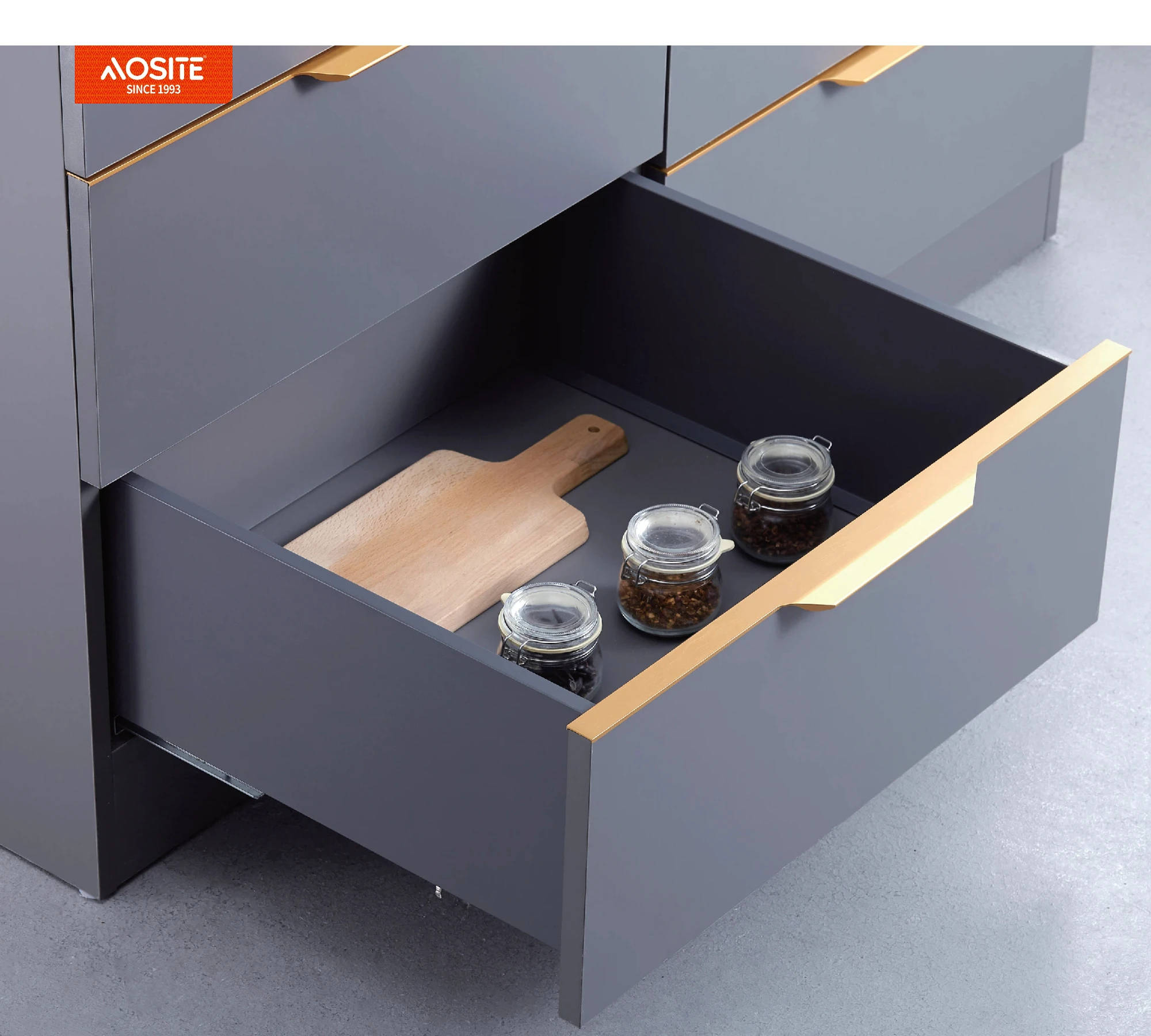
Low Drawers: The Natural Home for Small Items
The low-profile drawer is the shallowest option in the range, and it excels wherever visibility matters more than capacity. Cutlery inserts, spice collections, utensil trays, and bathroom toiletries all sit comfortably in a low drawer where everything is immediately reachable. In wardrobes, low drawers are ideal for jewellery, ties, belts, and other accessories that vanish in deeper boxes. Because the drawer is shallow, its contents cannot pile up and hide each other, which subtly encourages better organization. AOSITE builds these low options with the same steel construction as the rest of the range, so the reduced height does not mean reduced durability.
Medium Drawers: The Versatile Middle Ground
If one drawer height had to cover the majority of household needs, the medium profile would be it. Medium drawers are deep enough for folded clothing, small appliances, pantry staples, and general kitchen equipment, yet shallow enough that users can still see and reach most of the contents without excavating. This versatility makes them the natural default in both kitchens and wardrobes. AOSITE positions the medium option as the workhorse of the range, and in most projects it will account for the largest share of drawers specified. When in doubt about a particular drawer's future contents, medium is rarely a poor decision.
High Drawers: Maximum Capacity for Bulky Storage
The high-profile drawer is built for volume. Deep and generous, it suits pots, pans, large cookware, bulk dry goods, bedding, and stacked clothing in wardrobes. Where a medium drawer would overflow, a high drawer simply accommodates. The trade-off is that deep storage requires more deliberate organization, since items at the bottom are less visible; internal dividers and a sensible loading strategy help considerably. AOSITE recommends high drawers for the heaviest and bulkiest categories of storage, and pairs them with appropriately rated runners so the extra volume does not come at the cost of smooth, reliable operation.
Matching Drawer Heights Within a Single Cabinet
The real art of specification lies in combining the three heights within one cabinet run. A typical kitchen base unit might pair a low drawer at the top for utensils with a medium drawer beneath and a high drawer at the base for pots, creating a natural hierarchy from light and visible to heavy and voluminous. Wardrobes follow a similar logic, with low drawers at comfortable heights for accessories and high drawers reserved for items used less often. AOSITE's range is designed so the three heights share consistent construction and fitting details, allowing designers to mix them freely without compromising alignment or appearance.

How Height Interacts With Runners and Load Ratings
Drawer height does not exist in isolation; it directly affects the demands placed on runners and the box structure. A high drawer carrying heavy cookware needs a more substantial runner system than a low drawer holding cutlery, and the load rating must reflect that. Buyers should confirm that the chosen height and capacity combination is rated for its intended contents rather than assuming all drawers in a range perform identically. AOSITE matches its runner specifications to the demands of each drawer profile, so a fully loaded high drawer still glides smoothly and closes with the same controlled motion as a light low drawer.
Bringing the Three Heights Together for a Better Home
The value of the low, medium, and high options lies in the combination, not in any single profile. A home organized with all three working together gains both efficiency and clarity: small things stay visible, medium items stay accessible, and bulky items have somewhere to go. AOSITE's tiered range gives specifiers the tools to make those decisions deliberately, drawer by drawer, rather than defaulting to one height throughout. For anyone planning a kitchen or wardrobe, taking fifteen minutes to map contents against heights is time that pays back every single day thereafter.
Comments (0)