


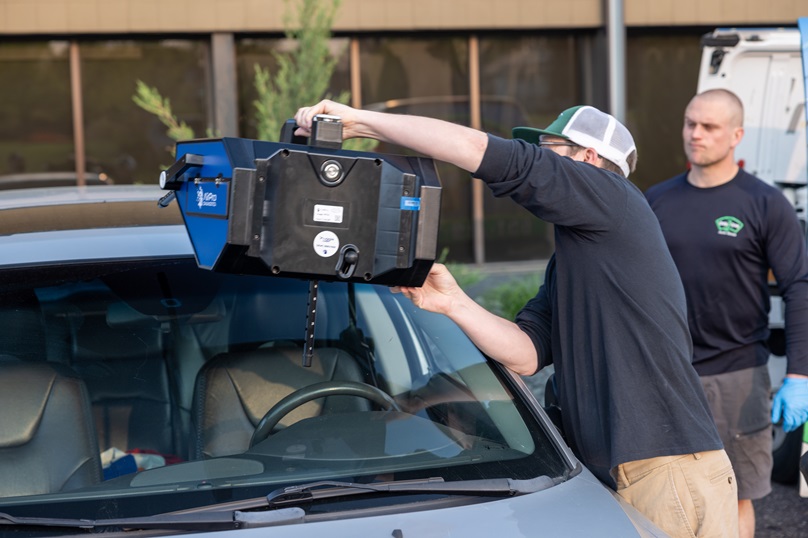
A camera can look perfectly clear and still provide inaccurate information. That matters when a vehicle depends on its cameras to detect lane markings, vehicles, pedestrians, and road signs. Windshield camera calibration helps ensure that an advanced driver assistance system receives accurate visual information after a camera or windshield has been disturbed. Understanding why calibration is necessary can help vehicle owners avoid warning lights, unreliable safety features, and unnecessary repair costs.
Why Camera Calibration Matters for Modern Vehicles
Modern vehicles increasingly rely on cameras as part of their advanced driver assistance systems (ADAS). These cameras may support features such as lane departure warnings, lane keeping assistance, automatic emergency braking, adaptive cruise control, traffic sign recognition, and forward collision warnings.
The camera does not simply record what happens on the road. Its images are interpreted by software that uses the camera's position and viewing angle to understand the vehicle's surroundings. Even a small change in that position can affect how the system interprets distance, direction, and lane position.
For example, imagine a forward-facing camera that has shifted slightly after a windshield replacement. The camera may still produce a sharp image, but its field of view could be different from the position expected by the vehicle's computer. As a result, a lane marking might appear to be farther to one side than it actually is.
This is why calibration is more than a technical adjustment. It is a process that helps the vehicle's safety systems understand what the camera is seeing and respond according to the manufacturer's specifications.
What Does Camera Calibration Actually Do?
Camera calibration establishes the correct relationship between the camera and the vehicle. Technicians use specialized equipment, software, targets, measurements, and manufacturer-specific procedures to determine whether the camera is positioned and aimed correctly.
Depending on the vehicle, calibration may involve static procedures, dynamic procedures, or a combination of both. Static calibration generally uses precisely positioned targets in a controlled workshop environment. Dynamic calibration may require the vehicle to be driven under specific road and environmental conditions while the system learns or verifies camera alignment.
The exact procedure varies significantly between vehicle makes and models. Therefore, technicians should follow the manufacturer's requirements instead of relying on a single universal calibration method.
How Camera Position Affects ADAS Performance
ADAS cameras are designed to work within carefully defined angles and mounting positions. The system expects the camera to see the road from a particular viewpoint.
If the camera is too high, too low, tilted, or shifted sideways, the software may interpret objects differently. A minor physical change can therefore create a meaningful difference in the system's calculations.
This is especially important for systems that determine whether a vehicle is staying within a lane or approaching another object. Accuracy depends not only on image quality but also on the camera's precise relationship to the vehicle.
When Does a Vehicle Need Calibration?
One of the most common misunderstandings is that calibration is only necessary when a dashboard warning appears. In reality, certain repairs or changes can require calibration even when the vehicle appears to operate normally.
Windshield replacement is a major example. Many vehicles have a camera mounted near the rear-view mirror or integrated into the windshield area. Removing and reinstalling the glass can affect the camera's mounting position or the relationship between the camera and windshield.
Other situations that may require calibration include:
- Replacing or removing an ADAS camera
- Repairing or replacing a windshield
- Performing certain suspension or wheel alignment repairs
- Changing vehicle ride height
- Repairing damage near a camera or sensor
- Adjusting components that affect sensor positioning
- Receiving a manufacturer-specific calibration requirement after certain repairs
The correct requirement depends on the vehicle. For that reason, checking the manufacturer's repair information is an important part of the process.
Why Windshield Replacement Can Affect Camera Accuracy
A windshield is not simply a piece of glass when it contains or supports ADAS technology. Its position, shape, optical properties, mounting area, and relationship to the camera can all matter.
During replacement, the original windshield is removed and another is installed. Even when the replacement appears identical to the old one, the camera may need to be recalibrated according to the vehicle manufacturer's specifications.
A technician may also need to inspect the camera bracket and surrounding components. If the bracket has moved, been damaged, or been incorrectly installed, calibration alone may not solve the underlying problem.
The Difference Between a Clear Image and an Accurate System
A camera can produce a visually perfect image while still being incorrectly aimed.
This distinction is important because vehicle owners may assume that everything is fine if there is no visible damage. However, ADAS software does not judge accuracy based solely on whether the picture looks clear. It depends on precise geometry and known reference points.
Calibration verifies that the system's understanding of the camera's position matches its actual position on the vehicle.
Static and Dynamic Calibration Explained
There is no single calibration process for every vehicle. Manufacturers use different technologies and procedures, so technicians must determine which method applies to the specific vehicle.
Static calibration usually takes place in a controlled facility. A technician positions calibration targets at specified distances and heights relative to the vehicle. The camera then detects those targets, allowing the system to establish or verify its correct orientation.
Dynamic calibration involves driving the vehicle under conditions specified by the manufacturer. The vehicle's systems use real-world road information, such as lane markings and other environmental features, to complete the calibration process.
Some vehicles require both approaches. Others use only one. The procedure can also depend on the type of camera, the ADAS system, the vehicle's software, and the repair performed.
Key Factors That Influence Calibration Results
Successful calibration requires more than connecting diagnostic equipment. Several physical and environmental factors can affect the process.
| Calibration Factor | Why It Matters | Potential Problem |
|---|---|---|
| Vehicle ride height | Changes camera geometry | Incorrect camera angle |
| Wheel alignment | Affects vehicle direction and reference position | Misleading system measurements |
| Camera mounting | Determines the camera's physical position | Incorrect field of view |
| Calibration target placement | Provides a reference for the camera | Inaccurate calibration data |
| Lighting and weather | Can affect certain procedures | Failed or interrupted calibration |
| Windshield installation | Influences camera position and optical path | Incorrect camera view |
| Manufacturer specifications | Define required procedures | Improper calibration method |
Technicians should also make sure the vehicle is positioned correctly and that required equipment is accurate and properly maintained. A calibration performed with incorrect measurements can create a false sense of confidence.
What Happens During a Professional Calibration?
The process generally begins with an inspection. The technician identifies the relevant ADAS components, checks for damage or installation problems, and determines what calibration procedure the vehicle manufacturer requires.
Diagnostic equipment may then be connected to the vehicle to identify system information and fault codes. The technician prepares the vehicle and calibration area before performing the required procedure.
Depending on the system, targets may be positioned around the vehicle, or the vehicle may need to be driven under specified conditions. After calibration, the technician verifies whether the system completed the procedure successfully.
A professional process should not end simply because the calibration tool reports completion. The technician should also check for relevant diagnostic faults and confirm that the system meets the applicable manufacturer requirements.
Why Manufacturer Procedures Should Come First
Different vehicles can use very different ADAS designs. Two vehicles with similar-looking cameras may have completely different calibration requirements.
Manufacturer documentation may specify exact target dimensions, distances, environmental conditions, vehicle loading requirements, tire pressures, alignment conditions, or driving procedures.
Following those instructions reduces the risk of applying an incorrect process. It also gives technicians a clear standard against which the work can be evaluated.
What Can Happen If Calibration Is Skipped?
Skipping required calibration can prevent an ADAS system from operating as intended. The consequences vary depending on the vehicle and system involved.
A lane-related system, for instance, may have difficulty accurately identifying the vehicle's position relative to lane markings. A forward-facing safety system could also have inaccurate information about the location of objects ahead.
Some vehicles may disable affected features and display a warning message. Others may continue operating while providing reduced or inaccurate assistance.
The important point is that drivers should not assume a safety feature is functioning correctly simply because the vehicle starts normally and no obvious mechanical problem exists.
How Drivers Can Avoid Calibration Problems
Vehicle owners can take a few practical steps when arranging repairs involving ADAS cameras.
First, tell the repair facility about any driver assistance features the vehicle has. This gives technicians important information before work begins.
Second, ask whether the planned repair can affect an ADAS camera or sensor. A windshield replacement, wheel alignment, suspension repair, or collision repair may have calibration implications depending on the vehicle.
Third, keep documentation showing what work was performed. If a calibration was completed, the service record can be useful when another repair facility works on the vehicle later.
Finally, pay attention to dashboard warnings or changes in driver assistance behavior. A warning message should not be ignored simply because the vehicle remains drivable.
Choosing a Qualified Calibration Service
Not every repair facility has the same equipment, training, or access to manufacturer procedures. When calibration is required, the quality of the process matters.
Look for a provider that uses appropriate calibration equipment and follows vehicle-specific procedures. The facility should also understand the difference between calibration and diagnosis. If a camera, bracket, windshield, alignment, or another component has a problem, calibration may not correct the underlying issue.
It is also reasonable to ask whether the facility can provide documentation of the completed procedure. Clear records help demonstrate what was checked and what work was performed.
Calibration Is Part of the Repair, Not an Optional Extra
When a repair affects an ADAS camera, calibration should be treated as part of restoring the vehicle to its intended operating condition. It is not simply a cosmetic adjustment or an optional service added to the repair bill.
The goal is straightforward: make sure the vehicle's technology has the correct information about where the camera is located and what it is seeing.
That is particularly important because many ADAS features operate quietly in the background. Drivers may depend on them without realizing how much precision is required for them to work correctly.
Conclusion
Camera calibration plays an important role in maintaining the accuracy of modern vehicle safety systems. A camera can look normal while being positioned incorrectly, which is why calibration becomes especially important after windshield replacement, camera removal, alignment-related repairs, or other work that may change sensor geometry. Professional technicians should follow vehicle-specific procedures, use suitable equipment, and verify the system after calibration. For vehicle owners, the best approach is simple: whenever a repair may affect an ADAS camera, ask whether calibration is required. Taking that step can help ensure the vehicle's safety technology performs according to its intended design.
Frequently Asked Questions
Is camera calibration necessary after every windshield replacement?
Not every vehicle requires the same procedure, but many vehicles with windshield-mounted ADAS cameras require calibration after windshield replacement. The requirement depends on the vehicle manufacturer, camera design, and repair procedure.
How long does a calibration procedure take?
The time varies by vehicle and calibration method. Some procedures can be completed relatively quickly, while others require additional setup, diagnostic checks, or a road test. A repair facility can provide a more accurate estimate after identifying the vehicle and required procedure.
Can I calibrate an ADAS camera myself?
DIY calibration is generally not recommended unless the vehicle manufacturer specifically provides a suitable procedure and the required equipment and conditions are available. Many systems require specialized targets, diagnostic tools, precise measurements, or controlled driving conditions.
What are the signs that an ADAS camera may need calibration?
Warning messages, disabled driver assistance features, unusual lane-keeping behavior, or problems following a repair can indicate that the system needs inspection. However, some calibration issues may not produce obvious symptoms, so manufacturer-required calibration should not be skipped.
Does wheel alignment affect camera calibration?
It can. Some vehicles require correct wheel alignment before certain calibration procedures because the vehicle's direction and geometry can affect the reference used by the ADAS system. Technicians should follow the specific manufacturer's requirements for the vehicle being serviced.
Comments (0)