


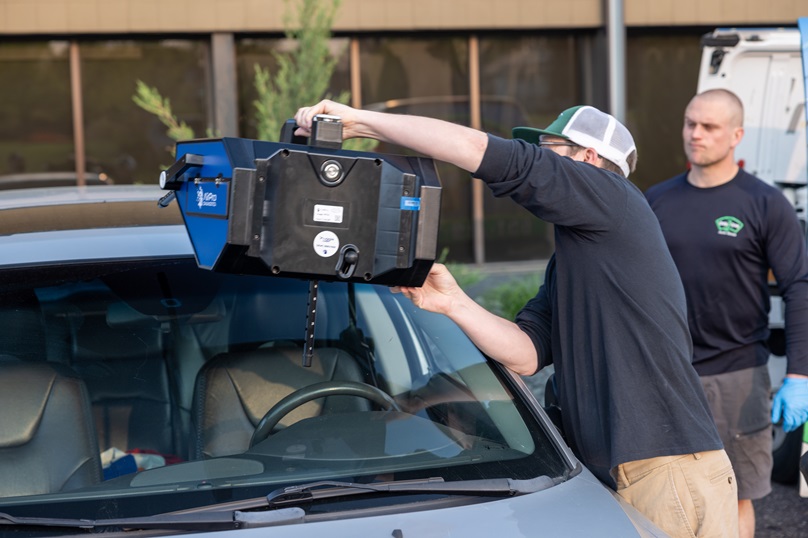
A small change in a vehicle’s camera position can create a surprisingly large difference in how its safety systems respond. Modern vehicles rely on cameras to monitor lanes, detect road markings, recognize vehicles, and support driver-assistance features. Windshield camera calibration helps restore the intended camera alignment when installation, glass replacement, or repairs affect its position. Understanding common calibration errors can help vehicle owners and technicians identify problems before they affect everyday driving.
Why Camera Accuracy Matters in Modern Vehicles
Many newer vehicles use advanced driver-assistance systems (ADAS) to provide features such as lane departure warnings, lane-keeping assistance, forward collision alerts, and automatic emergency braking. Depending on the vehicle design, these systems can rely on cameras mounted behind the windshield, along with radar, ultrasonic sensors, or other components.
A camera does not need to move very far to change what it sees. Even a small difference in angle or position can affect how the system interprets lane markings, vehicles, pedestrians, or other objects.
For example, a camera that points slightly too high may have a different view of the road compared with its original factory position. The vehicle may then receive information that does not accurately match the conditions around it.
That is why calibration is more than simply checking whether a camera turns on. The system must be aligned and configured so that its measurements correspond with the vehicle manufacturer's specifications.
Common Errors That Calibration Can Solve
Camera calibration can address several problems that occur after windshield replacement, collision repairs, suspension work, camera removal, or other service procedures. The exact requirements vary by vehicle make, model, year, and equipment.
Incorrect Camera Position
One of the most common problems involves a camera that is not positioned exactly as intended.
A camera mounted behind the windshield must have a specific relationship with the vehicle's centerline and viewing angle. If its mounting position changes, the system may interpret objects as being in a slightly different location.
Calibration allows technicians to compensate for the required alignment and verify that the camera is operating within the manufacturer's specified parameters.
Misaligned Lane Detection
Lane detection depends on the camera recognizing road markings accurately. If the camera's position or angle is incorrect, the system may struggle to identify lane boundaries.
Drivers may notice warning messages, inconsistent lane-departure alerts, or unusual behavior from lane-keeping assistance. Calibration can help restore the camera's intended field of view when misalignment is the underlying issue.
However, road conditions also matter. Faded markings, construction zones, heavy rain, snow, glare, and poor visibility can affect camera performance even when calibration is correct.
Incorrect Distance or Object Recognition
Camera-based systems analyze visual information to estimate the location of objects around the vehicle. If the camera is incorrectly aligned, the geometry used by the system can become inaccurate.
This does not necessarily mean the camera itself is defective. Instead, the problem may come from its relationship to the vehicle and the road.
A properly completed calibration helps ensure that the camera's measurements correspond with the vehicle's actual orientation.
Situations That Can Cause Calibration Problems
Understanding what causes calibration issues is useful for both vehicle owners and repair professionals. In many cases, calibration becomes relevant because something has changed physically or electronically.
| Situation | Possible Effect | Why Calibration May Be Needed |
|---|---|---|
| Windshield replacement | Camera position may change | Camera alignment may no longer match specifications |
| Front-end collision repair | Vehicle components may shift | Camera geometry can be affected |
| Camera removal or replacement | Mounting position can change | New alignment may need to be established |
| Suspension or alignment work | Vehicle geometry may change | Camera reference points may require verification |
| Camera mounting disturbance | Viewing angle can change | System measurements may become inaccurate |
| Diagnostic fault | Warning messages may appear | Calibration or system checks may be required |
| Poor installation | Camera may not sit correctly | Proper positioning must be confirmed |
Not every warning light means calibration is the solution. A technician should first identify the specific diagnostic trouble code, inspect the hardware, and follow the vehicle manufacturer's service procedure.
How Windshield Replacement Can Affect Camera Systems
Windshield replacement is one of the most important situations to consider when a vehicle has a forward-facing camera.
The camera may be mounted directly to the windshield or positioned close to it. Replacing the glass can therefore affect the camera's mounting relationship, even when the new windshield appears visually identical.
Why Glass Installation Matters
Modern windshields can contain specific optical characteristics, mounting areas, brackets, or other features designed for vehicles equipped with driver-assistance technology.
Using the correct replacement glass and installing it properly is important. The camera should sit securely in its intended location without unnecessary movement or obstruction.
After installation, the appropriate inspection and calibration procedure depends on the vehicle manufacturer's requirements.
Dirt and Obstructions Can Also Create Errors
Calibration cannot correct every camera problem. Dirt, stickers, tinting materials, damaged glass, moisture, or other obstructions near the camera's viewing area can interfere with image quality.
Before diagnosing a calibration problem, technicians should inspect the camera area and make sure the lens and windshield region are clean and unobstructed.
Static and Dynamic Calibration Methods
Different vehicles use different calibration procedures. Two broad approaches are static and dynamic calibration.
Static Calibration
Static calibration generally takes place in a controlled workshop environment. The vehicle is positioned according to specific requirements, and calibration targets may be placed at measured distances and heights.
The technician uses diagnostic equipment to communicate with the vehicle and complete the manufacturer's specified procedure.
Because measurements can be precise, factors such as floor level, vehicle position, target placement, tire condition, and lighting can matter.
Dynamic Calibration
Dynamic calibration uses real-world driving conditions to allow the vehicle's system to complete or verify certain calibration processes.
The technician may need to drive the vehicle under specific conditions, such as on a suitable road with visible lane markings and appropriate traffic conditions.
The requirements differ significantly between vehicle manufacturers. Some vehicles require static calibration, some use dynamic procedures, and others require a combination.
Errors Caused by Incorrect Calibration Procedures
Calibration itself can introduce problems when performed incorrectly. A procedure may fail if technicians skip required preparation steps or use unsuitable equipment.
Incorrect Target Placement
For systems that use calibration targets, placement must follow the manufacturer's specifications. A target positioned too close, too far away, too high, or too low can produce inaccurate results.
This is why professional calibration should rely on vehicle-specific procedures rather than a one-size-fits-all approach.
Uneven Workshop Conditions
The surface where calibration takes place can affect measurements. If the vehicle or calibration equipment is not positioned correctly, the resulting data may not represent the intended reference position.
Technicians should therefore verify the required floor and alignment conditions before beginning the procedure.
Skipping Pre-Calibration Checks
A calibration procedure should not replace basic inspection. If the camera bracket is damaged, the windshield is incorrectly installed, or another component has a fault, calibration alone may not solve the problem.
A proper workflow starts with diagnosis, followed by physical inspection and the appropriate calibration procedure.
Warning Signs That a Vehicle May Need Calibration
Vehicle owners may notice several signs after repair or maintenance that justify professional inspection.
Common examples include:
- ADAS warning messages appearing on the dashboard
- Lane-keeping assistance behaving unexpectedly
- Lane-departure warnings occurring inconsistently
- Forward-facing camera fault messages
- Calibration-related diagnostic codes
- Driver-assistance features becoming unavailable
- A windshield replacement followed by an ADAS warning
- Camera components being removed or replaced during repairs
These symptoms do not automatically prove that calibration is required. They indicate that the vehicle's systems should be checked according to the appropriate diagnostic procedure.
Practical Steps Before Scheduling Calibration
Vehicle owners can make the process easier by collecting a few basic details before visiting a repair or calibration facility.
Record Recent Repairs
Tell the technician whether the vehicle recently had a windshield replacement, collision repair, suspension work, wheel alignment, camera replacement, or other related service.
This information can help narrow down potential causes.
Check the Camera Area
Look at the windshield area around the forward-facing camera. Make sure there are no obvious stickers, dirt, damage, or objects blocking its view.
Avoid attempting to move or adjust the camera yourself. Its mounting position can be part of a precise safety-system setup.
Note Dashboard Messages
Write down any warning messages or system notifications. If possible, take a photograph of the dashboard message so the technician can review it later.
Specific diagnostic information can be much more useful than simply reporting that the system "doesn't work."
How Professional Calibration Improves Diagnostic Accuracy
A professional calibration process does more than clear a warning message. It helps establish whether the camera and related systems are operating according to the vehicle's intended specifications.
Technicians can use appropriate diagnostic tools to communicate with the vehicle's electronic control systems and follow manufacturer-specific procedures.
After calibration, additional checks may be necessary. Depending on the vehicle, these can include diagnostic scans, visual inspections, road tests, or confirmation that relevant ADAS functions have returned to their expected operating state.
This approach reduces the risk of treating a symptom without identifying its actual cause.
Choosing the Right Calibration Service
Not every automotive repair facility has the same equipment or experience with ADAS systems. Vehicle owners should ask practical questions before scheduling service.
Questions to Ask
Consider asking:
- Does the facility work with my vehicle's make and model?
- Does it follow the manufacturer's calibration procedure?
- What type of calibration does my vehicle require?
- Will the camera and related components be inspected first?
- Will diagnostic trouble codes be checked before and after calibration?
- Will I receive information about the completed calibration procedure?
Clear answers can help vehicle owners understand what work will be performed.
Why Manufacturer Procedures Matter
Camera systems differ from one vehicle to another. The required calibration distance, targets, diagnostic software, environmental conditions, and road-test requirements may all vary.
For that reason, technicians should rely on the applicable manufacturer service information rather than assuming every vehicle follows the same process.
A procedure that works for one model may not be appropriate for another.
Preventing Future Camera Calibration Problems
Although some calibration needs are unavoidable after repairs, good maintenance practices can reduce preventable issues.
Keep the windshield area around the camera clean and avoid placing objects where they can block its view. If the vehicle has a windshield replacement, tell the glass installer that the vehicle is equipped with camera-based driver-assistance technology.
Likewise, mention the camera system before collision, suspension, or front-end repairs begin. Early communication gives the repair team an opportunity to account for calibration requirements during the repair process.
What Calibration Cannot Fix
It is important to understand the limits of calibration. Calibration cannot repair a physically damaged camera, replace defective electronic components, remove a windshield obstruction, or correct every environmental condition.
For example, heavy rain or faded road markings can affect how a camera interprets its surroundings. A calibration procedure cannot make road markings more visible or eliminate every limitation of camera-based technology.
If a system continues to report an error after calibration, further diagnosis may be necessary.
Conclusion
Camera-based safety systems depend on accurate information, and even small changes in camera position can affect how that information is interpreted. Proper calibration can help resolve alignment-related problems following windshield replacement, collision repairs, component replacement, or other service work. However, calibration should form part of a broader diagnostic process rather than being treated as a universal solution. Vehicle owners can support safer and more reliable repairs by reporting recent service work, keeping the camera area unobstructed, and choosing technicians who follow vehicle-specific procedures. With the right inspection and calibration process, common camera-related errors can be identified and addressed more effectively.
FAQs
1. What is camera calibration?Camera calibration is the process of configuring and aligning a vehicle's camera system according to the specifications required for its driver-assistance features. The exact process varies by vehicle.
2. Is calibration needed after windshield replacement?It may be required when a windshield replacement affects a forward-facing camera or its mounting position. The vehicle manufacturer's service requirements should determine whether calibration is necessary.
3. Can calibration fix a camera warning light?Calibration may resolve a warning when incorrect camera alignment is the underlying cause. However, damaged components, wiring problems, software faults, or obstructions may require additional diagnosis.
4. How long does vehicle camera calibration take?The time varies depending on the vehicle, calibration method, equipment, and whether additional repairs or diagnostics are needed. Some procedures can be completed relatively quickly, while others require additional preparation or road testing.
5. Can I calibrate my vehicle camera myself?Most vehicle camera systems require specialized equipment, precise measurements, diagnostic tools, and manufacturer-specific procedures. For that reason, calibration is generally best handled by a properly equipped automotive professional.
Comments (0)