


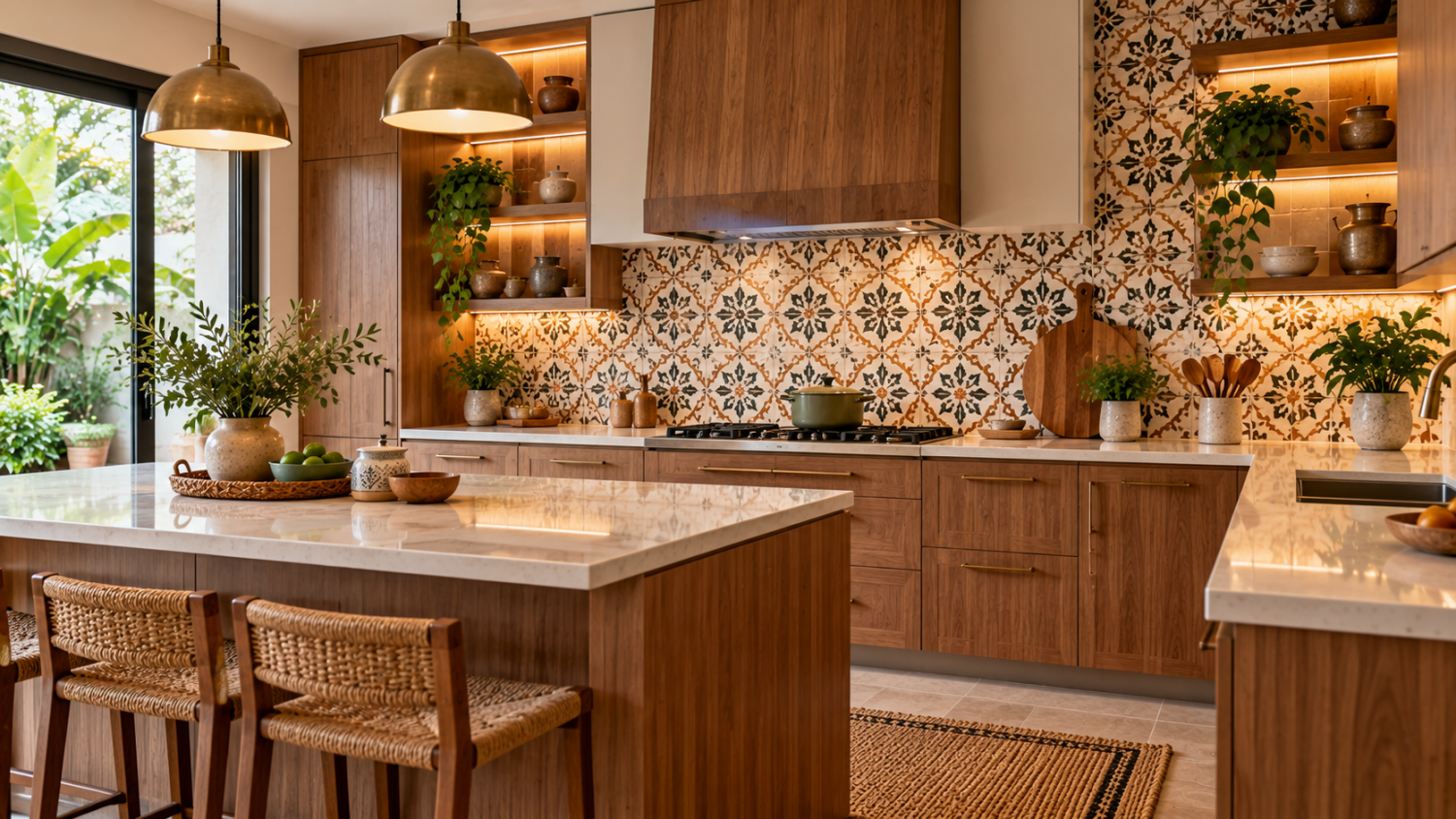
Kitchen design in Bangladesh has developed considerably, with homeowners increasingly combining familiar materials and colours with contemporary layouts. The result does not have to be completely traditional or completely modern. A balanced kitchen can use familiar warm tones, practical surfaces, and modern tile formats to create an interior that feels both comfortable and current. When developing a Bangladesh Kitchen Tiles Design, the most successful approach is often to identify which traditional characteristics matter and reinterpret them through colour, pattern, and installation.
Start With Familiar Warm Colours
Warm beige, cream, brown, terracotta, and muted earthy colours can create an inviting kitchen environment. These shades can complement timber cabinetry and traditional decorative details while remaining suitable for modern layouts.
A warm palette is particularly useful where the kitchen connects directly to a dining area containing wooden furniture.
Introduce Contemporary Formats
Traditional colour does not require traditional tile size. A warm stone-inspired large-format wall tile can provide a modern foundation while retaining a comfortable colour palette.
Alternatively, elongated rectangular tiles can create a contemporary appearance while using colours associated with classic interiors.
Use Pattern in a Controlled Way
Decorative patterns can reference traditional craftsmanship without covering the entire kitchen.
A patterned backsplash behind the cooker can act as an accent. The surrounding walls can remain neutral, allowing the pattern to be appreciated without making the room visually crowded.
Pair Tiles With Wood
Wood and tile are natural partners in kitchen design. Timber-look cabinets or wooden shelving can soften the appearance of hard tiled surfaces.
Warm beige or cream tiles can reinforce this relationship. For a stronger contemporary contrast, a warm wood cabinet can be paired with a cool grey stone-effect tile.
Think About Cooking Habits
A beautiful backsplash still needs to cope with everyday cooking. Bangladeshi kitchens may experience substantial steam, oil splashes, spice stains, and frequent wiping.
The surface around the cooker should therefore be easy enough to clean and appropriate for the intended use. Texture should be chosen carefully in areas where grease is likely to accumulate.
Use Lighting to Highlight the Design
Under-cabinet lights can bring out the colour and texture of a backsplash. Warm lighting can emphasise earthy tones, while cooler lighting can make grey and white surfaces appear crisper.
The lighting plan should be considered before installation so that the tile's appearance works under both daytime and evening conditions.
Keep the Countertop in the Conversation
A traditional-inspired tile can become overwhelming if combined with a heavily patterned countertop and ornate cabinet doors.
If the countertop already contains strong visual movement, choose a simpler tile. If the countertop is plain, the backsplash can carry more of the decorative responsibility.
Use Borders Carefully
A narrow decorative border can introduce a traditional reference without dominating the wall. However, borders should be planned around outlets, corners, windows, and cabinet edges.
A modern alternative is to use one decorative tile format across the backsplash without adding a separate border.
Create a Bridge Between Old and New
The most successful mixed-style kitchens do not simply place traditional and modern elements next to each other. They create connections between them.
A warm stone colour can link wooden furniture with modern cabinets. A geometric pattern can reinterpret a traditional motif. A contemporary layout can make a familiar colour palette feel fresh.
Design for Future Updates
Kitchen appliances and hardware can change over time. A tile palette with some flexibility will continue to work when those elements are replaced.
Neutral foundations and limited accents are generally easier to update than highly specific designs covering every wall.
Make the Kitchen Feel Personal
There is no requirement for a Bangladeshi kitchen to follow one fixed style. The best interior reflects the household's practical needs and visual preferences.
By combining warm colours, contemporary formats, controlled patterns, suitable surfaces, thoughtful lighting, and familiar natural materials, homeowners can create a kitchen that feels rooted in its surroundings while still looking modern and well planned.
Comments (0)