


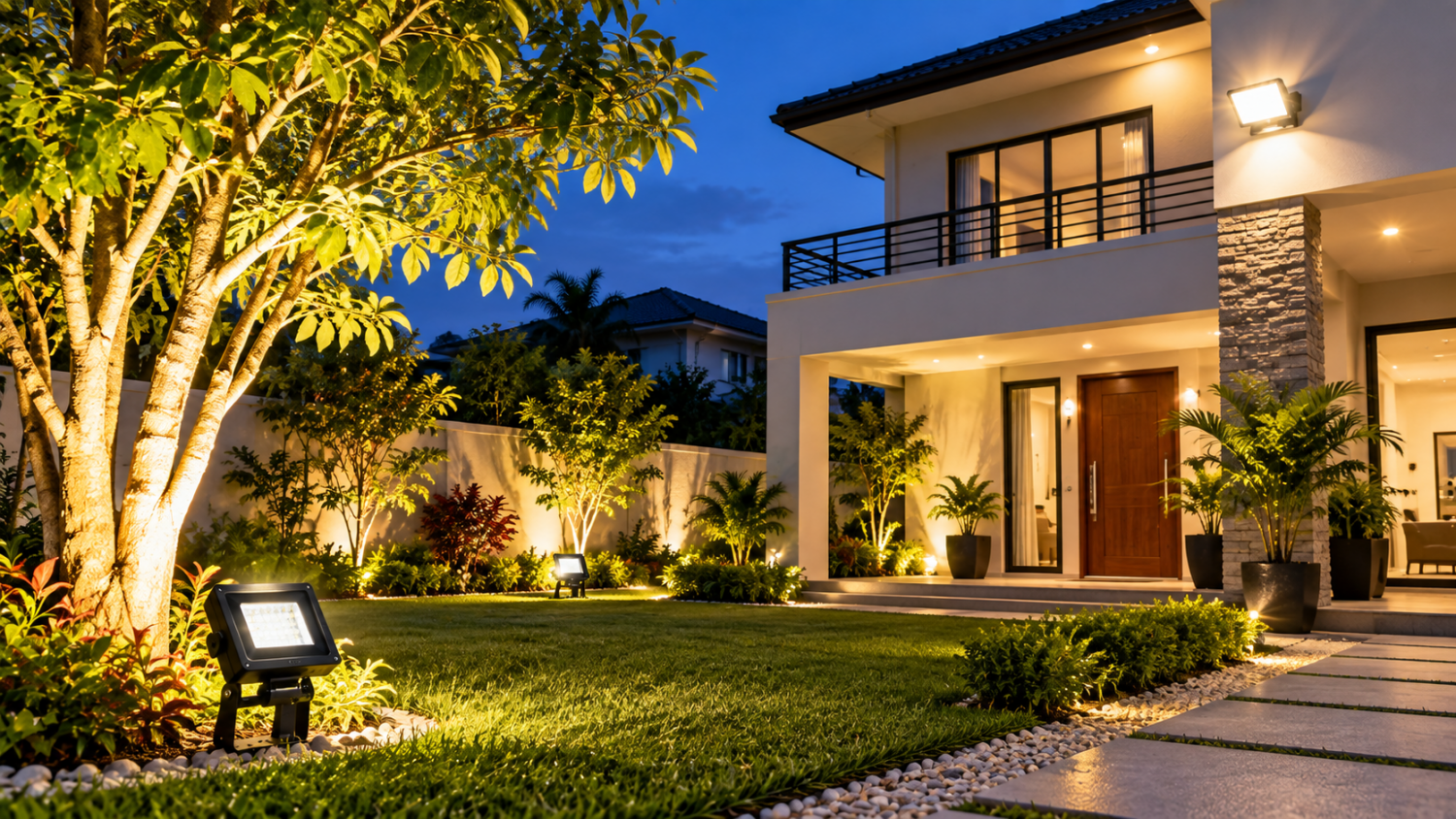
Outdoor areas around a home are often used after sunset for entrances, parking, gardens, balconies, driveways, and security-related visibility. Good lighting can make these spaces easier to use while also giving the exterior a more finished appearance.
LED flood lights are useful for residential applications because they can provide broad illumination from a relatively compact fixture. The challenge is choosing enough light without creating glare or making the space unnecessarily bright.
Identify the Purpose of Each Light
Start by deciding what each fixture is supposed to accomplish. A gate light may need to illuminate an entrance, while a garden light might be intended to highlight landscaping. A driveway requires clear visibility along the route, and a backyard may need wider coverage for general use.
Once the purpose is defined, selecting brightness and beam coverage becomes easier.
Match the Product to the Installation
When reviewing the LED Flood Light Price in Bangladesh, consider where the fixture will be mounted and how much area needs illumination.
A wall-mounted fixture may require a different beam angle from one installed on a tall pole. Mounting height affects the spread of light, so the product specification should be considered together with the planned position.
Avoid placing powerful fixtures where the light shines directly into windows or toward people approaching the property.
Use Multiple Lights Strategically
A common mistake is trying to illuminate an entire property with one extremely powerful light. Multiple appropriately sized fixtures can provide more even coverage and reduce harsh shadows.
For example, separate lights can be used for the driveway, entrance, and backyard. Each can be aimed at the area where illumination is actually needed.
This approach also gives homeowners more control. Individual lights can be switched according to use rather than running every fixture at once.
Think About Colour and Comfort
Outdoor lighting does not have to be unpleasantly harsh. Colour temperature can affect the appearance of walls, plants, paving, and other surfaces.
A warmer appearance may feel more comfortable around residential entertainment areas, while a clearer white light can be useful where visibility is the priority. The choice should complement the surrounding environment.
Weather and Maintenance
Outdoor fixtures should be selected with weather exposure in mind. Rain, dust, humidity, and heat can affect electrical equipment if the product is not appropriate for the location.
Installation quality is equally important. Wiring should be protected, mounting should be secure, and connections should be suitable for outdoor conditions. If the installation involves significant electrical work, a qualified electrician should handle it.
A well-planned residential lighting system does not need to be complicated. Focus on purpose, coverage, efficiency, comfort, and durability, then choose fixtures that fit those requirements. The result can be a safer and more useful outdoor environment without excessive energy use or unnecessary equipment.
Avoiding Common Residential Mistakes
One common mistake is placing an outdoor flood light too high or aiming it without considering the people who will use the property. Another is choosing a very bright fixture for a small area and creating uncomfortable glare.
It is also worth considering how the lights will be controlled. Separate switches, timers, or suitable sensors can make it easier to illuminate only the areas that are needed. This can improve convenience and help avoid unnecessary energy use.
Before installation, check the surrounding environment during the evening. Existing street lights, neighbouring properties, trees, and walls may affect the final result. Small changes to the mounting position can sometimes improve coverage more effectively than choosing a much brighter product.
Test the Result Before Finalising
If the project is important, consider testing one or two fixtures before installing the full quantity. A real-world test can reveal glare, shadows, colour differences, and coverage issues that may not be obvious from specifications alone.
Observe the area at night from the positions where people normally stand or walk. Small adjustments to direction or mounting height can make a significant difference. Testing can be especially useful for entrances, gardens, retail displays, and other visible areas.
Comments (0)