


Selecting Equipment for Safer Traffic Control
Roadworks, construction projects and infrastructure upgrades often require temporary traffic controls to guide motorists, pedestrians and workers around changing site conditions. Choosing suitable equipment depends on factors such as road layout, traffic volumes, work activities, pedestrian movements and the duration of the project.
Before searching for a traffic management company near me, project managers should identify the equipment required for the specific worksite. Hiring the right traffic control equipment can help establish clear boundaries, communicate temporary road conditions and support organised vehicle and pedestrian movements.
Assessing Your Project Requirements
The first step is to assess the worksite and identify potential interactions between construction activities and road users. Consider whether lanes will be closed, whether vehicles will enter and exit the site, whether pedestrians need a temporary route and whether traffic controllers will be required.
Different projects can require completely different equipment packages. A small maintenance project may need basic signs and cones, while major roadworks may require barriers, delineation systems, variable message signs and additional traffic control equipment.
Traffic Cones and Delineation Devices
Traffic cones are among the most commonly used pieces of temporary traffic control equipment. They can help mark work areas, separate traffic lanes and guide vehicles through temporary configurations.
Choosing Suitable Cones
Cone size and visibility should be appropriate for the environment in which they will be used. High-visibility materials can make temporary traffic arrangements easier for motorists to identify, particularly during low-light conditions.
Using Delineation Effectively
Delineation devices can create a continuous visual path through a work zone. They are particularly useful when traffic needs to move around an obstruction or when a temporary lane needs to be clearly defined.
Temporary Traffic Signs
Signs communicate important information to drivers and pedestrians approaching or travelling through a work zone. Depending on the project, temporary signs can provide warnings, directions, restrictions or information about changed traffic conditions.
Warning Signs
Warning signs can alert motorists to upcoming roadworks, changed conditions, lane closures or potential hazards. Providing information before a driver reaches the work area can give them more time to adjust their speed and position.
Directional Signs
Directional signs can help road users follow temporary routes or locate alternative access points. They can be particularly useful where familiar road layouts have changed.
Regulatory Signs
Some projects may require temporary regulatory signs to communicate restrictions or requirements. The signs used should be appropriate for the approved traffic arrangement.
Safety Barriers and Temporary Barriers
Barriers can provide physical separation between traffic and construction areas. They can also help prevent vehicles or pedestrians from unintentionally entering restricted zones.
Protecting Work Areas
Where there is a significant difference between an active work area and a live traffic lane, suitable barrier systems may be considered as part of the traffic control arrangement.
Separating Pedestrians
Temporary barriers can also help establish a defined pedestrian pathway where construction activities occur close to public access areas.
The appropriate barrier system depends on the site's risk profile, road environment and relevant traffic management requirements.
Variable Message Signs
Variable Message Signs (VMS) can display changing information to road users. They may be useful on projects where traffic conditions, lane arrangements or warnings need to be updated during different stages.
Communicating Real-Time Changes
A VMS can display information about changed traffic conditions, upcoming work activities or alternative routes. This can be particularly helpful on larger projects where road arrangements change regularly.
Supporting Driver Awareness
Providing advance information can help motorists prepare for changes before entering a work zone. The information displayed should be concise and relevant to the current traffic arrangement.
Temporary Traffic Lights
Some roadworks require temporary control of traffic at locations where normal traffic signals are unavailable or where traffic must alternate through a restricted section.
Managing Alternating Traffic
Temporary traffic lights can control vehicles travelling through a single available lane when traffic cannot safely pass in both directions at once.
Considering Site Conditions
The suitability of temporary traffic lights depends on factors such as road geometry, traffic volumes, sight distance and the length of the controlled section. Equipment should be installed and operated according to the approved traffic management arrangements.
Pedestrian Management Equipment
Pedestrian safety should be considered whenever construction affects footpaths, crossings or public access routes.
Temporary Pedestrian Barriers
Barriers can guide pedestrians along designated pathways and create separation from construction activities. They can also help prevent pedestrians from accidentally entering vehicle operating areas.
Temporary Pathway Signs
Clear directional signs can indicate where pedestrians should walk when their normal route is unavailable. Signs should be positioned where people can easily understand the intended direction.
Speed Management and Traffic Control Devices
Temporary work zones may require measures to encourage appropriate vehicle speeds and improve driver awareness.
Speed-Related Signage
Temporary speed signs can communicate changed speed requirements where applicable. Their placement should provide sufficient warning for drivers to adjust their speed safely.
Traffic Controllers
Traffic controllers can complement physical equipment when direct management of vehicle or pedestrian movements is required. They can provide instructions, coordinate vehicle access and respond to changing site conditions within the approved arrangements.
Lighting and Night Work Equipment
Projects operating during evenings or overnight may require additional equipment to maintain visibility.
Improving Work Zone Visibility
Appropriate lighting can help workers, traffic controllers and road users identify signs, barriers and work areas. Equipment should be positioned carefully so it does not create glare or interfere with drivers' vision.
Reflective Equipment
Reflective signs, cones and delineation devices can improve visibility when natural light is limited. The equipment selected should suit the conditions and applicable requirements.
Choosing a Traffic Control Equipment Hire Provider
The equipment itself is only one part of effective traffic management. The hire provider should understand the requirements of the project and supply equipment that is suitable for the intended application.
Check Equipment Condition
Before accepting hired equipment, inspect signs, cones, barriers and other devices for damage or deterioration. Faulty equipment may not provide the intended level of visibility or separation.
Match Equipment to the Site
A reputable traffic management company near me should be able to discuss the worksite and help identify suitable equipment based on the traffic arrangement, project duration and site conditions.
Consider Delivery and Collection
Project managers should also confirm delivery times, collection arrangements and equipment quantities. Having equipment available when required helps prevent delays to planned traffic control activities.
Frequently Asked Questions
What traffic control equipment is commonly hired?
Common equipment includes traffic cones, temporary signs, barriers, delineation devices, pedestrian barriers, variable message signs, temporary traffic lights and other traffic control devices.
How do I know what equipment my project needs?
Start by assessing the road layout, traffic conditions, work activities, pedestrian movements and vehicle access requirements. A qualified traffic management provider can help identify equipment suited to the site's approved traffic arrangements.
Can traffic control equipment be used for night work?
Yes, equipment suitable for night work can include reflective signs, high-visibility delineation and appropriate lighting systems. The selection depends on the worksite and applicable traffic control requirements.
Should I hire equipment or use a full traffic management service?
For straightforward projects, equipment hire may be suitable if the project team can properly manage the traffic controls. More complex projects may benefit from a full traffic management service that includes planning, equipment and trained personnel.
AAA Traffic Control Pty Ltd
10 Coventry Pl, Mount Druitt NSW 2770
(02) 96757731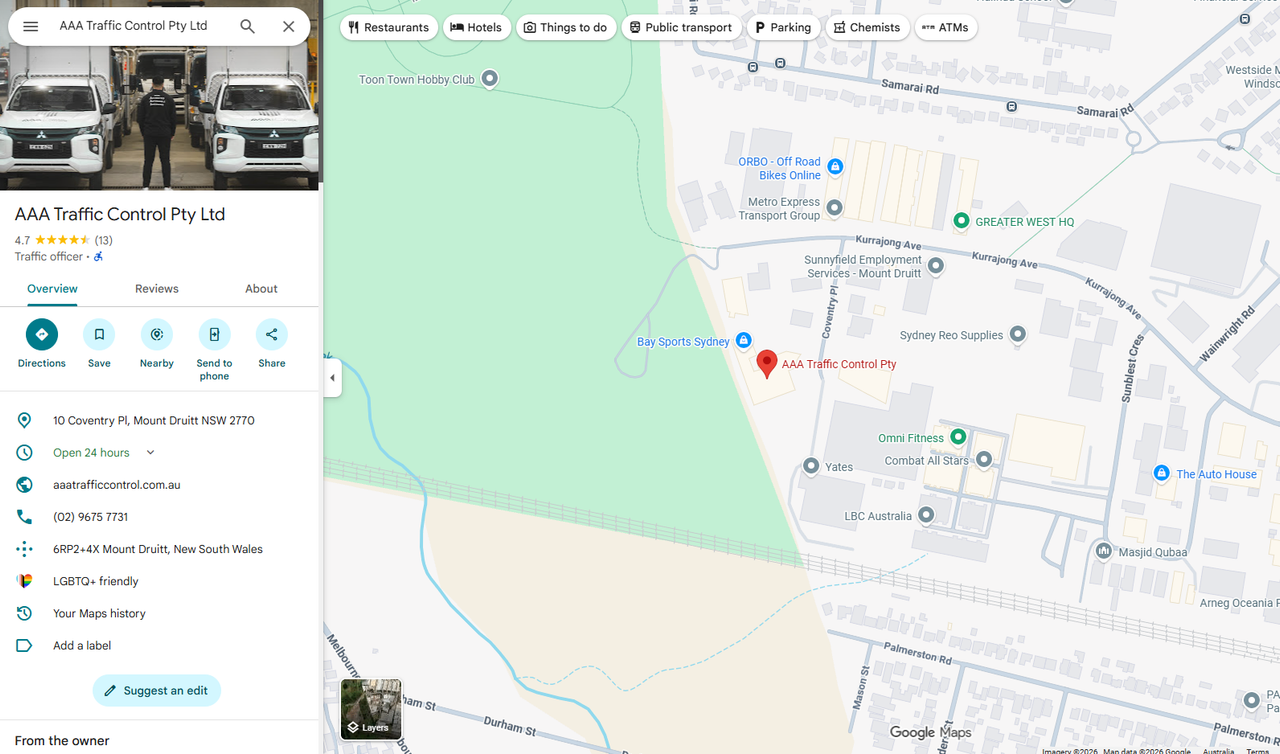
Comments (0)