


Data analytics has emerged as one of the most practical and high-growth career options for people looking to switch into a modern, future-ready profession. As organizations increasingly depend on data to make decisions, the demand for professionals who can interpret and communicate insights continues to rise. This Data Analytics Online Course creates a strong opportunity for individuals from non-IT backgrounds to transition into analytics by building the right skills and gaining hands-on experience.

Why Data Analytics Is a Realistic Career Switch
One of the biggest advantages of data analytics is that it does not require a specific academic background. Instead, it is built around learnable skills that can be developed step by step. Since every industry—finance, healthcare, retail, education, logistics, and more—relies on data, companies are open to hiring professionals who can combine analytical ability with domain understanding.
What the Data Analyst Role Involves
A data analyst works with raw data and turns it into meaningful insights that support decision-making. This includes collecting information, cleaning datasets, identifying trends, and presenting findings through dashboards or reports. The role is less about complex coding and more about logical thinking, structured problem-solving, and clear communication.
Essential Skills to Get Started
To begin a career in data analytics, a few core tools are essential. Excel is widely used for organizing and analyzing data. SQL helps in retrieving and managing data from databases. Visualization tools like Power BI and Tableau are used to convert data into easy-to-understand visuals. As you progress, Python becomes valuable for deeper analysis and automation tasks.
Learning in a Structured Way
A step-by-step learning approach works best when entering data analytics. Instead of trying to learn everything at once, focus on one skill at a time and practice regularly. Building small, real-world projects while learning helps reinforce concepts and improves confidence. Over time, this consistent approach builds strong practical ability.
Using Your Existing Experience as a Strength
Your non-IT background is not a limitation—it is an advantage. Every profession involves working with data in some form, whether related to customers, operations, sales, or performance tracking. This Data Analytics Course in Chennai experience helps you understand business context, making your insights more meaningful and aligned with real-world needs.
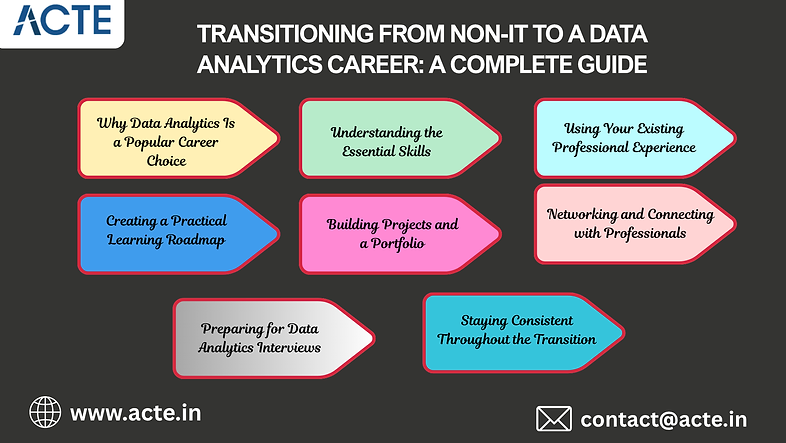
Gaining Practical Experience Before Employment
Hands-on practice is essential for becoming job-ready. Working with publicly available datasets allows you to apply what you learn in real scenarios. You can analyze trends, build dashboards, and solve business problems. These Software Training Institute practical exercises help bridge the gap between learning concepts and applying them in professional environments.
Building a Strong Portfolio
A portfolio is one of the most important assets for anyone switching careers into data analytics. It demonstrates your ability to work with data and generate insights. Include projects that highlight skills such as data cleaning, analysis, visualization, and storytelling. Clearly explaining your process adds depth and helps employers understand your approach.
The Role of Networking in Career Growth
Networking plays a major role in entering the data analytics field. Connecting with professionals through online communities, webinars, and industry discussions helps you stay updated with trends and job opportunities. It also increases access to mentorship, referrals, and insights that are not always publicly available.
Staying Updated in a Changing Field
Data analytics continues to evolve as new tools and technologies are introduced. Continuous learning is important to stay competitive and grow in the field. Professionals who adapt to changes and consistently upgrade their skills are better positioned for long-term success and career advancement.
Conclusion
Transitioning from a non-IT background into a data analytics career is both realistic and achievable. By learning core tools, leveraging your existing experience, gaining practical exposure, and staying consistent in your learning journey, you can successfully enter this growing field. With dedication and a clear plan, data analytics can become a rewarding and stable long-term career path.
Comments (0)