


The 5.7-liter Hemi V8 in the Dodge Ram 1500 is a masterpiece of engineering, producing 395 horsepower and 410 lb-ft of torque in its factory configuration. However, the stock exhaust system muffles the engine's true voice, transforming what could be a thunderous roar into a muted hum. Installing a cat-back exhaust system—which replaces the exhaust components from the catalytic converter back to the tailpipe—liberates that suppressed sound while delivering modest performance gains. For Ram owners seeking a more aggressive driving experience, a cat-back exhaust transforms every cold start into an event, every throttle blip into a symphony, and every highway merge into a grin-inducing experience. Beyond the audio drama, a quality cat-back system typically reduces backpressure, allowing the engine to breathe more efficiently and potentially adding 5 to 15 horsepower. The installation is a straightforward weekend project, but before you focus entirely on the exhaust note, there is one critical safety component you should inspect at the same time: your headlights.
Choosing the Right Cat-Back System for Your Ram
The 2018 Dodge Ram 1500 offers dozens of cat-back exhaust options, ranging from mild to wild. Understanding the differences is essential to achieving your desired sound profile. Axle-back systems replace only the muffler and tailpipe, offering a moderate sound increase with the simplest installation. Cat-back systems replace everything from the catalytic converter rearward, including the intermediate pipe, muffler, and tailpipe, providing more significant sound and performance gains. Materials matter significantly: 409 stainless steel offers good corrosion resistance at a lower price point, while 304 stainless steel provides superior rust protection and a longer lifespan, especially in northern climates where road salt is prevalent. Muffler design determines the sound character. A chambered muffler (like Flowmaster's Super 44 or Super 10) produces the classic deep, aggressive "muscle car" tone with pronounced idle rumble. A straight-through design (like Magnaflow or Borla) offers a smoother, more refined sound that remains civilized during highway cruising but roars under heavy acceleration. For most Ram owners, a mild to moderate system strikes the perfect balance—loud enough to announce the Hemi's presence but quiet enough for daily driving and towing without drone at constant speeds.
The 2018 Dodge Ram 1500 offers dozens of cat-back exhaust options, ranging from mild to wild. Understanding the differences is essential to achieving your desired sound profile. Axle-back systems replace only the muffler and tailpipe, offering a moderate sound increase with the simplest installation. Cat-back systems replace everything from the catalytic converter rearward, including the intermediate pipe, muffler, and tailpipe, providing more significant sound and performance gains. Materials matter significantly: 409 stainless steel offers good corrosion resistance at a lower price point, while 304 stainless steel provides superior rust protection and a longer lifespan, especially in northern climates where road salt is prevalent. Muffler design determines the sound character. A chambered muffler (like Flowmaster's Super 44 or Super 10) produces the classic deep, aggressive "muscle car" tone with pronounced idle rumble. A straight-through design (like Magnaflow or Borla) offers a smoother, more refined sound that remains civilized during highway cruising but roars under heavy acceleration. For most Ram owners, a mild to moderate system strikes the perfect balance—loud enough to announce the Hemi's presence but quiet enough for daily driving and towing without drone at constant speeds.
The Critical Connection: Headlight Aim After Exhaust Installation
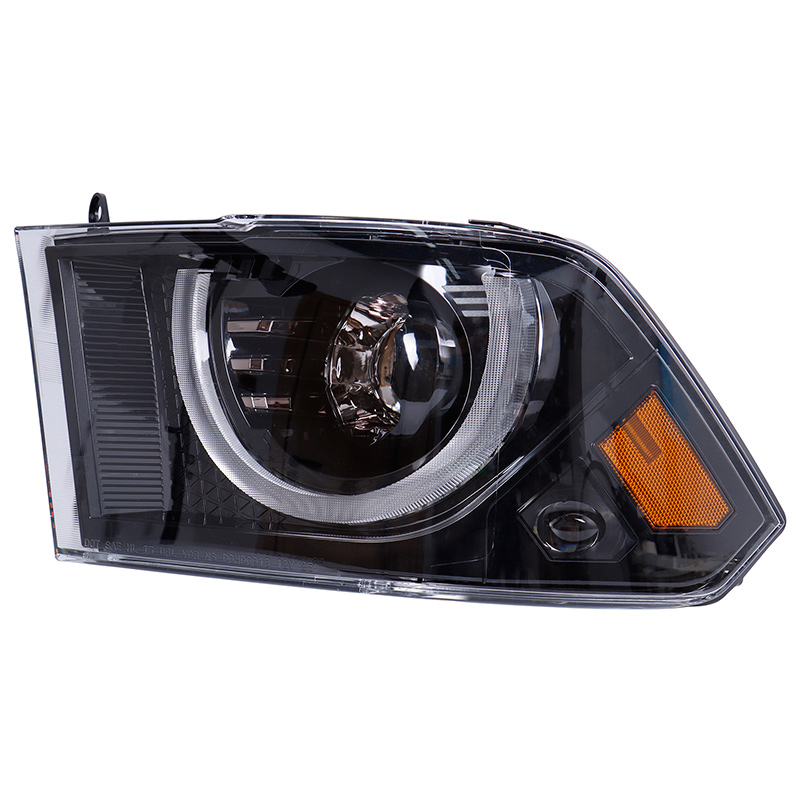
While installing a cat-back exhaust seems entirely unrelated to your truck's forward lighting, there is a practical connection that most owners overlook: headlight aim relative to vehicle stance. Many Ram owners pair an exhaust upgrade with other modifications like leveling kits, larger tires, or added weight from tools and gear. Here is the often-missed detail: after spending hours under your truck installing a new exhaust system, you will almost certainly take it for an enthusiastic test drive. If your Ram has any suspension modifications—or even if the exhaust system's weight distribution changed slightly—your 2018 Dodge Ram 1500 headlight beams may be pointing too high or too low. A misaimed headlight reduces your ability to see the road during that exhilarating nighttime test drive while simultaneously blinding oncoming drivers. Additionally, some aftermarket exhaust tips extend further rearward or exit at different angles. If you have rear-facing auxiliary lights (like backup lights or work lights mounted near the bumper), a larger exhaust tip can occasionally cast shadows or cause heat-related discoloration on light housings. More directly, a louder exhaust often encourages more aggressive driving, including faster night driving on back roads. At higher speeds, proper headlight aim becomes even more critical—those extra few seconds of stopping distance provided by correctly aimed high beams can mean the difference between spotting a deer and hitting one.
While installing a cat-back exhaust seems entirely unrelated to your truck's forward lighting, there is a practical connection that most owners overlook: headlight aim relative to vehicle stance. Many Ram owners pair an exhaust upgrade with other modifications like leveling kits, larger tires, or added weight from tools and gear. Here is the often-missed detail: after spending hours under your truck installing a new exhaust system, you will almost certainly take it for an enthusiastic test drive. If your Ram has any suspension modifications—or even if the exhaust system's weight distribution changed slightly—your 2018 Dodge Ram 1500 headlight beams may be pointing too high or too low. A misaimed headlight reduces your ability to see the road during that exhilarating nighttime test drive while simultaneously blinding oncoming drivers. Additionally, some aftermarket exhaust tips extend further rearward or exit at different angles. If you have rear-facing auxiliary lights (like backup lights or work lights mounted near the bumper), a larger exhaust tip can occasionally cast shadows or cause heat-related discoloration on light housings. More directly, a louder exhaust often encourages more aggressive driving, including faster night driving on back roads. At higher speeds, proper headlight aim becomes even more critical—those extra few seconds of stopping distance provided by correctly aimed high beams can mean the difference between spotting a deer and hitting one.
For these reasons, completing an exhaust installation is the perfect time to perform a headlight re-aiming check. Park your 2018 Ram on level ground exactly 25 feet from a flat wall with the fuel tank half full and any typical cargo in the bed. Measure from the ground to the center of each headlight bulb and mark that height on the wall with tape. Using a 7mm socket on an extension, locate the vertical adjustment screw accessible through a hole in the inner fender. Turn the screw to lower or raise the beam so that the top of the low-beam cutoff is approximately 2 to 2.5 inches below the center mark on the wall. This five-minute adjustment ensures that your newly aggressive exhaust note does not lead to aggressive driving consequences.
Installation Process and Sound Expectations
Installing a cat-back exhaust on a 2018 Dodge Ram 1500 is a moderate-difficulty DIY project, typically taking two to four hours with basic hand tools and a floor jack with jack stands. Begin by safely lifting the truck and supporting it on stands—never rely on a jack alone. Apply penetrating oil to the exhaust band clamp connecting the catalytic converter to the intermediate pipe; on Rams driven in salt states, this clamp often rusts solid. Using a reciprocating saw or exhaust cutter, carefully cut the pipe if the clamp refuses to break free. Remove the old exhaust system by sliding the hangers out of their rubber isolators (using soapy water or silicone spray as lubricant). Install the new system from front to back, starting with the intermediate pipe, then the muffler assembly, and finally the tailpipe and tip. Most quality systems use slip-fit connections with included band clamps, allowing fine adjustments to tip alignment and clearance around the spare tire and rear suspension links. Torque all clamps to the manufacturer's specification—typically 35 to 45 foot-pounds. Before lowering the truck, double-check clearance around the brake lines, fuel tank, and wiring harnesses; a vibrating exhaust can rub through these components over time.
Installing a cat-back exhaust on a 2018 Dodge Ram 1500 is a moderate-difficulty DIY project, typically taking two to four hours with basic hand tools and a floor jack with jack stands. Begin by safely lifting the truck and supporting it on stands—never rely on a jack alone. Apply penetrating oil to the exhaust band clamp connecting the catalytic converter to the intermediate pipe; on Rams driven in salt states, this clamp often rusts solid. Using a reciprocating saw or exhaust cutter, carefully cut the pipe if the clamp refuses to break free. Remove the old exhaust system by sliding the hangers out of their rubber isolators (using soapy water or silicone spray as lubricant). Install the new system from front to back, starting with the intermediate pipe, then the muffler assembly, and finally the tailpipe and tip. Most quality systems use slip-fit connections with included band clamps, allowing fine adjustments to tip alignment and clearance around the spare tire and rear suspension links. Torque all clamps to the manufacturer's specification—typically 35 to 45 foot-pounds. Before lowering the truck, double-check clearance around the brake lines, fuel tank, and wiring harnesses; a vibrating exhaust can rub through these components over time.
The first cold start after installation is a moment you will remember. The Hemi fires with a deep, authoritative bark that settles into a rumbling idle, announcing that this is no ordinary Ram. Under light throttle, the sound remains civilized—conversation in the cab is unaffected. However, when you mat the throttle, the V8's roar fills the cabin and echoes off nearby buildings, a primal sound that connects you to the engine's power delivery in a way the factory exhaust never could. On the highway, choose your system carefully: a chambered muffler may produce drone between 1,800 and 2,200 RPM (typical cruising range), while a straight-through design generally remains quiet. Some owners add a Helmholtz resonator or J-pipe to cancel specific drone frequencies, though most aftermarket systems are well-engineered from the start.
Final Thoughts on Performance Sound
Installing a cat-back exhaust on your Dodge Ram 1500 is one of the most rewarding modifications you can make. It transforms a practical daily driver into a vehicle with personality, announcing the Hemi's presence with every start and every downshift. The modest horsepower gain (typically 5-15 HP) is barely noticeable, but the improved throttle response and the smile on your face are undeniable. Just remember: with great sound comes great responsibility. A louder truck attracts more attention from law enforcement, so drive respectfully, especially in residential areas at night. And before you take your newly vocal Ram for that celebratory night drive, check your headlight aim. After all, the best exhaust note in the world won't help if you cannot see where you are going—or if you blind the driver coming the other way.
Installing a cat-back exhaust on your Dodge Ram 1500 is one of the most rewarding modifications you can make. It transforms a practical daily driver into a vehicle with personality, announcing the Hemi's presence with every start and every downshift. The modest horsepower gain (typically 5-15 HP) is barely noticeable, but the improved throttle response and the smile on your face are undeniable. Just remember: with great sound comes great responsibility. A louder truck attracts more attention from law enforcement, so drive respectfully, especially in residential areas at night. And before you take your newly vocal Ram for that celebratory night drive, check your headlight aim. After all, the best exhaust note in the world won't help if you cannot see where you are going—or if you blind the driver coming the other way.
Comments (0)