


Every watt hour that disappears as heat inside a battery is a watt hour that never powers your lights, runs your well pump, or charges your phone. In renewable power systems, where every electron comes from the sun, wind, or water, efficiency is not just a technical specification, it is the difference between a system that meets your needs and one that leaves you short. High efficiency rack mounted batteries are engineered to minimize every possible loss, from the internal resistance of the cells to the standby power of the management system. They capture more of what your solar panels produce and deliver more of it to your loads. For off grid homes, remote telecom sites, and any renewable system where energy is precious, choosing a high efficiency rack means getting more usable power from the same solar array, often without adding a single additional panel.
Understanding Round Trip Efficiency Numbers
Round trip efficiency is the single most important number for a renewable energy battery. It tells you what percentage of the energy you put into the battery comes back out. A high efficiency rack battery delivers ninety five to ninety eight percent round trip efficiency. That means for every ten kilowatt hours your solar panels send to the battery, you get back over nine and a half kilowatt hours to use at night. The remaining five percent is lost as heat and to power the battery management system. Inefficient batteries, particularly older lead acid or poorly designed lithium units, might only offer eighty to eighty five percent round trip efficiency. Over a year of daily cycling, that ten to fifteen percent difference adds up dramatically. A five kilowatt solar array generating twenty kilowatt hours daily would waste three kilowatt hours every single day in an inefficient battery, over one thousand kilowatt hours lost annually, enough to run a refrigerator for an entire year.

Low Internal Resistance as the Key Metric
Internal resistance is the hidden factor that determines much of a battery's efficiency. Think of it as friction inside the cells. Every time current flows into or out of the battery, that resistance converts some energy into heat. High efficiency rack batteries use cells with exceptionally low internal resistance, typically below one milliohm per cell. This is achieved through optimized electrode design, high quality separators, and precise manufacturing. Low resistance means the battery can accept charge faster without heating up and can deliver high currents without voltage sag. For renewable systems with variable production, like solar panels that suddenly produce full power when a cloud passes, low resistance allows the battery to absorb that energy burst efficiently rather than wasting it as heat. When comparing batteries, look for internal resistance specifications. Lower is always better for efficiency. Premium cells from manufacturers like EVE, CATL, and REPT consistently offer the lowest internal resistance in the industry.
Voltage Matching for Maximum Transfer Efficiency
A surprising amount of efficiency is lost when battery voltage and system voltage are poorly matched. High efficiency rack batteries are available in voltages that align perfectly with common renewable system architectures. For small to medium systems, 48 volts is the sweet spot, offering a good balance between efficiency and safety. For larger systems, high voltage racks operating at 150 to 600 volts reduce current dramatically, and lower current means lower resistive losses in cables and connections. A high voltage system might achieve ninety eight percent round trip efficiency compared to ninety five percent for a comparable 48 volt system, a meaningful difference for large installations. When designing your renewable system, choose a battery voltage that matches your charge controller and inverter. Mismatched voltages require DC to DC converters, which add their own efficiency penalties of three to five percent. The most efficient system is one where everything operates at the same nominal voltage without conversion losses.
Temperature Effects on Real World Efficiency
Efficiency ratings are measured at ideal room temperature, but your renewable system likely lives in a garage, shed, or outdoor enclosure. Temperature dramatically affects battery efficiency. Cold increases internal resistance, reducing both charge and discharge efficiency. A battery that is ninety seven percent efficient at seventy seven degrees might drop to ninety percent efficiency at freezing temperatures. Heat is equally problematic, increasing side reactions that waste energy. High efficiency rack batteries address this with thermal management systems that maintain optimal cell temperature. Some use low power heaters to warm cells in cold weather, drawing a small amount of energy to prevent much larger efficiency losses. Others use passive cooling or temperature controlled fans to shed excess heat. When evaluating efficiency, look for efficiency curves that show performance across your expected temperature range. A battery that maintains high efficiency from freezing to one hundred degrees is far more valuable in real world conditions than one that only performs on a lab bench.
Standby Consumption and Parasitic Losses
Even when your battery is not actively charging or discharging, it consumes power. The battery management system runs continuously, monitoring cell voltages, temperatures, and current flow. Communications modules draw power to maintain network connections. Displays, if present, consume additional energy. In a high efficiency rack battery, these parasitic loads are minimized. The BMS uses low power microcontrollers that draw milliamps rather than amps. Communications modules enter sleep mode when inactive, waking only when data is requested. Displays are optional or use ePaper technology that consumes power only when updating. Typical standby consumption for a high efficiency rack is two to five watts. That translates to fifty to one hundred twenty watt hours per day, two to five percent of a typical five kilowatt hour daily cycle. Inefficient batteries might consume ten to fifteen watts continuously, doubling or tripling these losses. For off grid systems where every watt hour is precious, minimizing standby consumption is as important as maximizing charge discharge efficiency.
Inverter Pairing for System Efficiency
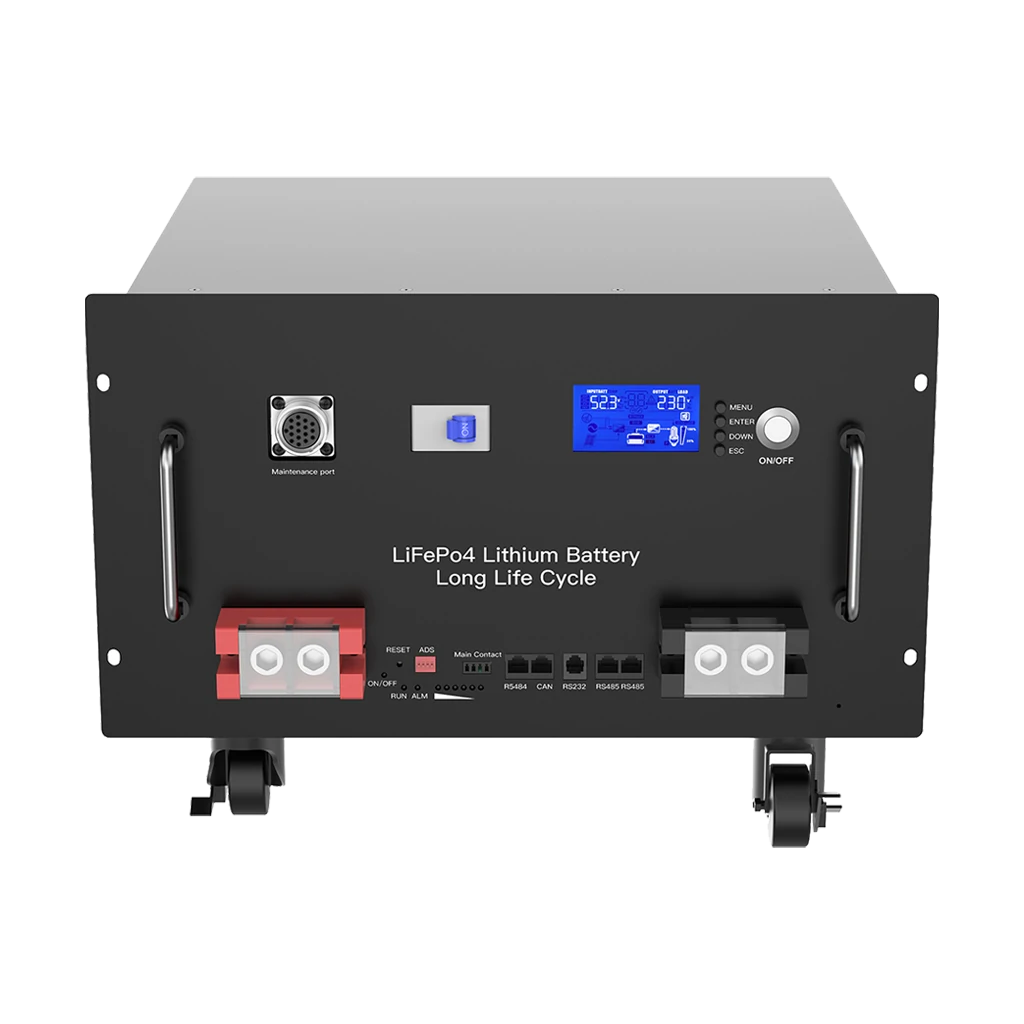
The most efficient battery in the world will perform poorly if paired with an inefficient inverter. The inverter converts battery DC power to AC power for your home, and this conversion has its own efficiency curve. High efficiency rack mounted battery batteries are designed to work with inverters that share similar operating voltage ranges and communication protocols. The battery provides a smooth, stable voltage that allows the inverter to operate at its peak efficiency point. Some integrated systems combine the battery and inverter in a single enclosure, eliminating cable losses and optimizing the pairing. These all in one high efficiency systems can achieve overall round trip efficiencies from DC battery to AC load of ninety three to ninety four percent, compared to ninety to ninety one percent for mismatched components. When shopping, consider the battery and inverter as a system. Request combined efficiency numbers rather than component specifications alone. The battery that advertises ninety eight percent efficiency is only valuable if paired with an inverter that can deliver it to your loads.
Efficiency That Pays for Itself
High efficiency batteries cost more upfront than standard models, typically ten to twenty percent higher for comparable capacity. But that premium pays for itself over time through reduced waste. A five kilowatt solar system charging a ten kilowatt hour battery daily loses five hundred watt hours per day with ninety five percent efficiency. The same system loses three hundred watt hours daily with ninety seven percent efficiency. The two percent difference saves seventy three kilowatt hours annually. At fifteen cents per kilowatt hour, that is eleven dollars per year saved. Over a ten year battery life, the efficiency difference saves one hundred ten dollars, not enough to justify a premium. But for larger systems, or for off grid homes where every lost watt hour must be replaced by running a generator, the math changes dramatically. A twenty kilowatt commercial system losing two percent efficiency wastes four hundred kilowatt hours annually. At commercial rates of twelve cents, that is forty eight dollars per year, or four hundred eighty dollars over ten years. For off grid systems where generator fuel costs fifty cents per kilowatt hour, the same two percent efficiency loss wastes two thousand dollars annually. In that context, paying extra for high efficiency is not just smart, it is essential to the financial viability of the entire renewable power system.
Comments (0)