
Remember me





 by Nino LeitnerYesterday
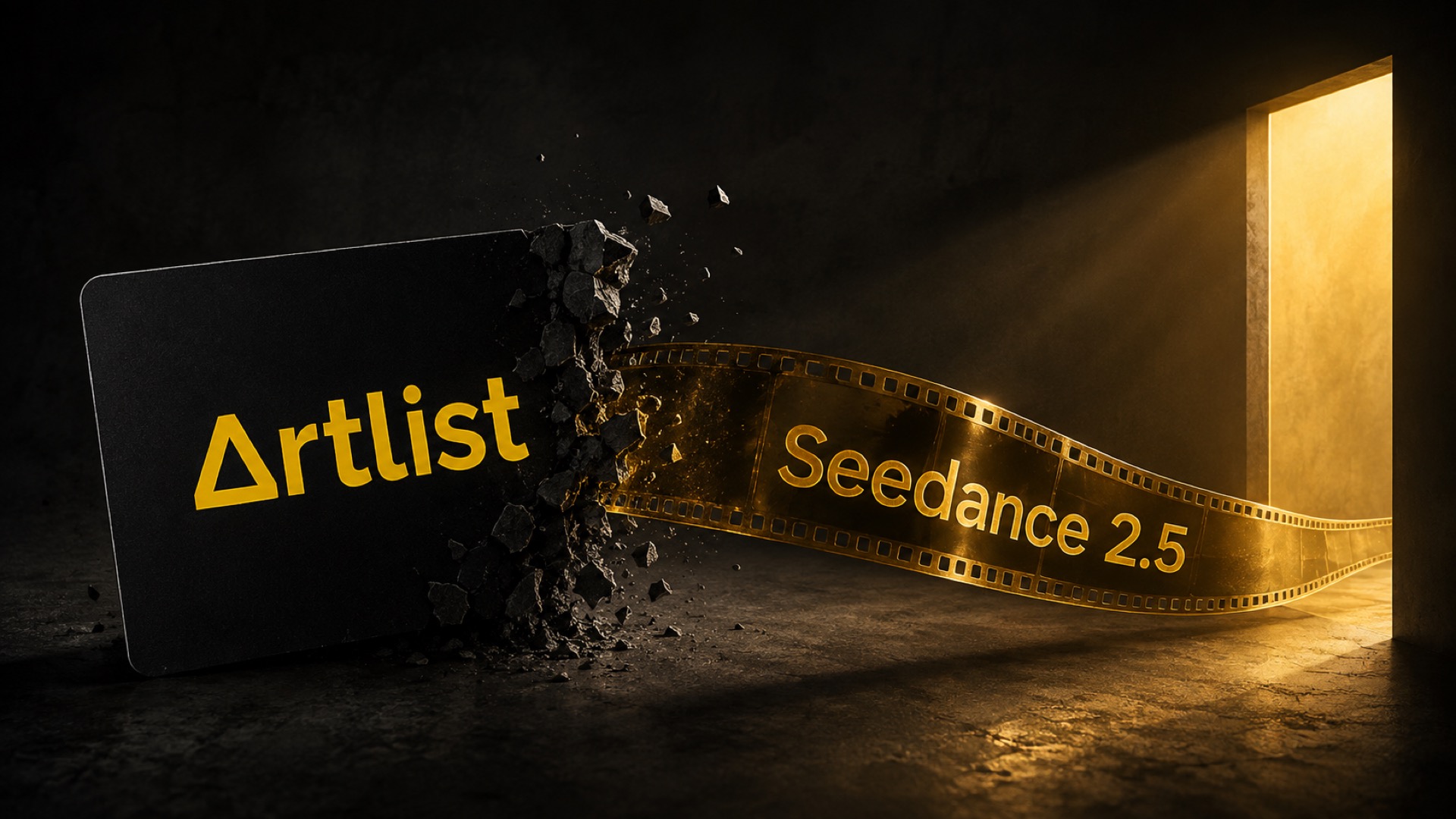
Artlist spent a weekend telling filmmakers that an annual AI Creator subscription bought them twelve months of unlimited generations on ByteDance’s Seedance 2.5, and it pointed at rivals offering a week to make the deal look generous. Within days the model was gone from Unlimited on every plan, and the people who paid around $500 were handed a credit allowance worth a small fraction of what they bought. Artlist calls this a demand problem. The pricing of the underlying model says it was a promise the company could never have funded, and our recommendation to filmmakers is blunt: do not give this company money up front.
This is an opinion piece. The facts below come from Artlist’s own statements, terms, and product pages, and from published API pricing for Seedance 2.5.
To its limited credit, Artlist has stopped hiding behind euphemism. In a statement to affected customers the company said it had made a huge commitment “that we couldn’t keep,” and that it was owning the mistake. That is the most honest sentence anyone at Artlist has produced this week. It is also an admission that the offer was sold to filmmakers before anyone checked whether it could be delivered.
Run the numbers Artlist should have run firstSeedance 2.5 is not a cheap model to serve. On the open reseller market, generation runs in the region of $0.47 per second of 720p video, which puts roughly $14 of raw inference behind a single 30-second clip. Artlist’s own promotional terms advertised a daily allowance of about 2,550 seconds, meaning around 85 half-minute clips per day. Multiply that out and one enthusiastic subscriber could burn through something in the region of $1,190 of inference in a day, against a subscription costing around $500 for the entire year.
We are working from public reseller pricing rather than Artlist’s undisclosed wholesale rate, so treat the figure as directional. It does not need to be precise. At any plausible discount, a single heavy user recovers the annual subscription price inside a day and then costs the company money every day for the following 364. This was not a forecast that went wrong. It was an offer that only survived contact with reality if customers failed to use what they had been sold, and it collapsed in a week because they used it.
Note also what that 2,550-second figure tells you. The unlimited plan had a hard daily ceiling from the moment it went on sale. Artlist was already metering the thing it was advertising as unlimited, and then removed it anyway.
 Message Artlist sent to subscribers about the removal of access to Seedance 2.5. Screenshot from a user.Everyone else sold a fortnight, Artlist sold a year
The capacity explanation would carry more weight if the industry had hit the same wall together. It did not. Higgsfield advertised up to 33 days of unlimited Seedance 2.5, tiered by clip length. Runway offered seven days at launch for new Max subscribers. Renoise ran a one-week window. Topview sells 60 days, Creaa sells 7, 15 and 30-day blocks, OpenArt caps its unlimited tier at five seconds and 480p.
Every serious reseller priced this model in days or weeks, because days or weeks is what the economics support. Artlist alone sold 365 days, and marketed that gap as proof of superior value rather than as the warning sign it was. When your differentiator is that you are the only company willing to promise something, the interesting question is not why everyone else was stingy.
What the terms actually say, and what that tells youArtlist’s site-wide Terms of Use define Unlimited as credits not being deducted for covered generations during an access period, and then strip almost every meaning from the word: Unlimited guarantees no particular speed, capacity, uninterrupted access, volume of generations, or “continued availability of any AI service, Model, feature.” That language is live on the site now, and it was there while the promotion was running.
So the legal position was covered before the marketing went out. Artlist reserved the right to withdraw the model at any moment, then built an acquisition campaign around a promise it had already contracted its way out of keeping. That is not a company blindsided by success. That is a company that knew what it might have to do and decided the sign-ups were worth it.
Meanwhile the customer-facing copy has been quietly diverging from itself. The Seedance 2.5 product page FAQ now states flatly that the model is not part of the Unlimited plan and must be run on credits. Further down the same page, the original copy still says it is included in Unlimited plans. Both sentences are live simultaneously. A company committed to being upfront would put the correction next to the promise and leave it there.
 Artlist heavily advertised Seedance 2.5 “unlimited for a full year” before pulling access after only a week. Screenshot via RedditThe remedy is engineered to keep the cash
Affected subscribers were bumped from 80,000 credits a month to 180,000 for the remainder of their term. AI Creator costs $41.67 per month billed annually, or $69.99 monthly, and users report paying $499.99 for the promotional year. Customers calculate a 30-second generation at roughly 15,000 credits, which would make the upgraded tier worth about twelve full-length clips a month. Artlist does not publish the per-generation credit cost of Seedance 2.5 anywhere on its live pages, so that number is customer arithmetic rather than a verified figure. Artlist has not disputed it either, and it could end the argument in one sentence by publishing the rate.
Twelve clips a month against 85 a day is not a reduced offer. It is a different product wearing the old receipt.
The refund, which is the only genuinely fair remedy available, was made opt-in and restricted to people who bought inside the August 7 to 10 window. Customers must find it, ask for it, and wait, while receiving what is visibly the same paragraph over and over, signed by a support name. Reports since then are split: some refunds processed promptly and in line with policy, many others met with refusals, silence, or generic replies, with customers turning to PayPal and credit card chargebacks to get their money back. On Trustpilot, Artlist responds to fewer than half of its negative reviews and states it typically replies within two weeks.
The company was able to push an automatic credit upgrade to every affected account overnight. It could have pushed an automatic refund with the same effort. It chose the option that keeps the money on its own balance sheet and puts the burden of chasing on the customer.
This is a pattern, not an accidentArtlist customers have been here before. A documented complaint from earlier this year describes an annual subscriber who says the credit cost of AI video generation was raised mid-contract, cutting effective output by around three quarters during a term already paid for, with support pointing to the terms and conditions. Different mechanism, identical structure: the customer prepays for a defined quantity, the platform redefines the quantity, the contract absorbs the complaint.
The corporate context makes the incentive obvious. Artlist closed 2025 with $260 million in annual recurring revenue and reported $300 million at the start of 2026 on the back of a 600% jump in new user growth. It then cut roughly 200 of about 500 employees in June, around 40% of the company, in a pivot to what management called an AI-native operating model, with the CEO noting that competitors run the same business with a fifth of the headcount. A subscription business under that kind of pressure has every reason to buy growth with a promise it cannot fund and settle the bill later, in credits.
 Examples for the heavy advertising Artlist has been running on platforms like Instagram and YouTube for “Unlimited” access to Seedance 2.5. Screenshots from ads, image credits: ArtlistAnd this is the model they built the campaign on
Worth remembering what was being resold here. Seedance 2.5 is genuinely impressive, and we covered it when the public API went live: 30-second clips in a single pass, up to 50 multimodal references, co-generated audio. It also belongs to the family that triggered a Hollywood-wide backlash when Seedance 2.0 produced viral deepfakes of Tom Cruise, Brad Pitt, and SAG-AFTRA president Sean Astin, drawing cease-and-desist letters from Disney and Paramount Skydance alleging training on their works without permission, a formal MPA demand on behalf of seven studios, and a US Senate letter calling for the model to be pulled. Those letters have not become lawsuits, ByteDance says it respects intellectual property and has strengthened its safeguards, and Seedance 2.5 is a distinct model from 2.0.
Still, this is what Artlist chose as the centerpiece of an aggressive campaign aimed at professionals who deliver to clients under warranty: wholesale access to a Chinese model whose training data is the subject of studio demand letters, resold as an all-you-can-eat buffet, with the right to withdraw it retained in the terms. Legal exposure, provenance questions, tool availability. Every risk in that chain was pushed downstream to the subscriber. Artlist’s license protects you from Artlist. It cannot tell you where the pixels came from.
Our recommendation: do not prepay ArtlistWe do not often tell readers to walk away from a company, and we are not doing it lightly here. No lawsuit, class action, or regulator has surfaced, and on the current facts none may. Artlist’s terms are almost certainly robust enough to survive this, which is exactly the problem. Nothing in this episode required breaking a contract. It only required breaking a promise, and the contract was written in advance to make that costless.
That is the basis of our advice, and it is unambiguous. Do not buy an annual Artlist AI plan. Do not buy any Artlist plan on the strength of a specific model being included, unlimited, or free of credit cost, because the company has now twice been documented redefining prepaid value mid-term: once by repricing credits during an active annual contract, and now by removing the single feature its entire acquisition campaign was built on. Two incidents make a pattern, and a pattern is a business practice. Until Artlist publishes the per-generation credit cost of the models it sells, restores what it promised, or refunds every affected subscriber without being chased, treat anything it advertises as unlimited as fiction and price your production risk accordingly.
If you are already in, act now rather than waiting for goodwill. Request the refund in writing, keep the correspondence, and if support stalls, go to your card issuer or PayPal, as many affected customers already have. If you want the model itself, Seedance 2.5 is sold by several platforms in honest, time-boxed windows that reflect what it actually costs to run, and a vendor who tells you the truth about a fortnight is worth more than one who sells you a fantasy about a year.
The broader lesson outlives this one company. Unlimited is advertising copy describing a promotional position built on inference costs the seller does not control, licensing questions the seller cannot answer, and supplier terms the seller cannot guarantee. Credits are contractual. Access is not. If a delivery schedule or a client budget depends on one generative model staying available at one price, get it in writing or build the fallback today.
Is a credit upgrade a serious remedy, or should every affected subscriber be refunded without asking? And would you prepay a year for any AI platform after this? Don’t hesitate to let us know in the comments below!