Octopus Energy tells customers to avoid using electricity during the eclipse as solar power generation plummets
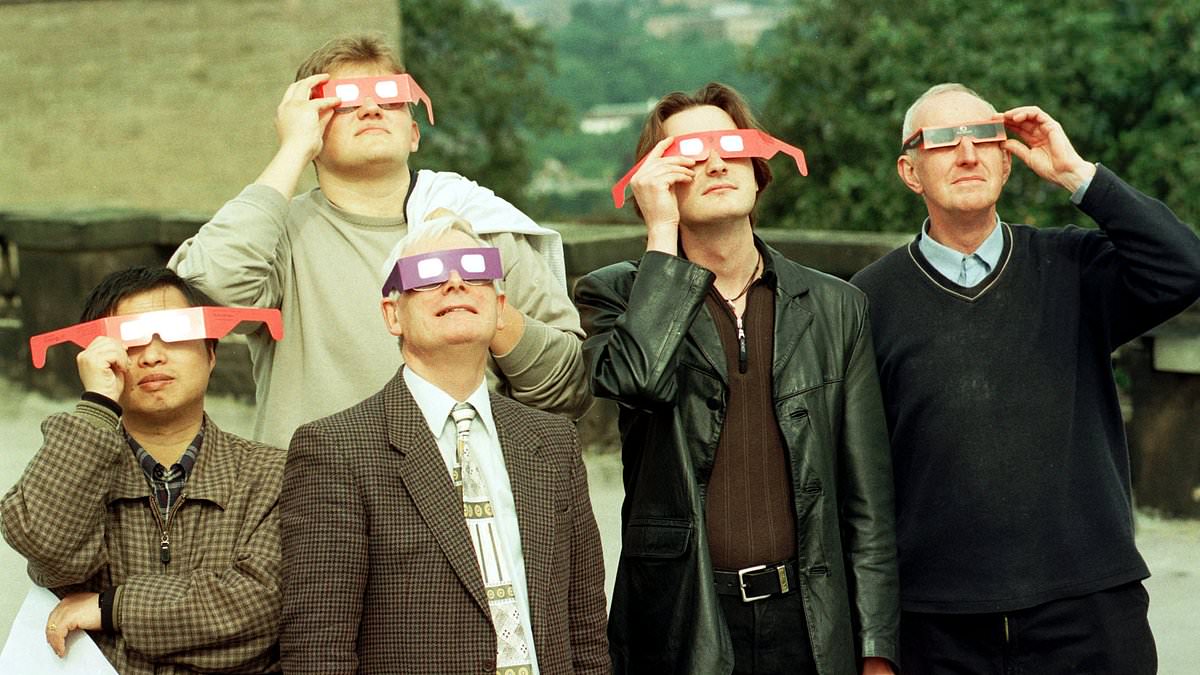
The UK's biggest energy supplier is encouraging Britons to use less electricity during the solar eclipse tomorrow, because solar power generation will plummet.Octopus Energy urged its 8million customers not to use washing machines, ovens, dishwashers and other plug-in devices between 6pm and 8pm.Tomorrow's hotly anticipated eclipse will see solar generation plunge at a crucial time of day when electricity demand rises as millions of people come home from work.Octopus has now warned customers the eclipse will 'briefly knock out a chunk of Britain's solar power' and possibly require more fossil fuel power generation.The National Energy System Operator (Neso), which runs the UK grid, said the eclipse could cut solar supply by up to 1.3 gigawatts tomorrow - enough to power at least 500,000 homes.Extra gas power stations may therefore have to be fired up, but Octopus said this need will be reduced if enough households delay using electricity for a short time.The firm said it would monitor those who use less electricity than usual during that two-hour window and give them one hour of free daytime electricity this Sunday at a time to be confirmed. Bosses said solar power generated a record 14.4 per cent of Britain's electricity last month, meaning two hours without sunshine will 'leave a gap that has to be filled'. A solar farm is surrounded by parched fields near Andover in Hampshire last week Spectators at Edinburgh's Royal Observatory view the last total solar eclipse in August 1999
The moon will obscure more than 90 per cent of the sun between 6.17pm and 8.06pm tomorrow, the most it has been blocked above the UK since the 1999 total eclipse. Neso confirmed it has been planning for the solar eclipse for more than a year, 'helping keep the electricity system balanced while the nation looks to the skies'. Octopus said it was asking people to use less energy between 6pm and 8pm to avoid putting extra pressure on the grid and increasing carbon emissions.Spain, a country which gets more than half of its electricity from wind and solar, was plunged into blackouts in April last year. Critics initially blamed a sudden plunge in solar power generation, but experts later put it down to so-called 'voltage control issues'.Spain was sourcing about 80 per cent of its electricity from solar and wind when the blackout hit - but its grid operator denied dependence on solar power was to blame. It follows claims yesterday that Britons could face a higher risk of blackouts after the National Grid changed rules to help hit the Government's green targets.Neso is set to operate the grid in future with reduced levels of 'inertia', which behaves like shock absorbers to keep spinning parts moving in the event of a power plant failure.The change to the new lower minimum inertia threshold will save consumers £96million a year, the state-owned body said. But electricity firms warned it could put the UK at a greater risk of blackouts, and a whistleblower said the 'truly insane risk-taking' was a 'massive gamble'.Meanwhile the Met Office revealed Devon, Cornwall and the westernmost parts of Pembrokeshire in Wales are set to see the eclipse at its fullest tomorrow, with a range of 94 per cent to 96 per cent of the sun obscured by the moon.Plymouth in particular is forecast to see the moon cover 94.66 per cent of the sun at 7.16pm.The rest of Wales, Northern Ireland, parts of the West Midlands and the South West, and the westernmost parts of Scotland can expect to see 92 per cent to 94 per cent solar coverage.In Cardiff, the moon is forecast to obscure 93.24 per cent of the sun at 7.13pm while in Belfast it will cover 93.09 per cent of the sun at 7.08pm. The Daily Mail's front page on August 12, 1999 following the last total solar eclipse Another total solar eclipse visible from the UK in 1927 - pictured in Stoneyhurst, LancashireSkygazers in the rest of the UK will likely see the moon obscure 90 per cent to 92 per cent of the sun – with 91.79 per cent expected in Birmingham at 7.12pm, 91.41 per cent in London at 7.13pm, 90.74 per cent in Inverness at 7.03pm, 90.71 per cent in Edinburgh at 7.06pm and 90.22 per cent in Newcastle at 7.07pm.Those most keen to catch a sight of the fullest possible solar eclipse should avoid the easternmost parts of the UK, where only 88 per cent to 90 per cent of solar coverage is expected.These include the coasts of Norfolk, Yorkshire and Aberdeenshire, as well as the Orkney and Shetland Islands.Eye doctors urged people to avoid looking directly at the sun, with even brief exposure causing lasting vision damage. When will the eclipse be visible in the UK? When to see the solar eclipse Location Eclipse starts Maximum eclipse Eclipse ends Edinburgh18:0819:0520:00 Glasgow 18:0819:05 20:06 Dublin 18:12 19:10 20:04 Manchester 18:13 19:1020:04 Liverpool 18:1319:10 20:04 Birmingham 18:1519:11 20:04 Bristol 18:1719:12 20:06 London 18:1719:12 20:06 Cardiff 18:1719:12 20:06 Truro 18:1819:16 20:10 Experts have warned that only special solar eclipse glasses that are ISO 12312-2 certified for the safest eye protection should be used to view the eclipse. But they have all but sold out online, or carry hefty delivery fees to arrive in time.The Royal Greenwich Observatory told the public that regular sunglasses are not a safe enough method to view the cosmic phenomenon.So-called eclipse glasses that do not carry the safety standards, or ordinary sunglasses, no matter how dark, should never be worn to view an eclipse, as they reduce glare, making it feel more comfortable to look at the sun for longer, but still allow harmful solar radiation to reach the retina.Following the 1999 eclipse, the Royal College of Ophthalmologists reported around 70 cases of people experiencing vision problems after watching the eclipse. Around 40 per cent had looked at it for less than a minute.The next time the moon obscures as much of the sun will be in 2081 and the next total solar eclipse in the UK will be in 2090.Reykjavik in Iceland and Spanish cities A Coruna, Oviedo, Zaragoza, Bilbao and Valencia will see a total eclipse tomorrow, in which the moon fully obscures the sun.In an added bonus for stargazers, the annual Perseid meteor shower reaches its peak tomorrow night. The shower is produced as Earth ploughs through a stream of dust left behind by Comet Swift–Tuttle.Each tiny grain strikes Earth's atmosphere at about 60km per second (37 miles per second), burning up in a brief flash that takes the appearance of a shooting star.