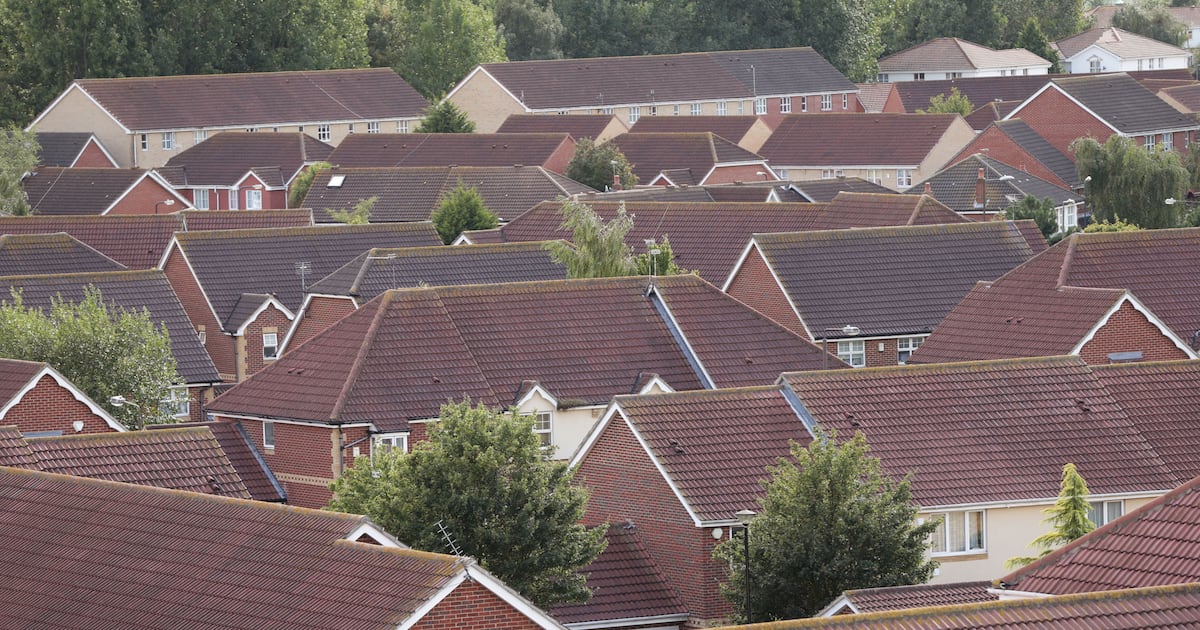
Is James Dyson hoovering up prime property in Dublin?
Ireland ranked bottom of Europe’s spying league Were recent Eurovision performances not disheartening enough, it’s now nul points for Ireland when it comes to spycraft too. That’s according to a poll of Europe’s top spooks by the French magazine L’Express.The current-affairs publication decided to run a competition “inspired by the Ballon d’Or in football or Eurovision”, pitting the intelligence services of European nations against each other. The voters were 60 “intelligence professionals”, including 17 current or former heads of services, as well as representatives of the CIA and Mossad.The UK won. “MI6 is extraordinary,” Robert Gorelick, a former CIA station chief, told the magazine. They’re good at recruiting moles, and “have a penchant for underhand tactics”, per a French source. Of countries with a similar or lower population to Ireland, Norway (7th), Estonia (8th) and Finland (13th) acquitted themselves relatively well. The system invited voters – think of Control or M from spy movies – to pick their top five, with points distributed accordingly. Latvia (21st) got one point. Ireland: none.READ MOREBerlin theatre’s new swimming pool gets locals debating ripple effectsPraying for a home by the beach? Renovated church for auction seeking €685,000London’s deep Irishness reveals itself in the most unexpected places During an eclipse, birds fell silent and Galápagos tortoises gazed up. As will we“Among the countries with zero points, Ireland and Luxembourg are still sought after for certain financial investigations,” the article this week notes. Just as in the football, however, the Irish are marginally better than Hungary, whose Orbanite apparatus is viewed with suspicion.The Irish intelligence services operate neither out of a large doughnut-shaped edifice like many British colleagues, or an enormous pentagonal building, like some US counterparts. Capabilities are divided between An Garda Síochána, the Irish Military Intelligence Services and elsewhere.But efforts are being redoubled: the Defence Forces arm has undergone a recent restructuring, while we’re reportedly about to see the launch of a new and improved An Garda Síochána Security Service. It has been described in the media (unclear by who) as one of the most significant developments in policing since the establishment of the Criminal Assets Bureau.There’s hope so.[ ‘The spy is the boring guy in a suit’: Inside the State’s military intelligence serviceOpens in new window ]James Dyson in the Royal Box at Wimbledon's Centre Court. Photograph: Steven Paston/PA Dyson rumours sweep DublinIs James Dyson hoovering up prime property in Dublin? A company previously used by the British vacuum billionaire for matters related to property in Ireland has applied for planning permission for improvements to a house in Rathmines. Locals are abuzz.The planning application for the Temple Road property was made in the name of Glashedy Fitzwilliam Trustees Ltd. That company is linked to James Dyson, inventor of the bagless vacuum cleaner and founder-chief executive of the Singapore-headquartered Dyson operation, which also gave the world hand-dryers that actually dry your hands.The house sold for €6 million earlier this year.We know of the link because of a letter lodged as part of a planning dispute over a helipad at Ballynatray House in Co Waterford. “I am the ultimate beneficial owner of the Property,” quoth Dyson on April 29th, 2024, authorising Glashedy Fitzwilliam to crack on with the various procedures and processes necessary to secure him a helipad.Permission was granted by An Coimisiún Pleanála after an appeal, with some restrictions: 50 flights a year, take down the windsock when it’s not in use and so on. Use of the trust is not a smoking gun, however. It has been used on other occasions for unrelated clients of Gartlan Furey, a Fitzwilliam Square-based firm of solicitors. Possible disappointment, then, for the already cosmopolitan Temple Road set. Former Paddy Power chief executive Patrick Kennedy, Cuisine de France founder Ronan McNamee and Campbells Soup heir John Dorrance III are all local, as is the Nigerian ambassador Ijeoma Chinonyerem Arimanwa Obiezu.A screenshot of Eamon Dunphy making comments about Rod Liddle The time Eamon Dunphy was ‘nasty’ but ‘not wrong’ about Rod LiddleSo farewell then Rod Liddle, columnist and controversialist at the Sunday Times, the Spectator and elsewhere in recent decades. He died aged 66 last weekend.In Ireland, Liddle was best known for being the subject of perhaps the most electrifying moment in our broadcasting history. It was 2005 and Roy Keane’s time at Manchester United had ended in acrimony. On the RTÉ panel, the participants fell into battle-lines drawn three years earlier during the Saipan debacle, which is to say Eamon Dunphy defended Roy Keane stridently as others tried to get a word in.Seeking to put the other side of the argument, the late Bill O’Herlihy offered a quote from the Sunday Times. Dunphy responded furiously.Liddle, in an intervention fairly typical of his style, had written for the paper that Keane should have been “banged up and certainly banned from the game for life” for his tackle injuring Alf-Inge Haaland in 2001. On cross-examination, O’Herlihy let on that he didn’t know who the author was. Dunphy did.“I’ll tell you who wrote it,” Dunphy said. “Rod Liddle. He’s the guy who ran away and left his wife for a young one.” Chaos. Liddle later addressed the incident in an interview with sports website Balls.ie in 2018. Dunphy “spoke from the heart, he spoke eloquently”, Liddle said, “and, even if the stuff he said about me was a bit nasty ... he wasn’t wrong.”Dunphy had offered an apology, which was accepted. Liddle, a Millwall supporter, had been an unlikely fan of Dunphy’s for years, having picked up his first memoir, Only A Game, aged 14. Which is to say he was familiar with his particular style of rhetoric. TU Dublin up for the cupOverheard spends more time than is healthy reading boilerplate on the Government’s tender platform to keep abreast of farfetched schemes. Our eye was caught recently by Technological University Dublin’s request for a “high-speed paper cup making machine capable of achieving a minimum production speed of 100 cups per minute”.What could they possibly need such cup-making capacity for, you wonder? Us too. That’s 6,000 cups an hour, and a million within a month, assuming a standard working week. Students can’t drink that much coffee. So what’s going on?It’s a research project, it turns out. Enterprise Ireland’s Innovation Partnership Programme stumps up cash for companies to team up with boffins in the hopes of finding something useful out. The plan here, which sees TU Dublin on the algebra for a company called Active Difference Limited, is to come up with a “fully biodegradable” version that both works and can be made at scale.It’s not that they need 50 million cups, but that they want to see cups being manufactured to make sure the process will work in the real world. Science in action.