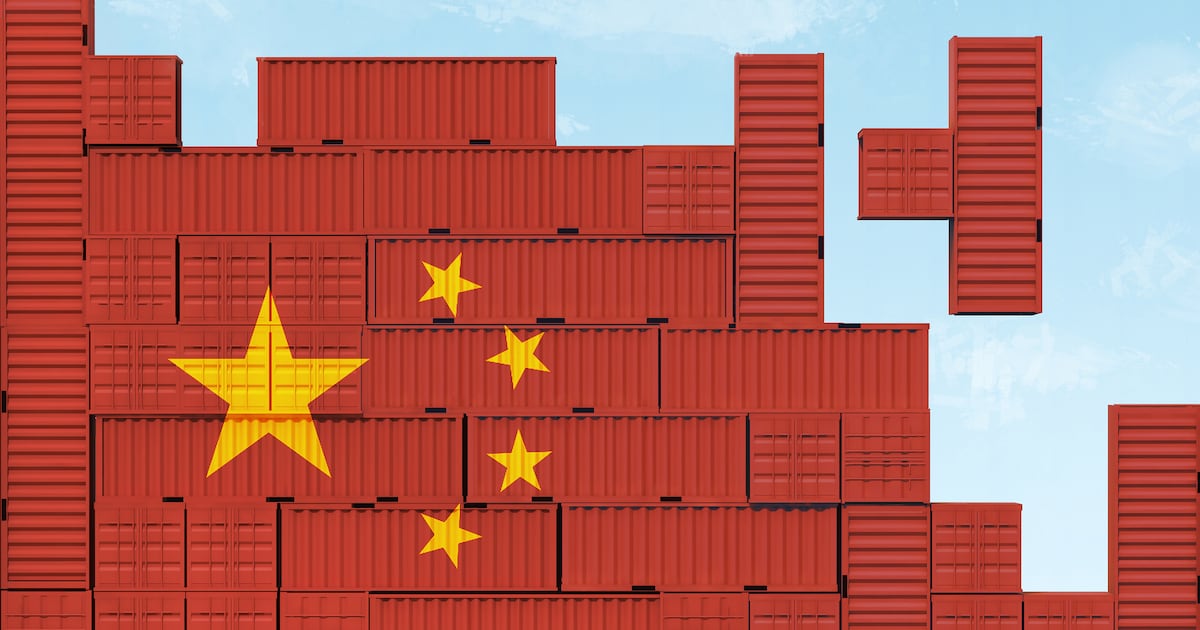
China Alt Protein: A summary of why it mattersChina is emerging as a major alt protein manufacturing hub due to its established fermentation expertise, government support, and focus on food security.China can significantly lower production costs, with industry sources suggesting a US$100 million US facility could cost about RMB100 million (around US$15 million) in China.Existing pharmaceutical and industrial fermentation facilities are increasingly being repurposed to produce alternative proteins and food ingredients.Experts warn that avoiding China entirely may create a competitive disadvantage as Chinese alt protein startups gain scale, lower costs, and strengthen innovation capabilities.
It has been years now since alt protein first burst onto the scene and became known as a key novel food for the future, and the industry has learned many lessons along the way.
One of the most important has been that in order to push this sector into the mainstream, cost and taste parity with conventional animal products must be achieved, and this is particularly so in price-sensitive markets like Asia — which is also the market forecasted to carry the world’s largest consumption of protein by 2050.
But all over the world, although many companies in this space have seen significant prowess when it comes to the technology and science required to achieve these cost and taste requirements, a lot of issues still remain when it comes to transferring these to a commercial context which requires large-scale manufacturing in order to be sold at competitive enough prices to compete with animal products.
At the core of the production of many types of novel alt proteins such as mycoprotein or microalgae-derived protein is the process of fermentation — and herein lies a core reason that all alt protein companies need to take note of China as a high-potential production location when planning for their futures.
“China’s novel food transformation is underpinned by two main factors: Economic and Strategic. Economically, it already produces much of the world’s fermented industrial and pharmaceutical products but [various factors] have created price pressures for these products,” biotechnology and geopolitical expert Dr. Dirk van der Kley stated in his new report on China’s Biomanufacturing Boom published via the Good Food Institute.
“Strategically, China is driven by the belief that large-scale biomanufacturing, including for alt proteins, will become central to global manufacturing and contribute to addressing food security concerns.”
Together with formal governmental support for the alt protein sector (dubbed as New Protein locally), these drivers are pushing Chinese companies that have longstanding expertise in fermentation, albeit for other sectors, towards alt protein production as a new avenue to utilise their existing capabilities.
This means that moving forward, pharmaceutical factories could well be reinvented as alt protein production facilities.
“Historically, pharmaceutical companies have shown limited interest in food applications [because these are] typically produced in much smaller volumes but command far higher prices than food ingredients,” Dr van der Kley said.
“However, the expansion of biopharmaceutical capacity in China [and] intense competition has encouraged some manufacturers to explore adjacent markets to leverage their existing fermentation capacity, including alt proteins, particularly where applications may attract market premiums.”
What does this mean for foreign alt protein companies?
The short answer to this is: Far lower production costs and far higher yields in a far shorter time.
“Construction of biomanufacturing facilities is much faster and more affordable in China. [There are many factors playing into this], including experience, building materials proximity, less red tape, lower wages, more affordable land and government subsidies,” the report stated.
“A general rule of thumb expressed by Chinese companies interviewed for this report is that the USD value of facility construction in the U.S. will cost roughly the same number in RMB in China (e.g. a US$100 million facility in the U.S. will cost RMB100 million, equivalent to ~US$15 million, in China).”
As of time of writing, there are several active case studies of overseas novel food companies with China-based production. One such example is US-headquartered Calysta, which makes microbial proteins by a gas fermentation technology, and is working with animal feed company Adisseo which is owned by China’s Bluestar.
Another one is Australia-born Nourish Ingredients, which makes precision-fermented fats and is working with China’s CABIO Biotech, which was previously skewed towards the production of nutraceutical products.
“[The biggest fear for many international companies] is inexperience in dealing with China — but the country is navigable [and] there are several examples of international novel food startups successfully manufacturing in China today,” he added.
“China will affect all global stakeholders in novel food [as] a potential market, a potential manufacturing destination, a future source of world-leading innovators, and it is often involved in the geopolitics of supply chains and manufacturing, so it cannot be ignored.”
But what about the risks?
Of course, for many companies and especially those from the United States, there are many non-negligible risks that still need to be considered when looking at China such as President Donald Trump’s tariff war on Chinese goods as well as a persistent concern among foreign companies regarding Intellectual Property (IP) risks.
But although these risks cannot be ignored, Dr van der Kley argues that in the long run, choosing to stay away due to these concerns is not likely to be sustainable for companies.
“At present, China’s preexisting strengths in fermentation [are being channelled] into novel foods, and genuinely dropping prices. This is likely to create a swathe of highly competitive Chinese startups in the future, [so there is the] equally important risk of remaining outside a market that may become the industry’s centre of manufacturing scale and cost reduction in the future,” he said.
“Engagement need not be an all-or-nothing decision as companies can pursue a spectrum of approaches from relationship building to manufacturing partnerships [so as to] test scale as conditions evolve. The risks of various engagement options should be weighed alongside the potential costs of non-engagement with this strategically important market.”