A new alloy turned up in a grain of sand from Hiroshima Bay
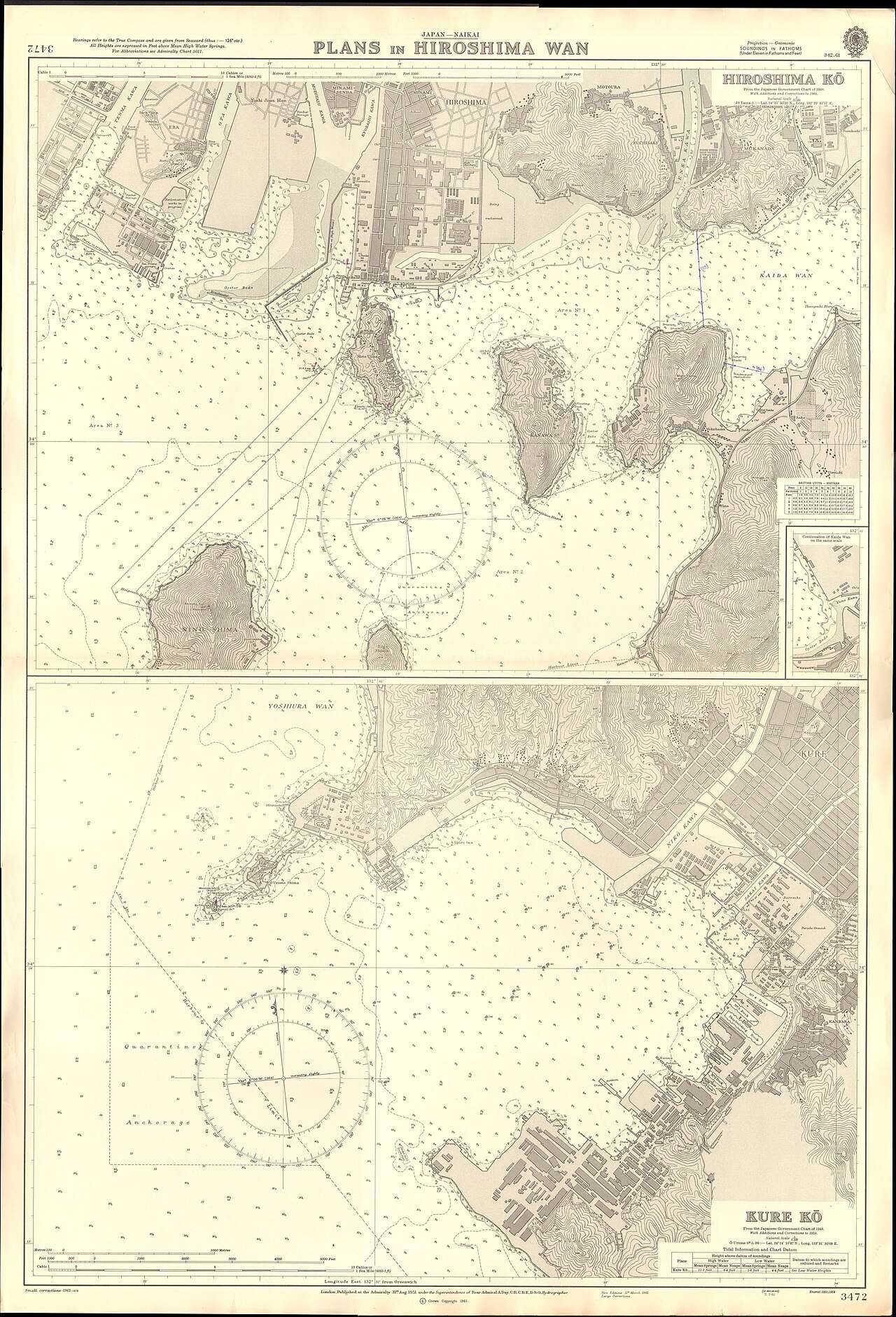
A metal that has never been recorded before turned up in a grain of sand from Hiroshima Bay. Writing in Science Advances, Luca Bindi, Hans-Rudolf Wenk, Mario Wannier, and Teresa Salvatici report the discovery of a multicomponent alloy forged by the Hiroshima atomic blast, sealed inside a glassy bead that formed during the airburst of 6 August 1945.
The bead is a hiroshimaite, one of the melted spherules recovered from the beach sands around the bay. The metal grain inside it measures a few micrometers across and sits in a matrix of glass that cooled too fast to crystallize. Microprobe analysis found it to be a single even mixture of iron, chromium, nickel, manganese, molybdenum, silicon, and aluminum, and x-ray diffraction showed its atoms locked into an ordered arrangement otherwise known from a gold-aluminum compound.
Nuclear detonations, the paper says, "generate extreme, transient physicochemical environments capable of producing previously unknown materials." The authors' account is that metals vaporized in the fireball, condensed together as a mixed vapor, and then froze so quickly that the elements had no time to sort themselves into the phases they would normally form.
"This finding demonstrates that nuclear plasma events may stabilize complex metallic phases and highlights atomic-blast debris as a natural laboratory for nonequilibrium alloy formation and materials discovery," the paper concludes.
Previously:
• The dentist who convinced FDR to bomb Japan with bats
• Biblical city of Sodom was possibly destroyed by an asteroid