
Remember me






 by Johnnie Behiri2 days ago
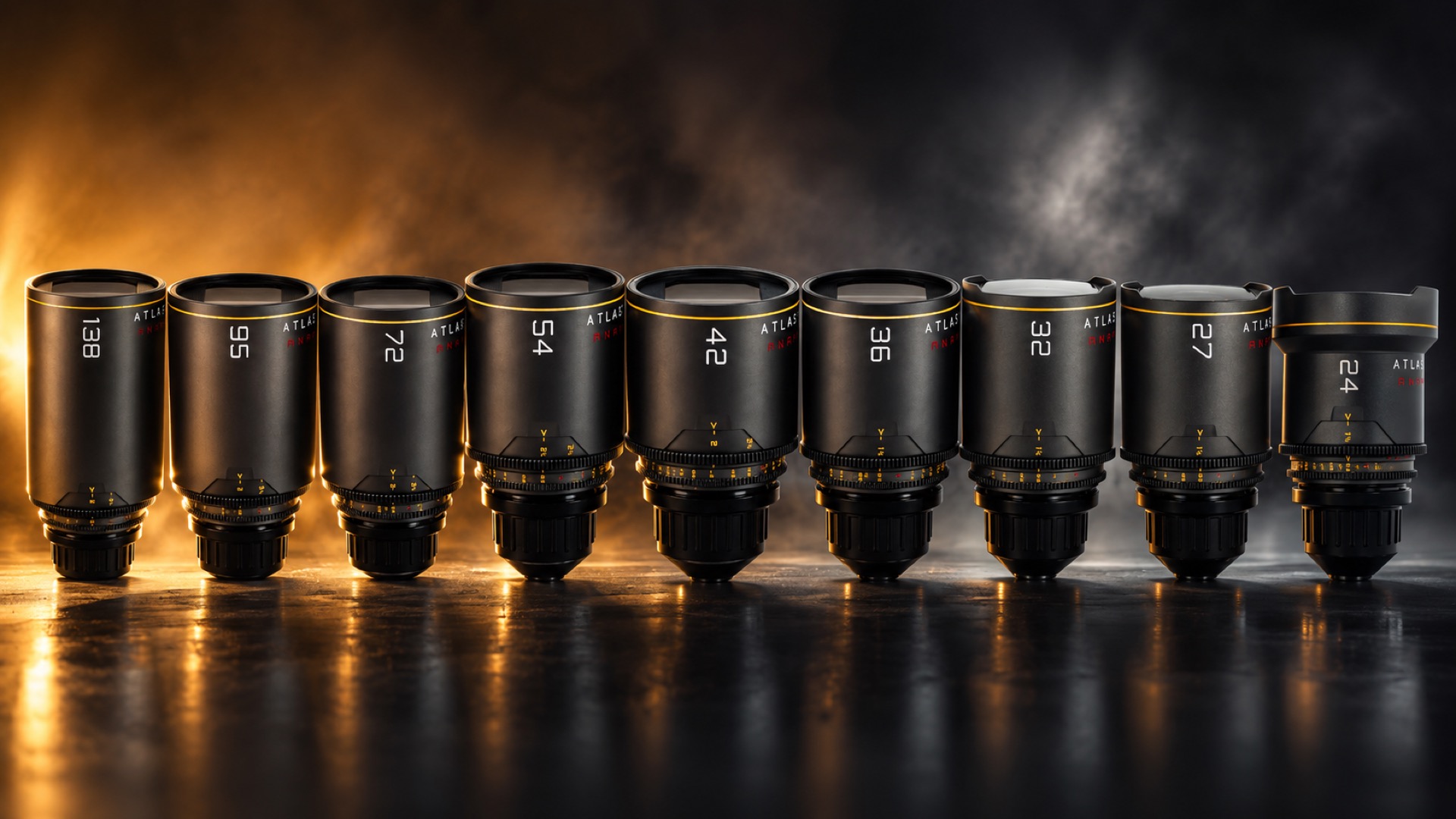
Atlas Lens Co. has cut the everyday price of its Mercury Series 1.5x full-frame anamorphic primes, with the 36mm, 42mm, 54mm, 72mm, 95mm, and 138mm falling from $7,995 to $4,499 and the wide 24mm, 27mm, and 32mm dropping from $9,995 to $5,999. That is a reduction of up to $3,996 per lens on a PL-mount set that covers full frame, throws golden streak flares, and now spans nine focal lengths from 24mm to 138mm.
Price cuts of this size on current-production cinema glass are rare, and they are rarer still in a year when almost every other line on the gear budget is moving in the opposite direction. Atlas describes this as a new, lower, everyday price rather than a limited promotion, which matters: a temporary discount changes when you buy; a permanent repositioning changes whether a lens set is realistic to own at all. For owner-operators and small rental houses who have been renting Mercury glass rather than buying it, the arithmetic has just shifted considerably.
 Shot with Atlas Mercury 42mm anamorphic lens. Credit: CineDFrom three lenses to nine
The Mercury Series has been a slow build. Atlas first announced the family with three focal lengths, the 36mm, 42mm, and 72mm, and we sat down with company president Forrest Schultz shortly afterward to unpack the design thinking behind the move from the 2x squeeze of the Orion Series down to 1.5x. A 54mm prototype followed at NAB 2023, and the second group of 54mm, 95mm, and 138mm lenses opened for pre-order after that. The wide trio of 24mm, 27mm, and 32mm completes the range.
Nine focal lengths is a meaningful number for an anamorphic line. It is enough to cover a feature or commercial without constantly reaching for a spherical to fill a gap, and the unified mechanics mean swapping between them on set costs seconds rather than a rebuild of the front of the camera.
Why 1.5x, and what it does to the imageThe squeeze factor is the defining decision here. Atlas built Mercury around a 1.5x anamorphic coefficient rather than the traditional 2x (Atlas Orion territory), which preserves the characteristics most people actually want from anamorphic glass: the oblong oval bokeh, the barrel distortion, the shallow depth of field, while allowing a housing roughly half the size and weight of most professional anamorphic primes.
It also solves a practical problem. A 1.5x squeeze delivers a 2:1 aspect ratio from a 4:3 open-gate sensor area, and on a 3:2 sensor it gives a perfect 2.25:1 Cinemascope look with minimal side-cropping.
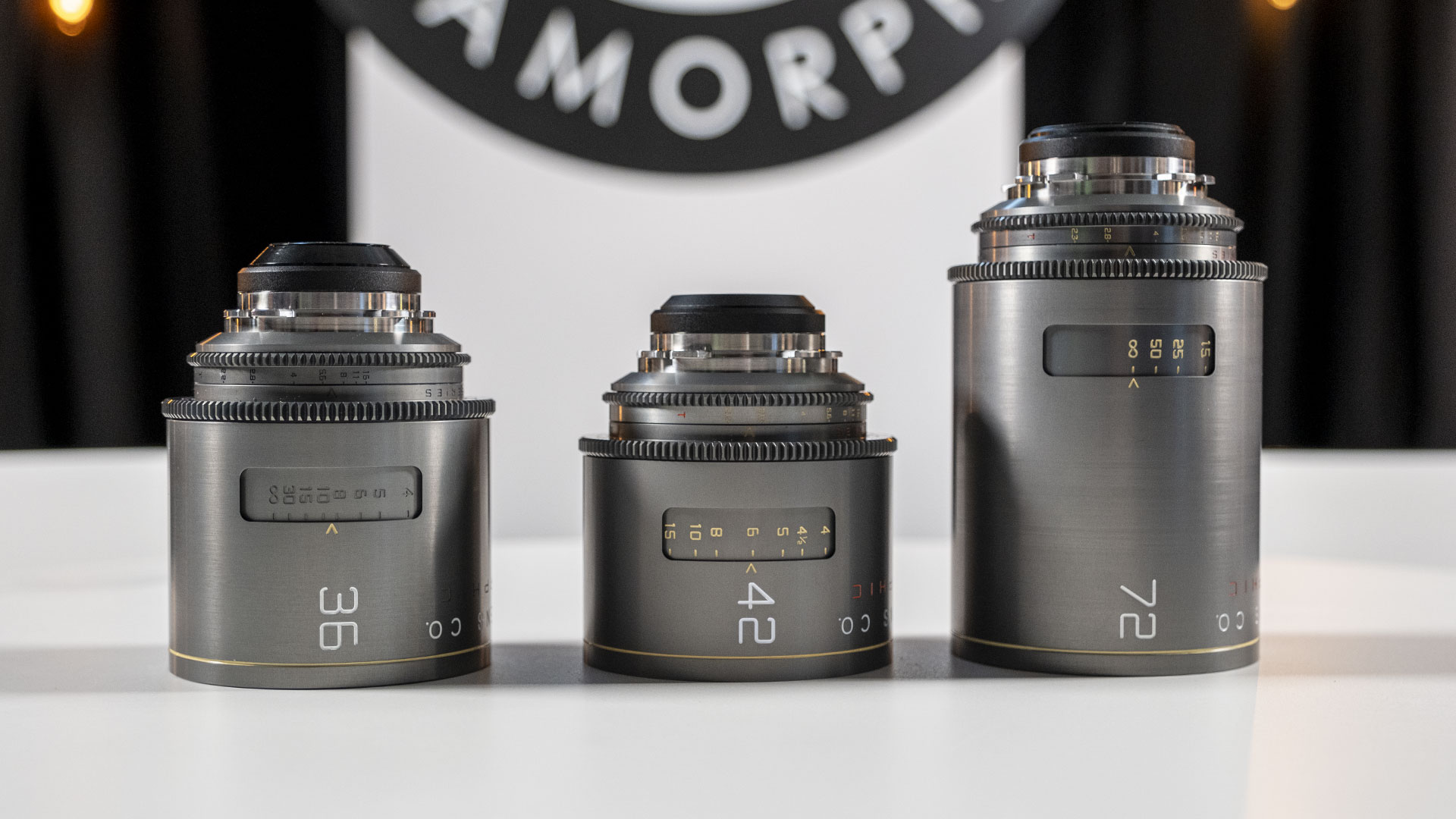 Atlas Mercury 36,42 and 72mm anamorphic lenses. Credit: CineDGolden flares and calibrated imperfection
Optically, Mercury is warmer and more expressive than the Orion Series that made Atlas’ reputation. The company specifies vintage sun-tinged golden flares from direct light sources, expressionist geometric distortion, classic anamorphic field curvature with frame fall-off, and near-apochromatic color correction, which in practice means the chromatic aberration that usually escalates at the edges of front anamorphic glass stays close to zero. Atlas also claims no mumping, the focus-dependent squeeze wobble that plagues cheaper anamorphics.
Aperture is T2.2 through most of the range, with the 138mm telephoto opening to T2.6, and every lens stops down to T16 through a 14-blade iris. The 42mm is my personal favorite anamorphic lens, and I have shot with it extensively. I paired that lens with the Sony FX5 (review here), filming the Gion Matsuri festival in Kyoto in 5K/24p open gate X-OCN LT, and it also did duty on our Leica SL3-P review. The verdict both times was the same: it is an unusually fun lens to work with, though the 86mm filter situation on the wider lenses takes some planning.
Mechanics, weight, and coverageAll Mercury lenses are ARRI PL mount only, which puts them on cinema bodies natively and on mirrorless cameras through a PL adapter. Focus and iris gearing is cine-standard 0.8 MOD with unified positions across the set, and the 32mm through 138mm share a 95mm front outer diameter, while the 24mm steps up to 114mm. Both imperial and metric focus scales are offered on every focal length.
Weights stay genuinely portable by anamorphic standards. The 42mm comes in at 1.1kg / 2.4 lb and 11.2cm / 4.4in long with a minimum focus distance of 56cm / 1.8ft, while the wider 24mm is the heaviest of the group at 1.75kg / 3.86 lb, measuring 12.8cm / 5in with a 46cm / 1.5ft close focus and a 132-degree horizontal field of view on full frame.
Coverage is where Mercury has quietly outgrown its original brief. The imaging circle spans 36.7 x 25.54mm, which handles full-frame digital including the ARRI ALEXA Mini LF, Sony VENICE 2, and Blackmagic URSA Cine 12K LF, but Atlas now also lists compatibility with beyond-full-frame systems such as the ALEXA 265, URSA Cine 17K, and the FUJIFILM GFX ETERNA 55, alongside 16mm and 35mm film in 3-perf and 4-perf, VistaVision open gate, and Super 35 or APS-C digital. If you want to check a specific body before committing, our lens coverage tool includes all nine Mercury focal lengths.
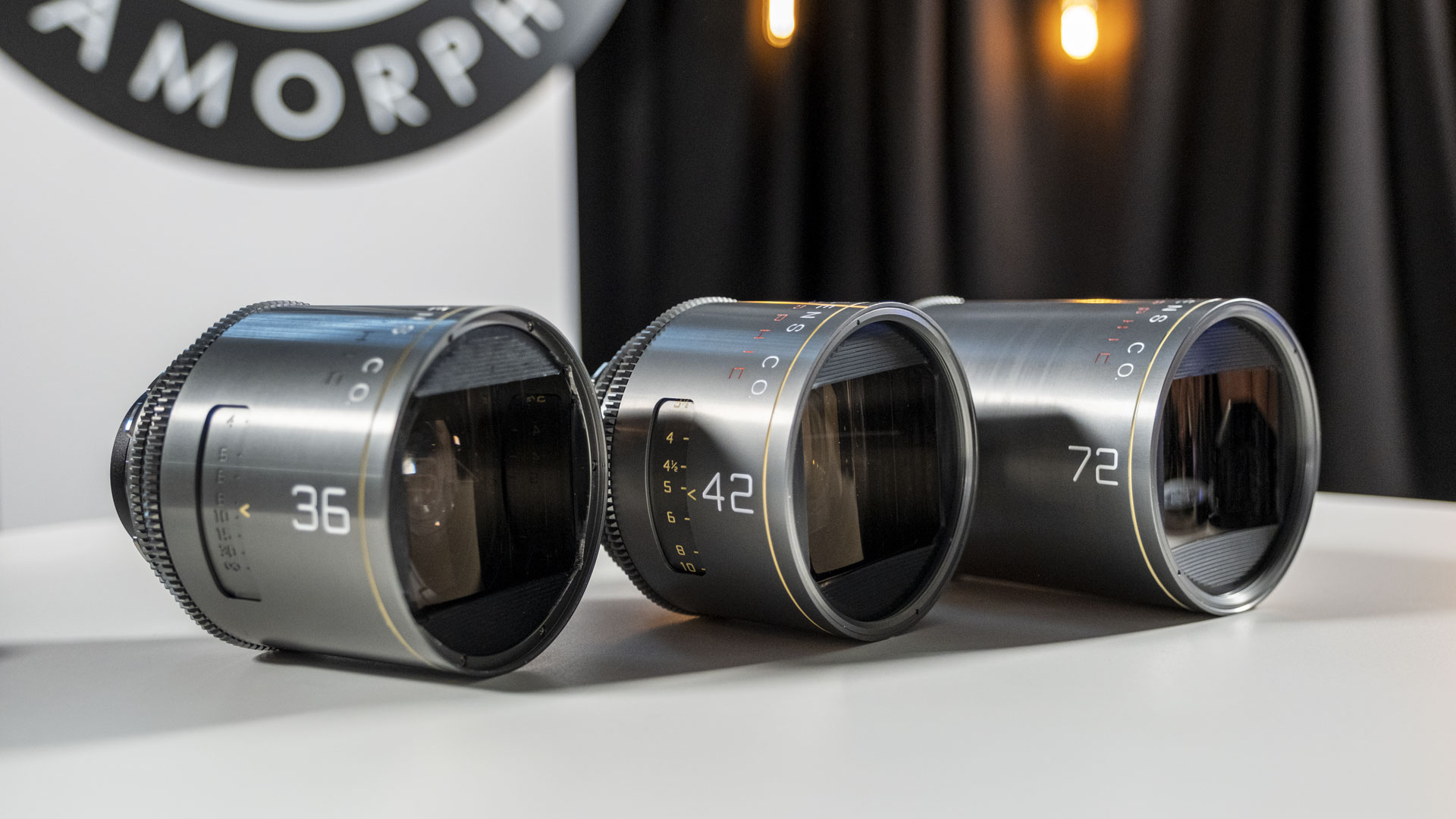 Atlas Mercury Anamorphic lenses. Credit: CineDThe pressure coming from China
It is impossible to ignore what has happened around Mercury since it launched. When Atlas introduced the series, a full-frame anamorphic prime with real cine mechanics was a category with very few affordable entries. Today it is one of the most crowded corners of the lens market, and most of the newcomers are Chinese.
Blazar, previously known as Great Joy, is the clearest example. The company built its reputation on the Remus 1.5x full-frame series, then expanded into the CATO 2x full-frame set and the Mantis 1.33x line with its oval iris, pushed into autofocus anamorphics with the APEX and the full-frame Talon 1.5X AF, introduced the lighter, more modern Viper 1.5x full-frame set, and most recently added the Sentinel 35-60mm anamorphic zoom at $1,299. SIRUI, Viltrox, and Laowa have been building out their own anamorphic catalogs in parallel. That is a lot of glass arriving very quickly, at price points that were unthinkable for full-frame anamorphic a few years ago.
We do not know whether that competitive pressure is the main reason behind Atlas’ decision. What we can say is that the gap between boutique American anamorphic glass and the fast-moving Chinese alternatives has narrowed sharply, and Atlas has now responded by attacking on price rather than retreating upmarket. Whichever way the causality runs, it is good to see Atlas putting up a fight, and we will be watching closely where the anamorphic lens market goes from here.
 Atlas-Mercury-54mm-T2.2 anamorphic lens. Credit: CineDA price move that runs against the market
The wider context makes this more interesting still. Camera and lens pricing across the industry has been drifting upward on the back of memory and semiconductor costs, with FUJIFILM, for instance, raising US camera prices and following up with European increases. Cinema lenses are less exposed to DRAM (Dynamic Random Access Memory) contract pricing than camera bodies are, but they are not immune to general manufacturing inflation, so a roughly 40 to 44 percent cut across a full range is a deliberate strategic choice rather than a reaction to input costs.
Where it lands, Mercury is in genuinely awkward territory for the competition. At $4,499, a full-frame 1.5x anamorphic prime with PL mount, 0.8 MOD gearing, and near-zero chromatic aberration sits well below the traditional entry point for owner-grade professional anamorphic glass, while remaining clearly above the budget 1.33x and 1.5x sets aimed at hybrid mirrorless shooters. Six lenses at the new price now cost less than what three used to. That is the kind of shift that turns a rental-only line into a purchase candidate for a working DP.
 Shot with Atlas Mercury 42mm anamorphic lens. Credit: CineD
One caveat worth flagging: availability is patchy. Several focal lengths were listed as temporarily out of stock at B&H when we checked, with lead times ranging from a couple of weeks to two to four months on the longer primes. If a specific focal length matters to your schedule, check availability before planning around it.
All nine Mercury primes are available in imperial and metric focus scales, and the new pricing is live at Atlas’ own store. At B&H, our North American affiliate partner, the 36mm, 42mm, 54mm, 72mm, 95mm, and 138mm now list at $4,499 each, down from $7,995, while the 24mm, 27mm, and 32mm come in at $5,999, down from $9,995. CVP, our European affiliate partner, lists the 36mm, 42mm, and 72mm at €4,607.25 excluding VAT, or €5,574.77 including VAT, a saving of €2,549.78 per lens.
For additional information about the Atlas Mercury series of anamorphice lenses, please head here.
Nine focal lengths, golden flares, and a 1.5x squeeze that plays nicely with modern sensors: is Mercury now on your shortlist? Don’t hesitate to let us know in the comments below!