
Remember me







 by Nino LeitnerYesterday
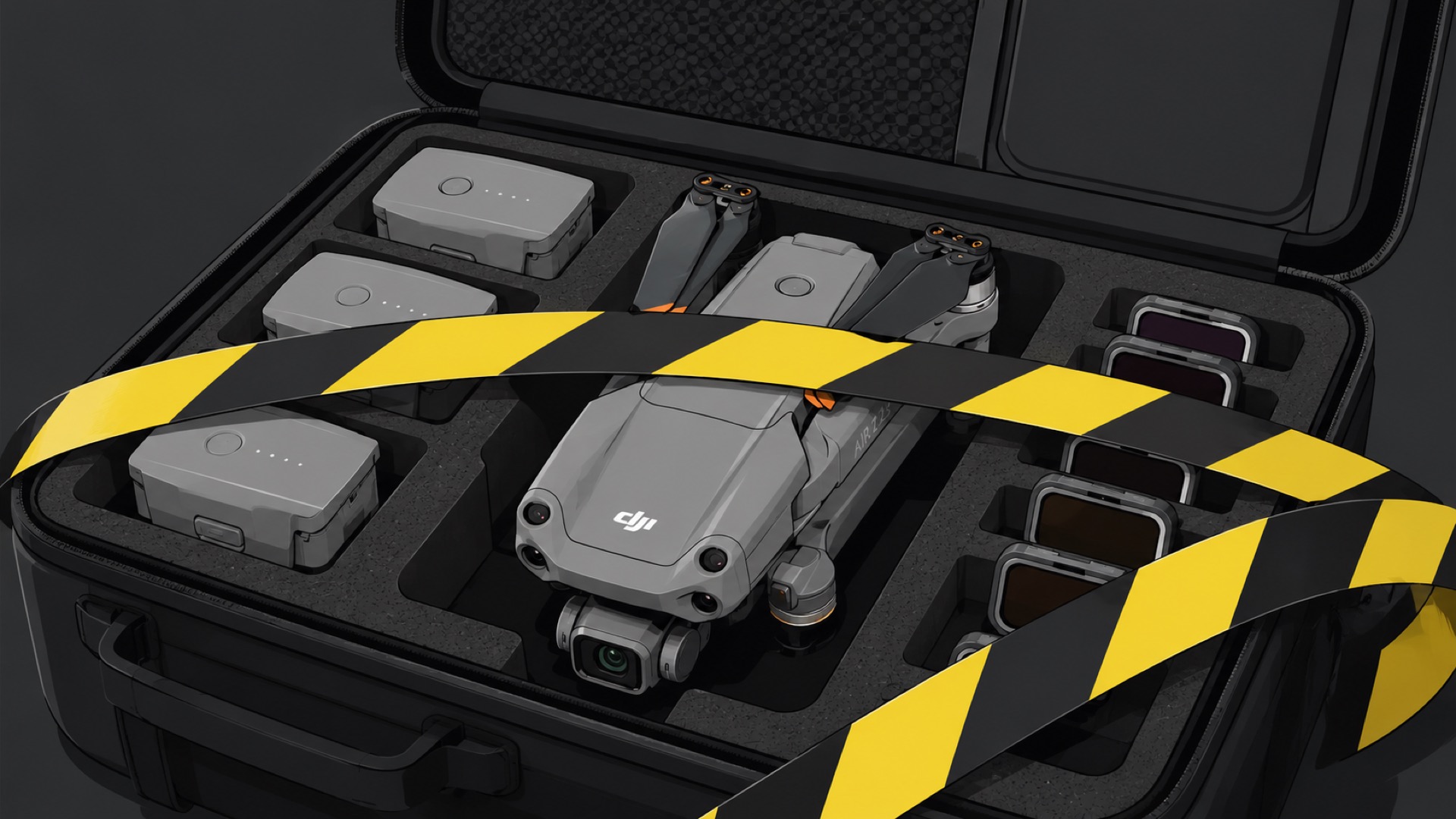
The US FCC is seeking public comment on whether to prohibit future importation and sales in the United States of foreign-made “military-grade” drones that are already authorized for the American market, a definition that covers thermal imaging, LiDAR, agricultural spraying, docking stations, drones over 55 pounds, and swarming systems. DJI has now responded publicly, arguing the proposal would retroactively ban the civilian tools that filmmakers, first responders, and farmers rely on every day, and the public can weigh in until September 2, 2026.
If you have followed our coverage of the US drone situation, you know the trajectory. In December 2025, the FCC added DJI and effectively all foreign-made drones to its Covered List after no federal agency completed the security audit required under the FY25 National Defense Authorization Act. That designation blocked new equipment authorizations, which is why recent DJI releases never officially reached US retailers, but it left one important door open: models authorized before the listing could continue to be imported and sold. The FCC’s new proposal takes aim at exactly that door.
What the FCC is proposingOn July 21, 2026, the FCC’s Public Safety and Homeland Security Bureau and Office of Engineering and Technology released a Public Notice (PS Docket No. 26-189) seeking comment on prohibiting the continued importation and marketing of previously authorized foreign-produced drones and drone components on the Covered List that qualify as “military-grade”. The accompanying FCC fact sheet frames the move as a step to secure the drone supply chain.
 Forever grounded in the US? The FCC’s new rules might have an impact on existing civilian drones in the US as well, not just enterprise versions like this one. Image credit: DJI
The decisive question is how “military-grade” is defined, and the FCC’s list is broad. It covers seven categories: drones weighing 55 pounds (about 25kg) or more at takeoff; drones capable of dispensing what FAA rules call an economic poison, which in practice describes agricultural spraying aircraft; drones that contain or integrate thermal imaging sensors; drones integrating LiDAR sensing; drone docking stations; drones specially designed to incorporate a defense article; and swarming drones, a definition that explicitly extends to systems built for coordinated formations such as drone light shows.
There are meaningful carve-outs. The prohibition would not apply to domestically produced equipment, to imports for federal government use, or to commercial testing and product development. Equipment exempt from the Covered List, including everything on the Department of War’s Blue UAS Cleared List, gear meeting the Buy America standard, and products holding a Conditional Approval, would also remain untouched. And crucially, the FCC states that already-purchased drones could continue to be used and operated; this targets future imports and sales, not existing fleets. The Bureau proposes that importers and retailers would have to cease all importation and marketing of the affected equipment 180 days after publication in the Federal Register, a notably longer transition than the 10-day window applied to an earlier round of prohibitions.
The same announcement also brought relief for exempted dronesIt is worth noting that the July 21 action was not purely restrictive. In a parallel notice, the FCC extended the exceptions that keep certain foreign-produced drones eligible for new authorizations: the Blue UAS List and Buy America exemptions, which had been set to expire on January 1, 2027, now run until January 1, 2028, and the termination date for equipment with a Conditional Approval has been eliminated entirely. According to the Commission, this is meant to give industry certainty that drones determined not to pose security concerns will not face imminent restrictions. For everything else on the Covered List, however, the direction of travel points the other way.
DJI calls it a retroactive ban on civilian equipmentDJI published its official response on August 7 on its ViewPoints blog, under the pointed title “The FCC Could Cut Off Future Access to Popular DJI Drone Models in the U.S.”. The company’s core argument is that while the proposal is framed as targeting military-grade equipment, the FCC’s definition captures civilian and commercial tools across its lineup.
DJI walks through the categories one by one. Thermal imaging, in its telling, is the technology search and rescue teams depend on to find missing people. LiDAR is not a targeting system but the sensing technology behind obstacle avoidance in its enterprise drones, and the company points out that even consumer models could be swept in simply because they use LiDAR for positioning and safety. The economic poison category describes, in DJI’s words, essentially every agricultural drone that can spray pesticides or spread seeds. Docking stations are widely used for public safety and inspection programs, and the 55-pound threshold catches the FlyCart delivery series, which has been deployed in disaster response. The company states plainly that it does not design or manufacture military-grade equipment, has not marketed its products for military use, and has consistently opposed the weaponization of civilian drones.
 The DJI Air 3S is one of many civilian DJI drones with LiDAR – will it be affected, and can yours be grounded? Image credit: DJI
DJI also warns about the knock-on effects: if adopted, the prohibition could make covered replacement components harder or impossible to obtain, and for many users there are no comparable domestic alternatives at similar price points. The company argues the result would be higher costs and reduced access for the Americans who rely on the technology, from public safety agencies to farmers and small businesses.
Where this leaves filmmakers and aerial operatorsFor our field, the significant shift is that this proposal reaches models that are currently still legal to buy. To be clear, this is a US regulatory matter: if you shoot in Europe, Asia, or anywhere else outside the United States, nothing changes for you, and DJI products remain available as usual. For US-based operators, however, the stakes are real. Until now, the practical consequence of the Covered List was a slowly aging product lineup: existing models stayed on shelves while new ones, from the Osmo Pocket 4P to the latest drones, were blocked from US authorization. If the new prohibition is adopted as written, already-certified drones with thermal or LiDAR sensors could disappear from US retail as well, and given how common LiDAR-assisted obstacle sensing has become across DJI’s current lineup, the overlap with working aerial cinematography kits is anything but theoretical.
The security debate underneath all of this remains unresolved. DJI commissioned an independent audit earlier this year that found no backdoors or unauthorized data transmission in the tested systems, while the FCC continues to lean on the Executive Branch determination that foreign-produced drones pose an unacceptable risk to US national security. Meanwhile, the agency has been cracking down on suspected DJI-linked lookalike brands, so the enforcement climate is only getting tougher.
For now, nothing is banned yet. This is a proposal open for public comment, and the FCC explicitly asks whether its list adequately captures military-grade equipment, whether comparable domestically produced alternatives exist, and what the economic impacts would be. Comments can be filed through the FCC’s Electronic Comment Filing System under PS Docket No. 26-189; according to DJI, the window runs through September 2, 2026, and the company is directing users to the Drone Advocacy Alliance to submit their input. Operators on all sides of the debate, including those who support the restrictions, can make their case there.
A proposal aimed at military-grade drones could end US sales of the thermal, LiDAR, and heavy-lift tools many crews fly. Will you file a comment? Don’t hesitate to let us know in the comments below!