







The
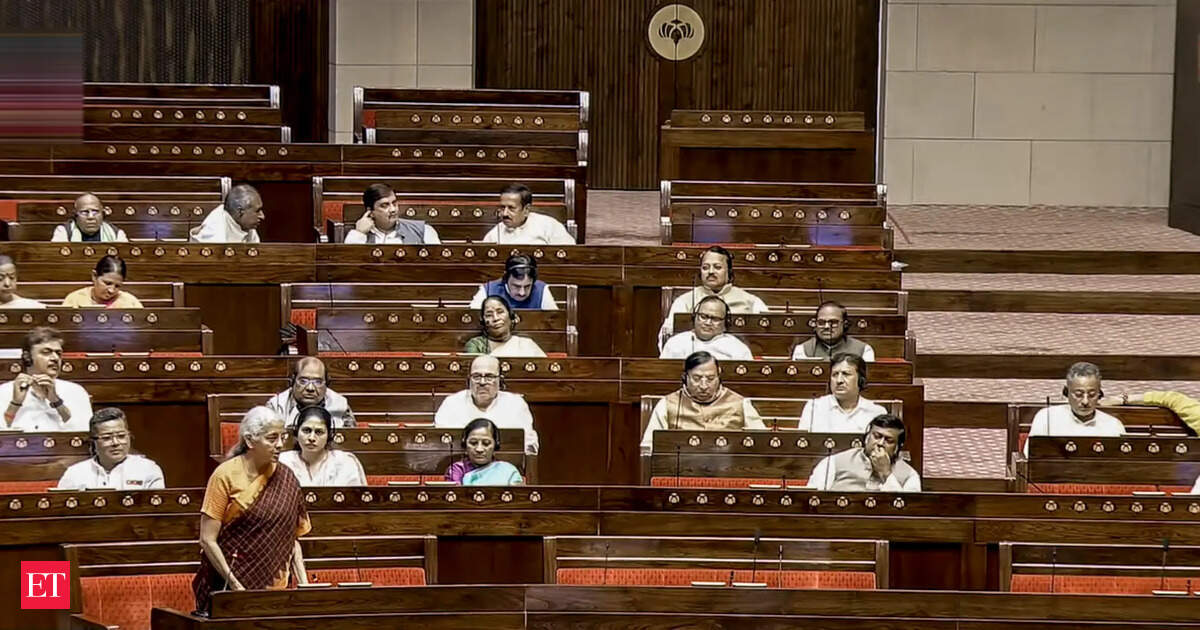
Rajya Sabha on Thursday passed the Appropriation (No. 3) Bill, 2026, granting parliamentary approval for government spending that exceeded original budget allocations during the 2022-23 financial year. With the Upper House clearing the Bill by voice vote, it now returns to the Lok Sabha, completing the legislative process for this
Money Bill.
Piloting the debate, Finance Minister Nirmala Sitharaman said the excess demand relates to only two heads of expenditure, both of which featured in the Public Accounts Committee's 39th report tabled in the Lok Sabha this April.
Also read: Govt, opposition discuss Delimitation Bill in 50-minute Parliament meeting: Sources
The first, a relatively modest ₹196.44 crore, stems from a court order against the
Railway Ministry. The second and far larger component, ₹53,871 crore, relates to
debt repayment. Sitharaman clarified that since this amount corresponds to the redemption of government securities rather than fresh spending, it carries no fiscal impact.
Under India's constitutional scheme, the government cannot spend money from the Consolidated Fund of India without Parliament's prior authorisation, granted annually through the Appropriation Act passed alongside the Union Budget. But actual expenditure sometimes exceeds these sanctioned amounts, due to emergent needs, court directions, or other unavoidable circumstances.

Live Events
Also read: Lok Sabha passes Taxation and Other Laws (Amendment) Bill to boost foreign investment, electronics manufacturingThis is a routine, largely procedural exercise, Parliament isn't approving new spending, but retrospectively regularising spending that has already occurred, often years after the fact (in this case, for FY 2022-23, being regularised in 2026).The "(No. 3)" in the Bill's title indicates it's the third Appropriation Bill taken up by Parliament in this session/year, following the main Budget appropriation and any supplementary demands for grants.
With inputs from PTI
Add

as a Reliable and Trusted News Source
(You can now subscribe to our
Economic Times WhatsApp channel)