STORAGE
Exposing virtualization built into the SSD will make VM migration simpler, consortium says
The NVM Express (NVMe) specifications have been updated, gaining enhancements such as support for post-quantum cryptography, and SSD virtualization and live migration to better support virtualized environments.
Announced by the NVM Express consortium, all 11 of the suite of NVMe specs have been updated with new features and engineering change notices. These represent the next step in the evolution of the standard, it says, which was created as a protocol to support storage devices connected to a system’s PCIe bus.
Perhaps the most significant new capability is PCIe Exported NVM Subsystem Migration. This extends existing NVMe virtualization to locally-attached PCIe SSDs. It does this by abstracting the physical drives into host-defined virtualized NVM subsystems, to allow for virtual machine (VM) mobility without storage reconfiguration.
When a VM moves from one server to another, its storage also needs to move with it in a way that’s non-disruptive to any applications running in that VM.
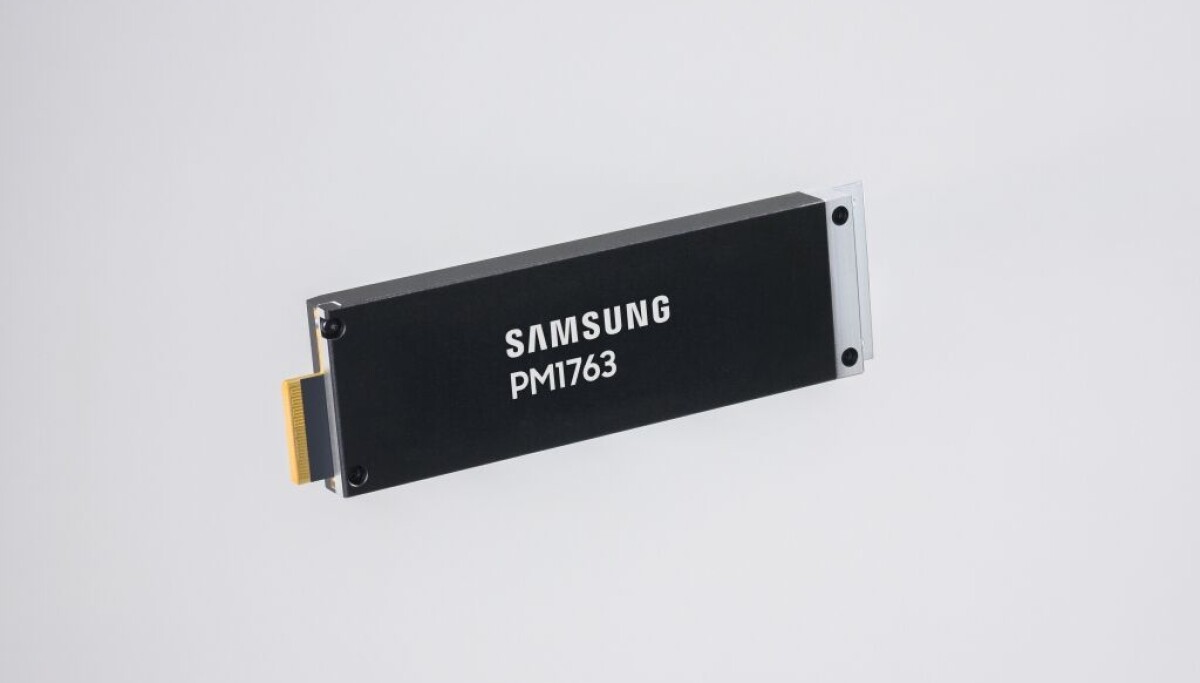
“With NVM Subsystem Migration, NVMe SSDs can present exported NVM subsystems that hide the complexity of the underlying hardware,” says Mike Allison, a senior director at SSD maker Samsung and NVM Express board member.
“Instead of interacting with physical controllers and namespaces, the host only sees exported controllers and namespaces. This creates a clean separation between what the VM sees and what’s happening under the hood,” Allison explains on an NVM Express blog.
“One of the key innovations here is providing the host with control over exported identifiers. During migration, those identifiers can be carried over exactly from the source to the destination. That consistency is crucial: even if the underlying hardware uses different internal IDs, the VM sees no change and can pick up right where it left off with no storage reconfiguration required,” he says.
In effect, the NVMe layer now enables the virtual machine manager (VMM) to rely on virtualization built into the SSD. The flash drive itself exposes logical, virtualized storage constructs, offloading this complexity from the VMM.
Also new are enhancements for post-quantum cryptography. This basically comprises updates to the protocol to support quantum-resistant algorithms approved by NIST (US National Institute of Standards and Technology) to strengthen end-to-end data protection between host and SSD.
This is only likely to become important if and when quantum computers ever gain the ability to decode data encrypted with existing algorithms.
Another capability added is Rate Limiting, aimed at optimizing storage performance via controller-based quality of service (QoS) that enforces bandwidth and IOPS (input/output operations per second) limits on NVMe SSDs.
Such limits may be imposed to maintain stable system performance, but also allow cloud storage providers to define service tiers based on IOPS and bandwidth thresholds.
Other notable enhancements include Voltage Monitoring to keep an eye on NVMe device health and help identify anomalies before they impact performance or reliability. There is also now a function to restore an NVMe subsystem to its factory-default settings, for troubleshooting or to ensures consistent system configurations.
The updated specifications include the NVMe 2.4 Base Specification, NVM Express Management Interface 2.2, NVMe Boot 1.4, transport layer specifications (NVMe over PCIe Transport 1.4, NVMe over RDMA Transport 1.3, NVMe over TCP Transport 1.3), and various Command Set Specifications.
All updated NVMe specifications are available to download from the NVM Express website.®