
Remember me
Streaming was supposed to end the cable-era headache of paying for channels you never watched just to get the two or three you wanted. Unfortunately, the landscape has splintered into a dozen separate subscriptions, each one holding a piece of the catalog hostage. A studio’s entire horror library might live on one platform this year and vanish behind a different paywall the next, and keeping every streaming service active at once can run a household well past what a cable bundle used to cost. As a result, sometimes it feels that streaming is no longer the promised alternative to cable but just a different version of the same problem, with more logins to manage.
Ad-supported free services have emerged as the direct answer to that. Companies like Tubi and Pluto TV license out deep benches of studio films, rotate new titles in monthly, and ask nothing from the viewer beyond sitting through a few commercial breaks — and since some streaming services charge a monthly fee and still force YouTube watch ads, that doesn’t seem too much to ask. Horror fans in particular have benefited from this shift, since the genre’s back catalog is exactly the kind of content that thrives on these platforms. This August, five films spanning three decades of horror are streaming completely free, and every one of them deserves to be discovered and rediscovered.
5) Event Horizon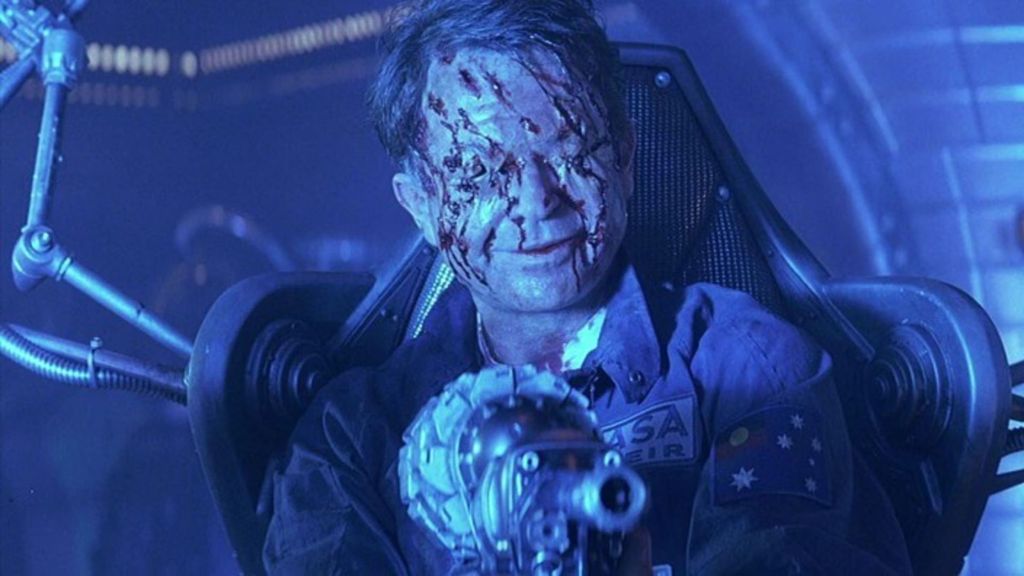 Image Courtesy of Paramount Pictures
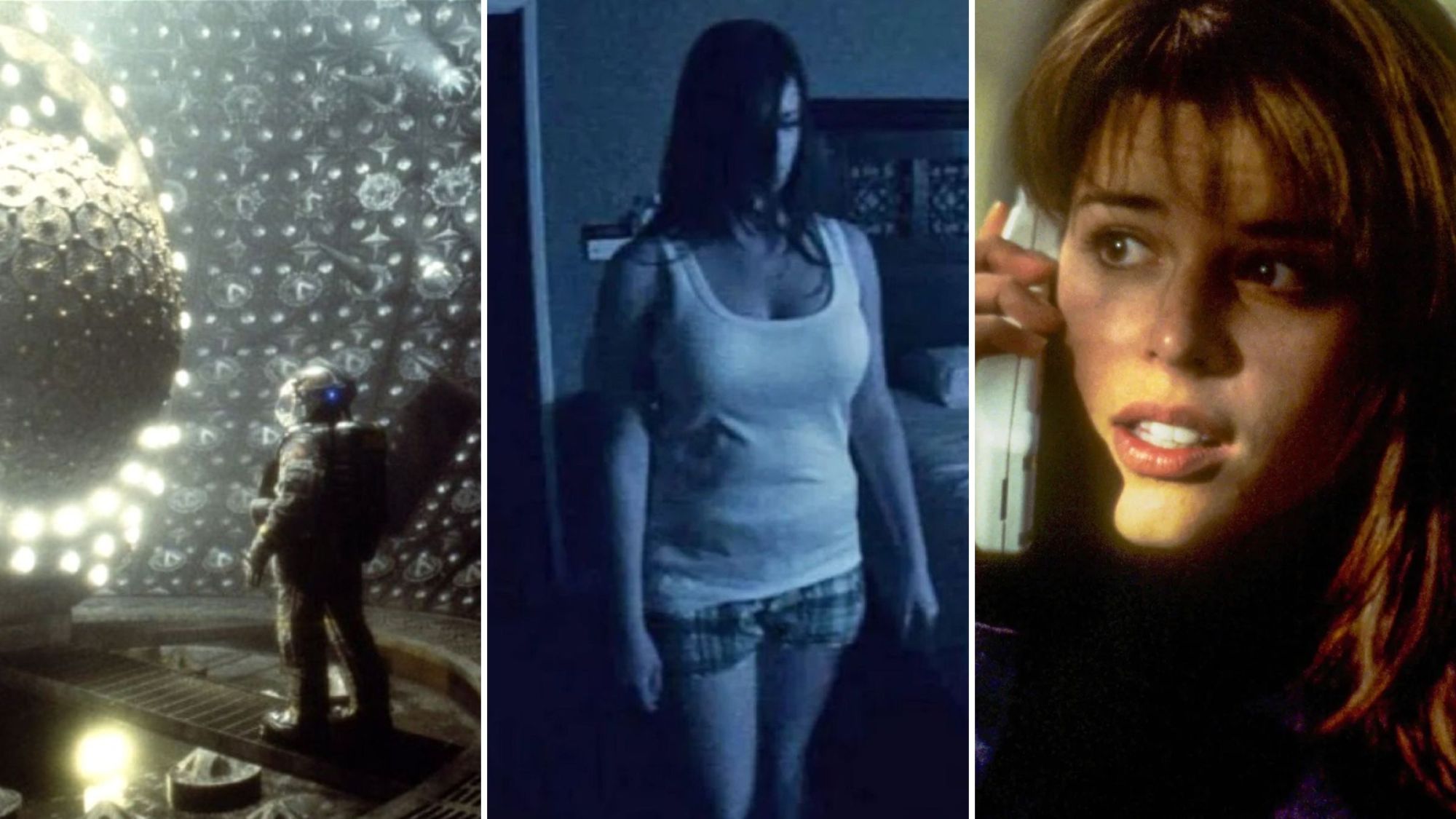
Set in 2047, Paul W.S. Anderson’s Event Horizon sends a rescue crew led by Captain Miller (Laurence Fishburne) to investigate a research vessel that vanished seven years earlier and has just reappeared near Neptune, transmitting a distress signal no one can decipher. The ship’s designer, Dr. William Weir (Sam Neill), joins the mission and quickly realizes that the Event Horizon’s experimental gravity drive sent the ship into an unknown dimension, and whatever came back with it is still on board.
During production of Event Horizon, Anderson brought in Clive Barker, the horror novelist and director behind Hellraiser, to consult on the design of the movie’s bloodiest sequences. Paramount was reportedly horrified by how graphic Anderson’s first cut was, and a negative test screening forced him to trim roughly 30 minutes of the most extreme material. Much of that footage was found to have degraded beyond recovery when the studio went looking for it years later. While we’ll never see the director’s cut of Event Horizon, the release version is still a brutal piece of gothic horror bolted onto hard sci-fi. Furthermore, massive practical sets and uncompromisingly grotesque imagery give the film a unique texture that later space horrors have repeatedly tried and failed to recapture. Event Horizon is streaming free on Pluto TV all August.
4) Paranormal Activity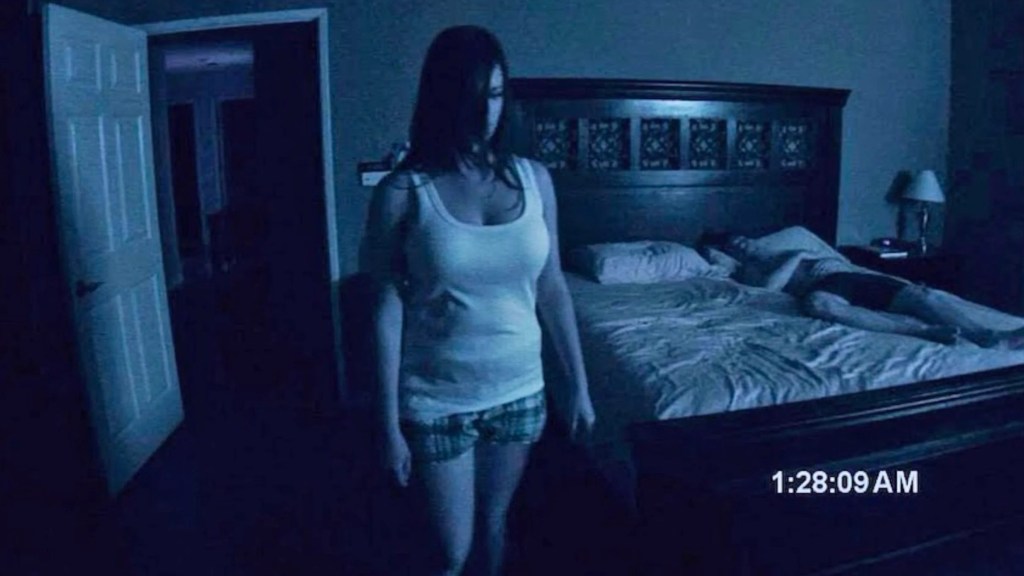 Image Courtesy of Paramount Pictures
Oren Peli shot Paranormal Activity in his own house over the course of a week in 2006, working from a loose script that trusted his two leads to improvise the mounting dread of a young couple convinced their home is haunted. Micah (Micah Sloat) sets up a video camera to capture whatever moves in the dark while he and Katie (Katie Featherston) sleep, and the film unfolds almost entirely through that fixed, grainy footage. Paranormal Activity understands that the scariest moments happen in the corner of the frame, forcing the audience to scan every inch of the image to notice a door shifting an inch, a shadow that stays too long, or the low rumble of a presence the camera cannot quite see.
Paramount acquired Paranormal Activity, retooled slightly, and released it into a slow-burn theatrical rollout built on word-of-mouth and night-vision reaction shots in trailers. It grossed over $190 million worldwide and launched a franchise that ran for six sequels, each one spiraling further into the mythology of the demonic force that has attached itself to Katie and her family. The success of Paranormal Activity was so great that it inspired a decade of found-footage copycats, as Hollywood chased the same legendary profits the movie got. Paranormal Activity is streaming free on Pluto TV this August, and the full franchise will be available there as well for anyone who wants to trace the terror all the way to its end.
3) Final Destination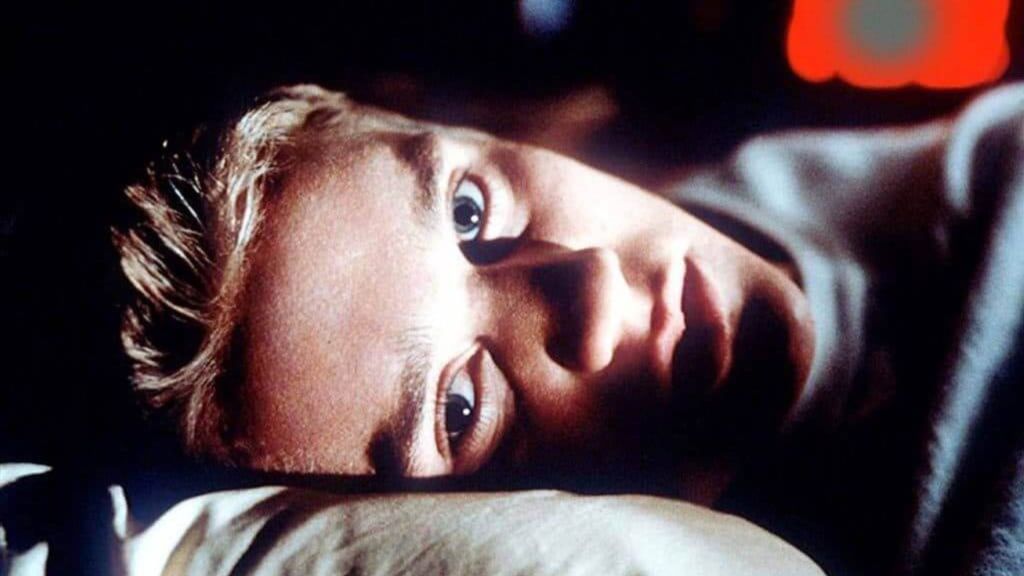 Image courtesy of New Line Cinema
Death doesn’t wear a mask or carry a knife in Final Destination. It moves with the cold, correcting logic of a collapsing Rube Goldberg machine, and the film’s genius is to strip the slasher formula down to its barest element and remove everything that makes the killer a person. In the opening moments of Final Destination, Alex Browning (Devon Sawa) has a premonition of his flight exploding on takeoff, panics, and gets himself and a handful of classmates removed from the plane moments before it erupts into a fireball. Relief quickly becomes horror as the survivors start dying one by one in freak accidents, and Alex realizes that Death is working through the list of people who were supposed to be on that plane, settling accounts in the order they would have perished.
What gives Final Destination its nasty staying power is the way it turns the entire world into a threat. A leaking mug, a stray screw on the road, or even a misrouted extension cord can become a weapon used by Death to claim its victims, and the film trains the viewer to spot the dominoes lining up long before the characters do. As a result, the setpieces build the suspense out of the gap between what the audience sees assembling and what the victim finally notices. In the decades since, horror has rarely produced a more thrilling premise, which explains why the Final Destination franchise is still going strong. The original movie is streaming free on Tubi this August, as well as Final Destination 2 and Final Destination 3.
2) Bram Stoker’s Dracula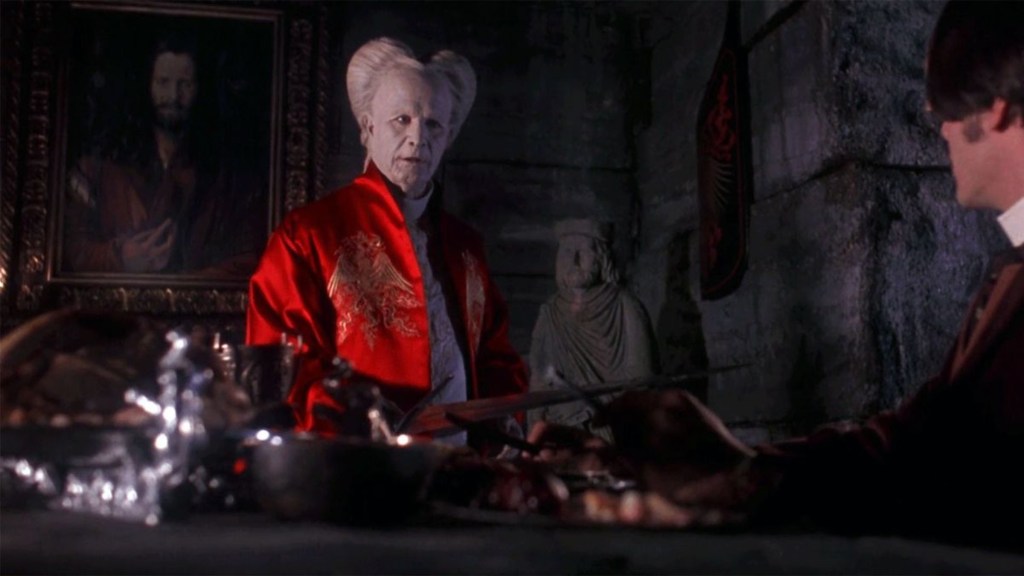 Image courtesy of Columbia Pictures
Francis Ford Coppola’s 1992 adaptation of Dracula follows Bram Stoker’s novel more closely than most of the versions that came before or after it, tracking the ancient vampire (Gary Oldman) as he leaves Transylvania for London, convinced that Mina Harker (Winona Ryder) is the reincarnation of the wife he lost centuries earlier. Meanwhile, Jonathan Harker (Keanu Reeves), Mina’s fiancé, gets trapped in the Count’s castle handling a real estate deal while Dracula begins his pursuit, and Anthony Hopkins arrives as vampire hunter Abraham Van Helsing once the bodies start piling up in London.
In addition to a star-studded cast, Coppola’s dedication to the craft of cinema makes Bram Stoker’s Dracula worth revisiting. The director famously fired his visual effects team when they told him his ideas required CGI, then shot every effect in camera using techniques borrowed from early cinema, including double exposure and forced perspective. The result is awe-inspiring, as every scene is beautiful to look at, having aged better than any contemporary CGI production. Bram Stoker’s Dracula is streaming free on Pluto TV throughout August.
1) Scream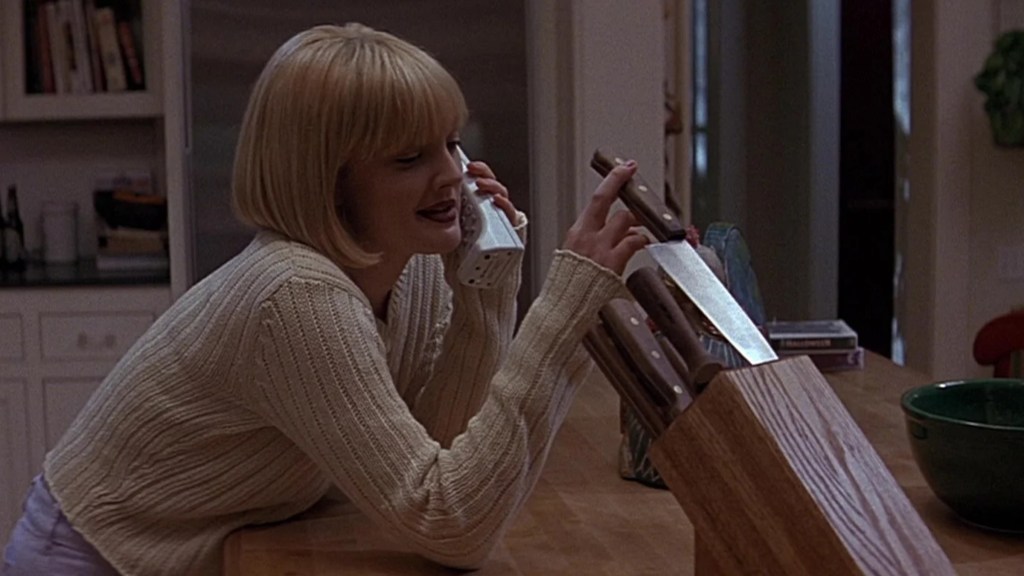 Image courtesy of Miramax
Wes Craven’s 1996 slasher Scream opens with one of the most notorious cold opens in horror history, as high schooler Casey Becker (Drew Barrymore) receives a flirtatious phone call that slowly curdles into a lethal game of horror movie trivia. From there, the killing spreads through the town of Woodsboro, and the story settles on Sidney Prescott (Neve Campbell), a teenager still grieving the murder of her mother one year earlier who realizes the masked killer hunting her classmates is connected to her. While the slasher setting could feel familiar, Craven and Scream screenwriter Kevin Williamson weaponize their characters’ encyclopedic knowledge of horror tropes, turning every conversation into a commentary on the genre that echoes the audience’s thoughts before subverting expectations.
What makes Scream endure is how it balances its intelligence with genuine cruelty. The film dissects the clichés of slasher cinema — the virgin-survivor rule, the killer’s supernatural aim, the fatal mistake of saying “I’ll be right back” — yet commits to each beat with enough craft that the scares land whether you’ve seen a hundred horror movies or none. On top of that, the Ghostface mask, a cheap dime-store rubber face stretched into an expression of perpetual shock, became instantly iconic, and the whodunit structure kept audiences arguing well past the credits. Nearly three decades later, Scream still feels sharp, and it remains the defining touchstone for any horror movie fan. Scream is streaming free on Tubi throughout August.